Edge Just Made Websites "Agent-Ready", And That Changes How AI Uses the Web
For thirty years, the web has been built for one audience: humans. Every button, form, dropdown, and pop-up was designed around what a person could see, click, and understand. That assumption is now breaking down. A fast-growing share of the traffic hitting websites is not people at all, it is AI agents, software that browses, reads, fills in forms, compares prices, and completes tasks on someone's behalf.
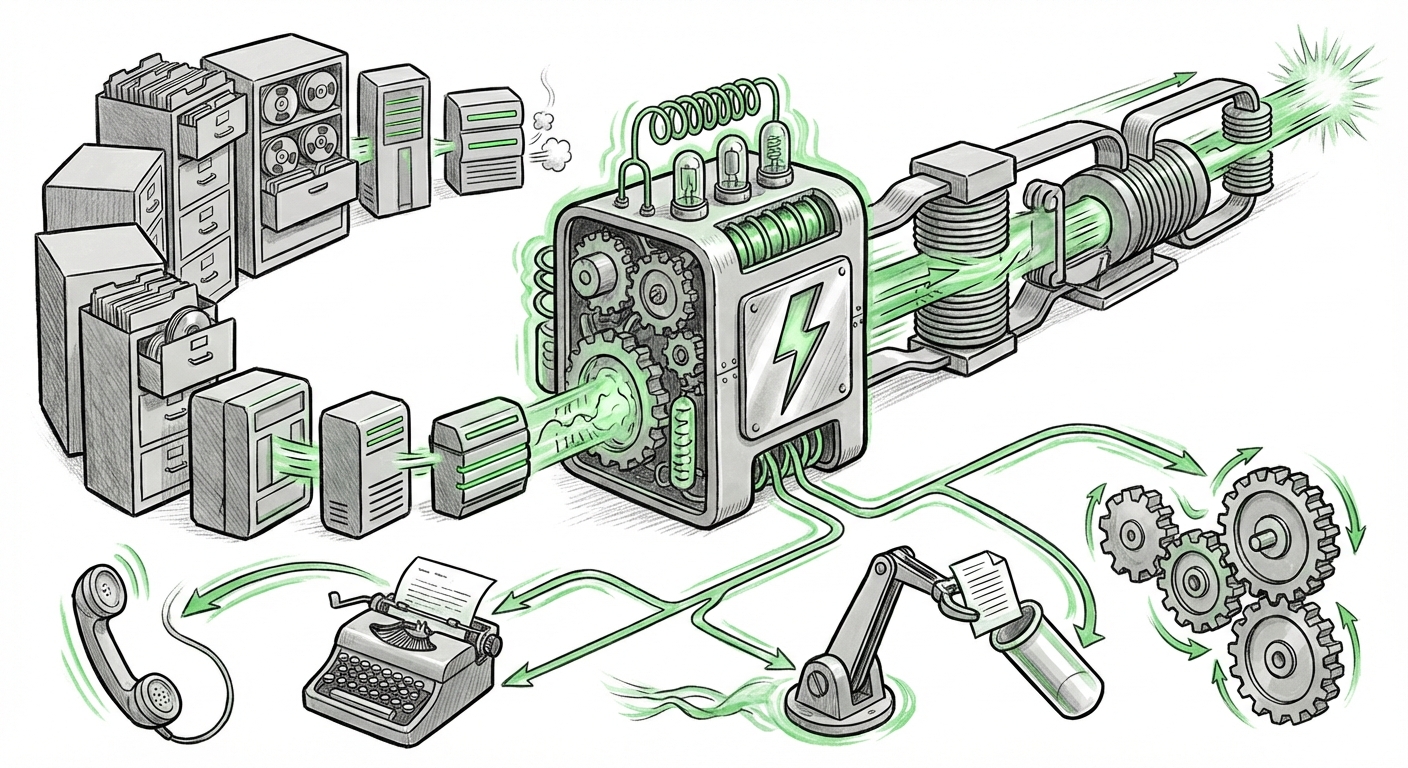
That shift is the backdrop to a new developer-focused update to Edge, which lands on two ideas: helping developers create better components, and helping them make their site agent-ready. It is a small headline with a very large implication. If browsers start treating AI agents as first-class visitors, the entire contract between a website and its audience has to be rewritten.
The Two Halves of the Announcement
On its face, the update splits into two pieces of work that sound unrelated but are deeply connected.
The first is about components, the reusable building blocks developers assemble into modern web pages. Better components mean cleaner code, more consistent design, faster load times, and less time spent rebuilding the same puzzle piece over and over. This is the unglamorous plumbing that quietly determines whether a site works well or falls apart.
The second is about making a site agent-ready. That is the newer, stranger idea, and it is the one worth paying attention to. An agent-ready site is one that can be understood and operated not just by a human with a mouse, but by an AI system acting on a human's instructions.
Put those two together and a pattern emerges. If developers are already refactoring their components, the argument goes, why not build them in a way that serves both audiences at once, the person and the agent?
Why "Agent-Ready" Is a Bigger Deal Than It Sounds
Today's AI agents are remarkably good at reading text and remarkably bad at dealing with the messy reality of a live website. They struggle with layouts that shuffle depending on screen size. They get confused by buttons that look identical but do different things. They stumble over cookie banners, chat widgets, and carousels. They can read a page, but they cannot reliably use it.
Most of that friction exists because the web was never designed to explain itself to a machine that has to make decisions. A human sees a green button that says "Buy Now" and instantly understands the stakes. A software agent sees a clickable element and has to guess whether it completes a purchase, opens a preview, or triggers something irreversible.
An "agent-ready" philosophy attacks that guessing game at the source. Instead of building a site for people and then bolting on workarounds for bots, developers design the site so that its structure, its meaning, and its available actions are clear to both. The same page becomes legible in two languages at once, one visual, one structural.
This is not a niche concern. It is the difference between AI that talks about doing things and AI that actually does them.
The Component Angle: Small Change, Big Leverage
The component half of the story deserves more credit than it usually gets. Components are where design decisions get frozen into code. If accessibility, clear labeling, and predictable structure are baked into a button, a form, or a product card from day one, every page that uses that component inherits those qualities automatically, for humans and agents alike.
That is the real leverage. You do not retrofit an entire website one page at a time. You fix the building blocks, and the fix propagates. For teams that have been putting off accessibility and structured-markup work because it feels like thankless overhead, agent-readiness gives them a commercial reason to finally do it. The same changes that help screen readers and search engines also help AI agents operate the site.
One investment, three payoffs. That is a rare alignment in web development.
What This Means for the Future of AI
The biggest bottleneck in AI right now is not intelligence. It is permission and plumbing. Models can reason about tasks far more complex than the environments they are allowed to touch. The web is one of those environments, and it has been largely hostile to automation, sometimes deliberately, sometimes accidentally.
Browser-level support for agent-readiness signals a change in posture. Instead of treating automated visitors as an adversary to be blocked, filtered, or rate-limited, the browser becomes a place where developers can choose to welcome them in a controlled way.
That matters for three reasons:
- It moves agents from the API world into the open web. Until now, reliable automation meant using a company's official API. Most websites do not have one. Agent-readiness offers a middle path, structured enough to be trustworthy, open enough to be universal.
- It shifts the battleground from models to interfaces. If every major AI lab can build a capable model, the differentiator becomes who can actually act in the real world. Interfaces become the moat.
- It creates a two-tier web. Sites that are agent-ready will be reachable by AI assistants. Sites that are not will become invisible to a growing slice of user intent. That is a competitive cliff, not a gentle slope.
In practical terms, imagine telling an assistant to "find a dentist near me who takes my insurance and book the earliest appointment." Today that request dies at the first website with a poorly labeled form. In an agent-ready web, the assistant reads the available actions, understands what each one does, and completes the booking. The AI stops being a search box and starts being a doer.
The Business Case, and the Business Risk
For businesses, the calculus is uncomfortable but simple. Customers are increasingly outsourcing the first stage of every decision, searching, comparing, filtering, to AI assistants. If your site cannot be read and operated by those assistants, you are not losing a click. You are losing the entire decision.
There is a flip side. Making a site agent-ready means handing more control to software you did not write. Companies will rightly ask hard questions. Which actions should an agent be allowed to take? Should it be able to check out? Cancel? Change an address? The answer is not "yes to everything." It is a deliberate policy about what is safe to automate and what still requires a human pause.
This is where the component story and the agent story fuse. If developers build the guardrails into their components, clear labels, explicit confirmations, well-defined actions, they get automation without chaos.
Actionable Steps for Teams Starting Now
You do not need to wait for the ecosystem to mature. Most of the groundwork is the same work you should already be doing.
- Audit your critical journeys. Pick the three tasks customers most want done, booking, buying, contacting, signing up, and walk through them as if you were a machine that cannot see the page.
- Fix the labels before the layout. Vague buttons like "Submit" or "Continue" are the single biggest source of agent confusion.
- Invest in reusable components. Build accessibility and clear structure into your design system once, and stop paying for it on every page.
- Decide your automation policy early. Write down which actions an agent may complete and which must be handed to a human. Then encode that policy.
- Instrument everything. You cannot manage agent traffic you cannot see. Track it the same way you track human visitors.
None of these steps require a finished standard. They are good practice regardless of how the agent ecosystem develops, and cheap insurance if it develops quickly.
The Road Ahead
There will be friction. Some publishers will fight agent access to protect ad revenue. Some will worry about bots overwhelming their systems. Some will simply not have the engineering time. Standards will take years to settle, and early implementations will be inconsistent.
But the direction is clear. The browser, the most important interface in computing, is beginning to acknowledge that its users are no longer only human. Edge's developer push, better components, agent-ready sites, is a small signal of a large reorientation. The web is being rebuilt for a second kind of visitor, and the developers who start now will be the ones who benefit when that visitor becomes the norm.