Low-Latency Headphones and the Future of AI: What the OneOdio Studio Max 2 Really Signals
On July 12, 2026, a new pair of headphones landed on the scene: the OneOdio Studio Max 2, billed as ultra-low latency headphones built for tech enthusiasts. On the surface, it looks like a niche audio product for gamers and music makers. Look a little closer, and it is something far more interesting.
Those headphones are a small window into the biggest shift happening in artificial intelligence right now. For years, the AI story was about giant models in giant data centers doing giant things, writing essays, generating images, answering questions after a short pause. The next chapter is different. It is about AI that responds instantly, right next to your body, in the same second you speak or move. And the single number that decides whether that works is latency: the delay between an action and a response.
The OneOdio Studio Max 2 is a hardware story. But it is also an AI story hiding in plain sight. Here is what it means, and why it matters to businesses, workers, and anyone who wears something on their head.
What the OneOdio Studio Max 2 Tells Us
The headline claim is right there in the name of the category: ultra-low latency. The OneOdio Studio Max 2 is aimed squarely at tech enthusiasts, people who notice delay, who feel it in a game, a recording session, or a video call.
Here is the key insight: latency used to be a problem only audiophiles and gamers cared about. Two people talking over a laggy call would just talk over each other. A musician hearing their own guitar half a beat late would get frustrated. That was it.
Now latency sits at the heart of the most ambitious AI products anyone is building. Real-time voice translation. AI assistants that answer while you are still finishing your sentence. Smart glasses that whisper a name into your ear when you meet someone. Headsets that listen to a meeting and surface the right document before you ask.
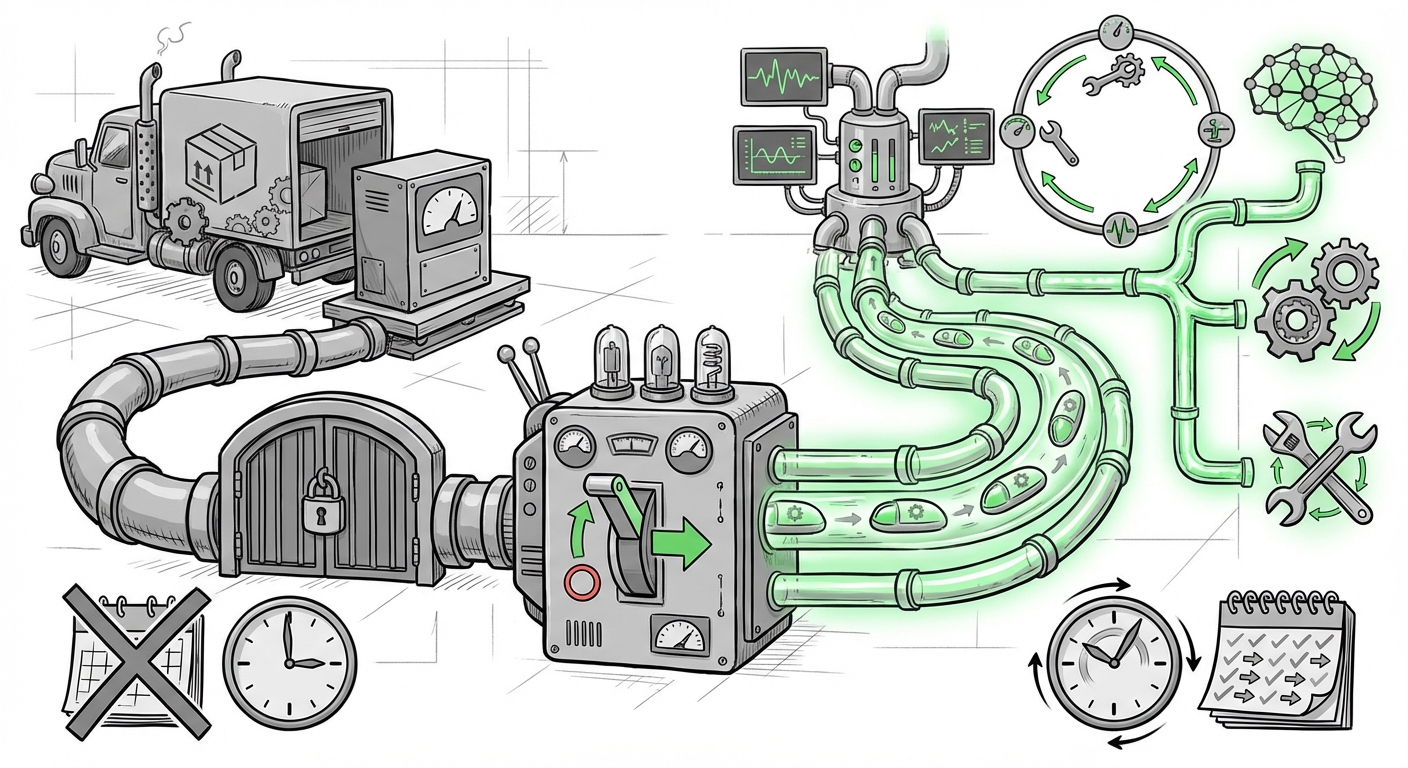
Every one of those depends on the same thing: the gap between the moment you act and the moment the machine responds has to be small enough to feel invisible. A headphone built around that idea is not just a listening device. It is a delivery pipe for AI.
Why Latency Is the Hidden Metric of the AI Era
Think about what a delay does to a conversation. If a person took two full seconds to answer every question, you would stop talking to them. Not because their answers were bad, because the rhythm was broken. Our brains are wired for conversational timing, and that timing is measured in milliseconds, not seconds.
This is the trap that early voice AI fell into. The AI could understand you. It could give a great answer. But if it took three seconds to start speaking, it felt like a toy. Users stopped trusting it. They went back to typing.
Latency is trust. That is the simplest way to say it. When a system responds instantly, we treat it as an extension of ourselves. When it lags, we treat it as a tool we have to manage. Every AI product team is now learning this lesson the hard way.
There are three reasons latency has become the battleground:
- Voice is the new interface. Keyboards are slow and screens demand your eyes. Talking is natural and hands-free. But voice only works when the round trip is instant.
- AI is moving onto the device. Small, efficient models now run directly on phones, laptops, and wearables instead of being sent to a server. No network trip means far less delay, and stronger privacy too.
- Real-time beats batch. Older AI worked in batches: you asked, you waited, you got a result. The new wave works live, alongside you, adjusting as you go.
The OneOdio Studio Max 2's emphasis on ultra-low latency is not a coincidence. It is a hardware vendor reading the room. The people buying tech today are increasingly buying it to run AI beside them, not just to play audio.
From Cloud to Ear: The Real-Time AI Stack
Picture the path a single spoken word takes in a modern AI headset setup.
Your voice hits a microphone. It gets cleaned up, background noise stripped out, your voice isolated. It gets turned into text or into a mathematical fingerprint of meaning. An AI model figures out what you meant, generates a response, and turns it back into audio. That audio travels to your ear.
Every one of those steps costs time. Add them all up, and you get the number that decides whether the experience feels magical or maddening.
The old fix was to throw computing power at the problem. Send everything to a huge data center and let a massive model do the work. The trouble is the trip itself. Data crossing the internet takes time, and no amount of processing power removes the speed-of-light delay of a round trip across a continent.
The new fix is to shrink the model and move it closer. On-device AI handles the parts that need to be instant. The cloud handles the parts that need to be smart. Splitting the work this way, sometimes called a hybrid or edge-first approach, is quickly becoming the standard design for anything that has to feel live.
This is where hardware like the OneOdio Studio Max 2 fits in. The device at the edge of the network is no longer a passive speaker. It is the last mile of an AI system. If that last mile is slow, everything upstream is wasted.
What This Means for Business
If you run a company, the practical takeaway is blunt. Speed of response is becoming a feature you can sell, and a failure you can be punished for.
Consider customer service. A chatbot that answers in eight seconds feels broken even when the answer is right. A voice agent that responds in under a second feels like a competent employee. Same technology, completely different customer reaction. The model quality matters, but perceived quality is now driven by response time.
Consider field work. Technicians wearing headsets could get hands-free, instant guidance while their hands are busy. Doctors could get real-time transcription and note-taking. Warehouse staff could be guided by voice. In every case, the value collapses if the system lags behind the task.
Consider global teams. Real-time translation that runs a half-second behind turns a meeting into a nightmare of overlapping speech. Translation that runs instantly turns a language barrier into a minor inconvenience. That is a huge unlock for international hiring and sales.
And consider product design. Any team building an AI feature should be measuring latency as carefully as it measures accuracy. Accuracy without speed is a demo. Accuracy with speed is a product.
Three questions every business should ask
- Where does our AI currently pause, and how long is that pause?
- Which parts of the job truly need to be instant, and which can wait?
- Are we building for a screen, a voice, or an ear, and have we designed the hardware and software for that choice?
Society, Work, and the Wearable Shift
The bigger picture is that AI is slowly moving off our desks and onto our bodies. Headphones, earbuds, glasses, watches, pins. Each of these puts a model next to your senses, ready to help without you pulling out a phone.
That shift is genuinely exciting and genuinely worth watching carefully. When AI sits in your ear, it hears what you hear. That raises real questions about privacy, consent, and recording laws. The same low-latency pipeline that translates a conversation for you could, in the wrong hands, be capturing it. Companies building these devices, and the people buying them, will need clear rules about what is being heard, stored, and shared.
There is also a work question. When instant AI assistance is always an ear away, what does expertise mean? Some tasks get easier for everyone, which is good. But there is a difference between a tool that helps a professional think faster and a tool that quietly replaces the thinking. The latency race will push these devices to be more present, more always-on, and more helpful. Society's job is to decide where the line sits.
Actionable Insights: What To Do Now
- Start measuring latency today. Time your own AI tools from question to answer. Anything above a few seconds is a red flag for interactive use.
- Design for the ear, not just the eye. Voice-first experiences need different thinking: shorter answers, natural pauses, a clear way to interrupt.
- Push simple tasks to the device. Instant, private, offline-friendly AI is often better than a smarter cloud model that keeps the user waiting.
- Treat hardware as part of your AI strategy. The mic, the speaker, and the wireless link are now part of the product experience, not accessories to it.
- Be transparent about what gets heard. Trust is the real currency for any always-listening device.
What Comes Next
Expect latency to become a marketing number, just like battery life and screen resolution before it. Expect more devices to advertise real-time AI as their main selling point. Expect the split between on-device and cloud AI to be one of the biggest engineering debates of the next few years.
And expect the winners to be the ones who understand that people do not experience AI as a model. They experience it as a feeling: it kept up with me, or it did not.
Conclusion
The OneOdio Studio Max 2 is a pair of headphones for tech enthusiasts with one clear promise: ultra-low latency. That promise matters far beyond audio. It points at the direction the entire AI industry is heading, away from slow, cloud-bound responses and toward instant, on-device help that lives right next to your senses.
For businesses, the lesson is simple. The smartest AI in the world loses to a faster, good-enough AI that never makes the user wait. Speed is not a nice-to-have anymore. It is the interface.