Substack's Pangram Partnership: Why AI Detection Is the New Trust Battleground Online
When a writing platform makes a deal with an AI-detection company, the obvious question is whether the tool works. The more important question is why the platform felt it had to announce the deal at all.
Substack has partnered with Pangram, a company that builds tools for identifying AI-generated text, in a move dated August 12, 2026. On the surface, this is a product integration story: a publishing platform adds a detection layer, writers get a new signal, readers get a new way to judge what they are reading. But the framing around this partnership is telling. It is, at its core, about sending a message.
That distinction matters. It tells us where the AI economy is heading, and why "is this human?" is becoming one of the most valuable questions on the internet.
Why a Partnership Instead of Just Building It In-House
The first thing to notice is the structure of the deal. Substack did not simply bolt on a generic filter. It chose a specialist partner. That choice carries meaning on several levels.
For one thing, AI detection is hard, fast-moving, and expensive to maintain. Detectors are locked in a permanent race with the models they are trying to catch. Every time a language model gets better at sounding natural, detection systems have to be retrained. A publishing company whose core skill is hosting writers and handling subscriptions has little reason to build that capability from scratch.
Partnering also shifts the blame. If a detection tool flags a human writer's essay as machine-generated, that is a problem, and it is a problem the platform would rather attribute to a specialized vendor than own entirely. In a category where false positives can destroy a person's reputation, distance has value.
Most importantly, though, the partnership is a public commitment. Announcing it is the point. Substack is telling writers: we see the concern, and we are doing something about it. It is telling readers: this platform takes authenticity seriously. And it is telling the wider industry: we think the future of publishing involves proving that humans are still in the room.
The Real Product Is a Signal, Not a Verdict
It is tempting to think of AI detection as a yes-or-no test. In practice, it rarely works that way, and any honest partnership in this space has to acknowledge that.
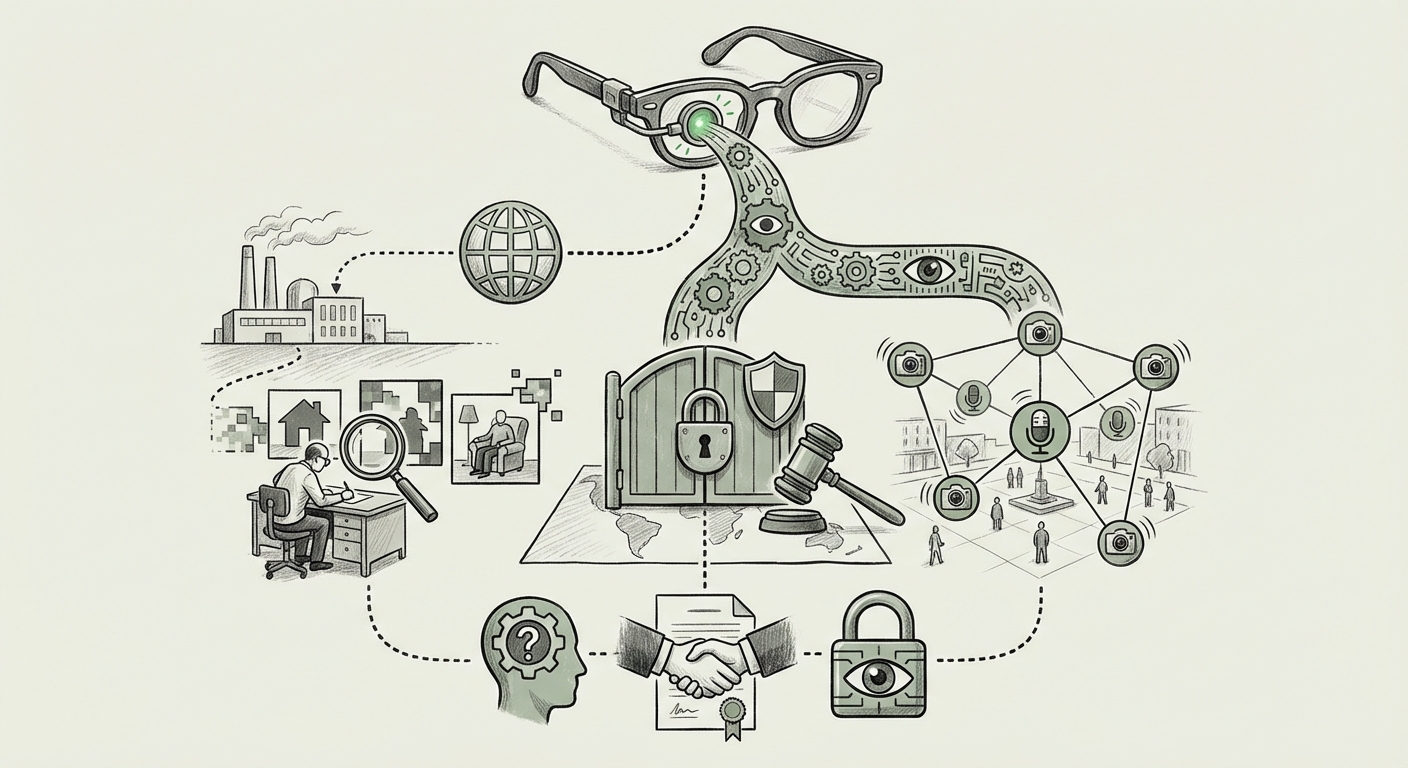
Detection tools look for statistical fingerprints. Language models tend to produce text with certain patterns, predictable word choices, smooth transitions, low variance in sentence rhythm, a kind of pleasant evenness that human writing rarely maintains for thousands of words. Human writers, by contrast, are messy. They repeat themselves, change their minds mid-paragraph, use odd idioms, and occasionally write a sentence that simply does not scan.
Those differences are real, but they are not proof. A careful human editor can produce very smooth text. A skilled AI user can prompt a model into rough, idiosyncratic prose. And writers working in a second language often produce writing that automation mistakes for machine output. The tool produces a probability, not a fact.
That is why the smarter framing is "signal" rather than "verdict." A detection score is one more piece of context a reader or editor can weigh, alongside voice, sourcing, reputation, and the writer's history. Treated as a single decisive number, it will cause harm. Treated as a clue, it can be genuinely useful.
Why This Is a Bigger Deal Than One Platform
Substack's move is best understood as part of a broader shift in how the internet handles authenticity. For roughly three decades, online content was assumed to be human by default. Bots and spam existed, but they were the exception, a nuisance layer on top of a mostly human web.
That assumption is gone. Text, images, audio, and video can now be produced at a scale and quality that make the old defaults useless. The result is a new and growing cost: the cost of verification.
Every platform now faces the same set of questions. Should we label AI content? Should we detect it? Should we let it in at all? Should we require proof of human authorship? Each answer carries trade-offs, and none of them is free.
Substack's answer, partner with a detector, and say so loudly, is one model. Others are pursuing provenance instead: cryptographic signatures that travel with a file and record where it came from. Both approaches are attempts to rebuild something the open internet quietly lost, which is the ability to know who made a thing.
Detection vs. Provenance: Two Different Bets
Detection works backward. It looks at a finished piece of content and asks what probably produced it. This is powerful because it can be applied to anything, including content created before the system existed. But it is inherently probabilistic and always one step behind.
Provenance works forward. It attaches a verifiable record to content at the moment of creation, so the question of origin is answered by the record rather than by inference. This is more reliable, but only for content that participates in the system. Anything created outside it is a blank.
The likely future is a mix of both. Detection catches what provenance misses. Provenance gives detection something firmer to stand on. Right now, the industry is experimenting with both at once, and no one has settled on a winner.
What This Means for Writers
For independent writers, the immediate practical effects are worth thinking through carefully.
- Your process may become visible. If a platform starts scoring submissions for AI involvement, how you write becomes part of how you are judged, not just what you publish.
- False positives are a real risk. Writers with clean, consistent styles, non-native English speakers, and anyone who uses AI tools for editing or translation are the most exposed.
- Documentation becomes an asset. Drafts, notes, revision history, and early outlines are the equivalent of a paper trail. Keeping them is no longer just good practice, it may be self-defense.
- Transparency is the safer bet. Disclosing how a piece was made, fully human, AI-assisted, or AI-generated, is likely to age better than being caught in an ambiguity.
The uncomfortable truth is that the burden of proof is shifting toward humans. That is a strange reversal. For years, the question was whether a machine could pass as a person. Now the question is whether a person can prove they are not a machine.
What This Means for Businesses
Companies face a version of the same problem, only with more at stake. Marketing content, customer communications, internal reports, and support documentation are increasingly AI-assisted. That is not automatically bad, it can be faster and cheaper. But it creates new exposure.
Consider a few practical consequences:
- Search and platform rules may penalize undisclosed AI content. Detection signals can feed into ranking, moderation, and eligibility decisions.
- Brand trust is fragile. Readers forgive AI assistance disclosed up front. They tend to react badly to discovering it later.
- Compliance and audit trails matter. In regulated industries, being able to show who wrote what, and how, is moving from nice-to-have to required.
- Quality control gets harder. Detection tools can flag human work as AI, which means review processes need human judgment in the loop, not just scores.
The smart move for most organizations is to stop treating AI detection as a tool and start treating it as a governance question. Who is allowed to use AI in our content? Do we disclose it? How do we handle a false accusation? These are policy decisions, and they need owners.
The Arms Race Nobody Wins Outright
It is worth being clear-eyed about the limits here. Detection and generation are locked in a feedback loop. Every improvement in detection creates pressure to make generation harder to detect, and vice versa. Neither side achieves a permanent victory.
That does not make detection pointless. A lock does not stop every thief, but it still changes behavior. The value of a detection partnership is partly mechanical and partly psychological: it raises the cost of passing off machine text as human, and it makes that decision a conscious one rather than an invisible default.
Which brings us back to the message. The most durable effect of a partnership like this is not the accuracy of any single scan. It is that platforms are now willing to make authenticity a public commitment. Once one major venue says "we care about human authorship," it becomes harder for competitors to say nothing at all.
Actionable Takeaways
- If you publish, know your platform's rules. Detection policies affect visibility, monetization, and reputation. Read them before you need them.
- Keep a creation trail. Drafts and version history are your best defense against a wrong accusation.
- Disclose AI use deliberately. A short, honest note about how a piece was made is cheaper than a controversy.
- Never treat a detection score as proof. Use it as one input among many, and always keep a human in the decision.
- For businesses, write the policy now. Deciding how AI is used in your content after an incident is far more expensive than deciding in advance.
- Watch for the shift from detection to provenance. Verified origin records may eventually matter more than probability scores.
The Bigger Picture
The internet spent years optimizing for volume. Anyone could publish, and that openness built enormous value. But openness also removed the signals that once told readers who was behind a piece of writing.
AI did not create that problem. It made it impossible to ignore. When text can be generated endlessly and nearly free, the scarce resource stops being content and becomes credibility. Platforms, publishers, and businesses are all now competing to supply it.
A detection partnership is a small technical step with a large symbolic payload. It says that humans are worth identifying, that readers deserve to know what they are reading, and that the platforms hosting the conversation are willing to take a position. Whether the detection itself holds up over time is almost secondary. The message is the product.