Iran Threat Fears and Nuclear Protection for U.S. Cities: What It Means for the Future of AI
When a government starts quietly upgrading the defenses around specific American cities because of worries that Iran could target them, it tells us something important. It tells us that the world's most dangerous risks are no longer only about missiles and warheads. They are about speed, information, and decisions made in seconds. And that is exactly where artificial intelligence is moving in.
The news that certain U.S. locations are receiving extra nuclear protection is a big deal on its own. But the deeper story is about how modern threats are changing, and how AI is becoming the tool that governments, cities, and businesses will lean on to keep people safe. This article breaks down what is happening, why it matters, and what it means for the future of AI in the real world.
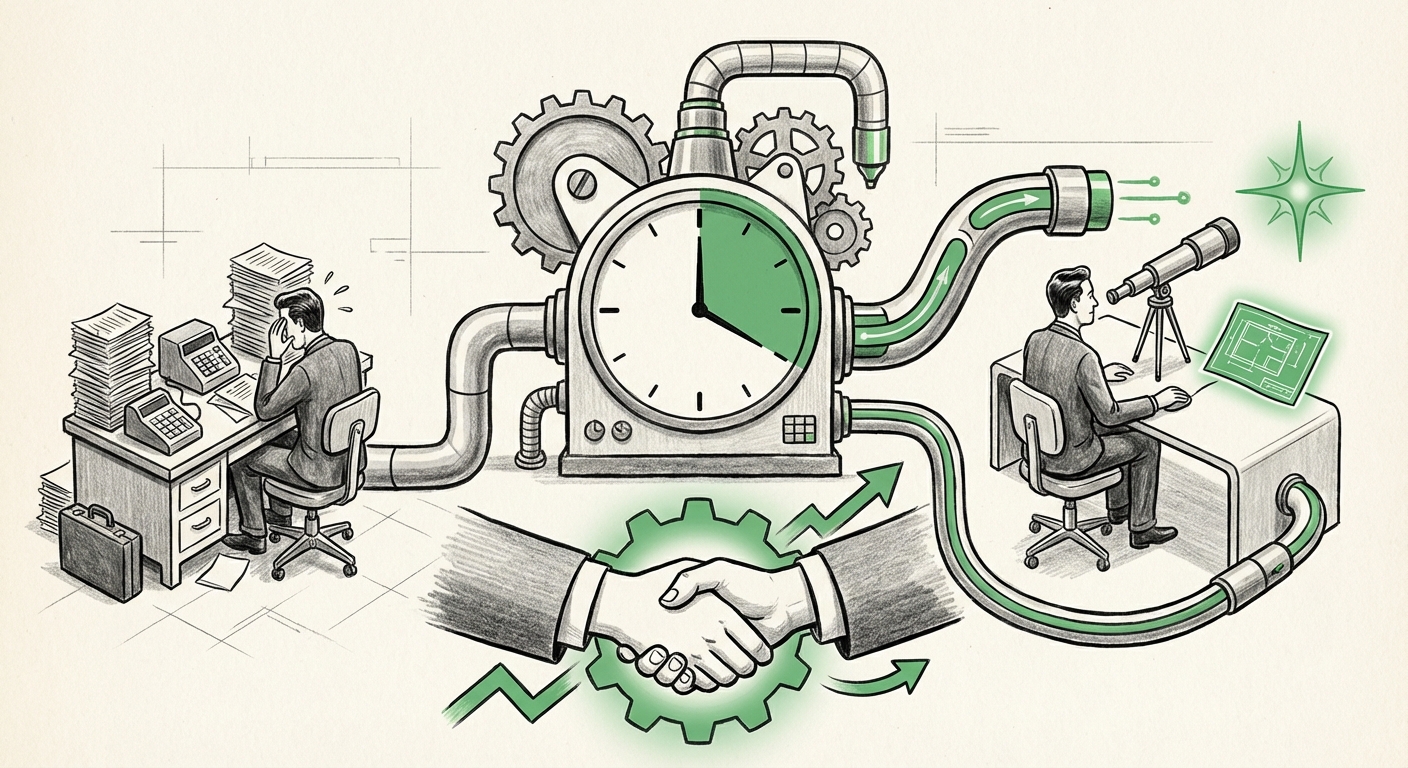
The New Kind of Threat Has a Timing Problem
Traditional nuclear deterrence worked on a simple idea: both sides know that if one attacks, the other will hit back. That balance kept the world stable for decades. But the threats we worry about today are messier. They involve smaller groups, regional powers, cyber tools, drones, and disinformation all mixed together.
When a country like Iran is seen as a possible threat to U.S. cities, the worry is not just about a single missile. It is about a whole range of possibilities, cyberattacks on power grids, drones, hidden devices, or something that makes cities panic even if nothing physically explodes. In all of those cases, the hardest part is time. Decisions have to be made in minutes, sometimes seconds.
Humans are not great at that. We are careful, but we are slow. We gather information, we talk to each other, we double-check. That is normally a strength. In a crisis, it can be a deadly weakness. This gap is where AI is being asked to help, and where the biggest debates about the future of AI are forming.
AI as an Early-Warning System
The most obvious use of AI in this space is detection. Early-warning systems already exist to spot missiles. Adding AI to them changes what they can do.
- Pattern spotting at scale: AI can watch millions of signals at once, radar, satellite images, sensor data, network traffic, and flag anything unusual. A human analyst might miss one small oddity in a sea of noise. A machine will not get tired or bored.
- Faster classification: When something appears on a screen, AI can help figure out quickly whether it is a bird, a weather balloon, a plane, or something far worse. That saves precious minutes.
- Cross-referencing: AI can compare what one sensor sees against what others see, plus intelligence reports and open-source data, to build a fuller picture in real time.
- Anomaly detection on infrastructure: The same idea applies to power plants, water systems, and communications networks. AI can notice a strange pattern of activity that suggests a cyber intrusion before damage is done.
For cities getting extra protection, this matters directly. Better detection means more warning. More warning means more time to act, protect people, and avoid mistakes.
The Speed Problem: When Machines Move Faster Than People
Here is where things get complicated, and where every serious AI expert stops and thinks hard.
If AI can spot a threat in seconds, should it also be allowed to respond in seconds? Most governments and militaries say no, a human should always be in the loop when nuclear weapons are involved. But if the other side's attack arrives in five minutes, a human review process that takes ten minutes is useless.
This is called the "human in the loop" problem. It is one of the most important issues in AI today, and it applies far beyond the military:
- Hospitals: Should an AI be able to order a life-saving drug before a doctor signs off?
- Power grids: Should AI be able to shut down parts of a grid to stop a cascading blackout?
- Finance: Should AI be able to freeze accounts when it detects an attack?
The answer people are landing on is something in between. AI gets to act fast on small, reversible decisions. Humans get pulled in for big, irreversible ones. Designing that handoff well is becoming a core engineering skill, and a core policy question.
AI in Civil Defense and Emergency Response
Extra nuclear protection for certain cities is not only about blocking an attack. It is also about what happens if something goes wrong. This is where AI has some of its clearest, least controversial value.
Getting the right message to the right people
In a real emergency, panic and confusion can cause as much harm as the event itself. AI can help emergency managers send the right instructions to the right neighborhoods in seconds, in multiple languages, and adjust those messages as the situation changes.
Moving people and resources
Evacuation routes, shelter capacity, hospital beds, food and water, all of these are complex logistics problems. AI is already good at these. During a crisis, it can suggest routes that avoid jams, find open shelters, and route supplies where they are needed most.
Supporting first responders
AI tools can give firefighters, police, and medical teams a live map of what is happening, predict where the danger is spreading, and help them coordinate across agencies that normally struggle to talk to each other.
Helping people after the event
Long after the immediate danger passes, communities face health monitoring, rebuilding, and mental health support. AI-driven tools can help track health trends, manage claims and aid, and connect people with services, work that is slow and expensive to do by hand.
The Information Battlefield
One of the most underrated parts of modern conflict is information. An adversary does not always need to hit a city to cause chaos. Spreading fear, fake videos, and false alerts can do enormous damage.
AI makes this both worse and better.
The bad news: AI makes it cheap and easy to create realistic fake images, voices, and videos. It can flood social media with confusing messages during a crisis, exactly when clear information matters most.
The good news: AI is also the best tool we have for fighting back. It can spot coordinated fake campaigns, flag manipulated media, and help newsrooms and governments push accurate information faster. Trust and verification are becoming the real currency of crisis communication.
For any organization that communicates with the public, this is a wake-up call. If you do not have a plan for how you will be trusted during an emergency, you do not have a plan.
What This Means for Businesses
You might think this is only a government story. It is not. The same technologies being deployed for national security will shape how every large organization operates.
- Risk teams will look more like intelligence teams. AI-powered monitoring of supply chains, networks, and geopolitics will become standard for major companies.
- Resilience becomes a budget line. Companies will invest in AI systems that keep operations running when a region is disrupted, whether by cyberattack, natural disaster, or conflict.
- Trust and verification become products. Tools that prove what is real, verified media, authenticated communications, will be in high demand.
- AI governance becomes a competitive advantage. Companies that can show they use AI responsibly, with clear human oversight, will win contracts and customers.
- Talent is shifting. The people who can design safe, fast, human-supervised AI systems will be among the most sought-after professionals of the next decade.
What It Means for Society
The bigger picture is uncomfortable but important. The same AI that helps detect threats can also make mistakes, be fooled, or be misused. A false alarm that triggers a real response is one of the worst-case scenarios in modern technology.
That is why the research focus right now is not just on making AI smarter. It is on making AI reliable, explainable, and careful. Systems need to show their work. They need to know when they are unsure. They need to hand off to humans at the right moment, not the wrong one.
There is also a transparency question. Citizens in cities that receive extra protection will want to know what is being done and why. Governments will have to balance secrecy with public trust. AI can help here too, by explaining decisions, modeling risks, and giving officials better ways to communicate what they know.
Actionable Insights
Whether you run a company, work in policy, or just want to understand where things are going, here is what to do with this.
- Build for speed with guardrails. Design AI systems that act fast on small decisions but escalate big ones to humans. Practice that handoff before you need it.
- Invest in detection. Anomaly detection in your networks, supply chain, and operations is one of the highest-value AI uses today.
- Prepare for the information fight. Have a crisis communication plan that accounts for fake content and AI-generated misinformation.
- Test your assumptions. Run tabletop exercises where AI plays a role. Find out where it helps and where it fails before a real event.
- Document your oversight. Regulators, partners, and customers increasingly want proof that humans are meaningfully involved in high-stakes AI decisions.
- Watch the policy space. Rules on autonomous systems, especially in defense and critical infrastructure, are forming now. Early engagement beats later compliance.
The Bottom Line
Extra nuclear protection for certain U.S. cities, driven by fears about Iran, is a signal about the era we are in. Threats move faster, come in more forms, and blur the line between physical and digital. In that world, AI is not a luxury or a novelty. It is becoming part of the safety equipment.
But the lesson is not "let AI handle it." The lesson is that AI changes the speed of everything, detection, decision, response, and communication. The organizations and governments that thrive will be the ones that use that speed wisely, keep humans in the right places, and earn public trust when it matters most.
The future of AI will not be decided in a lab. It will be decided in the moments when real people need real answers, fast.