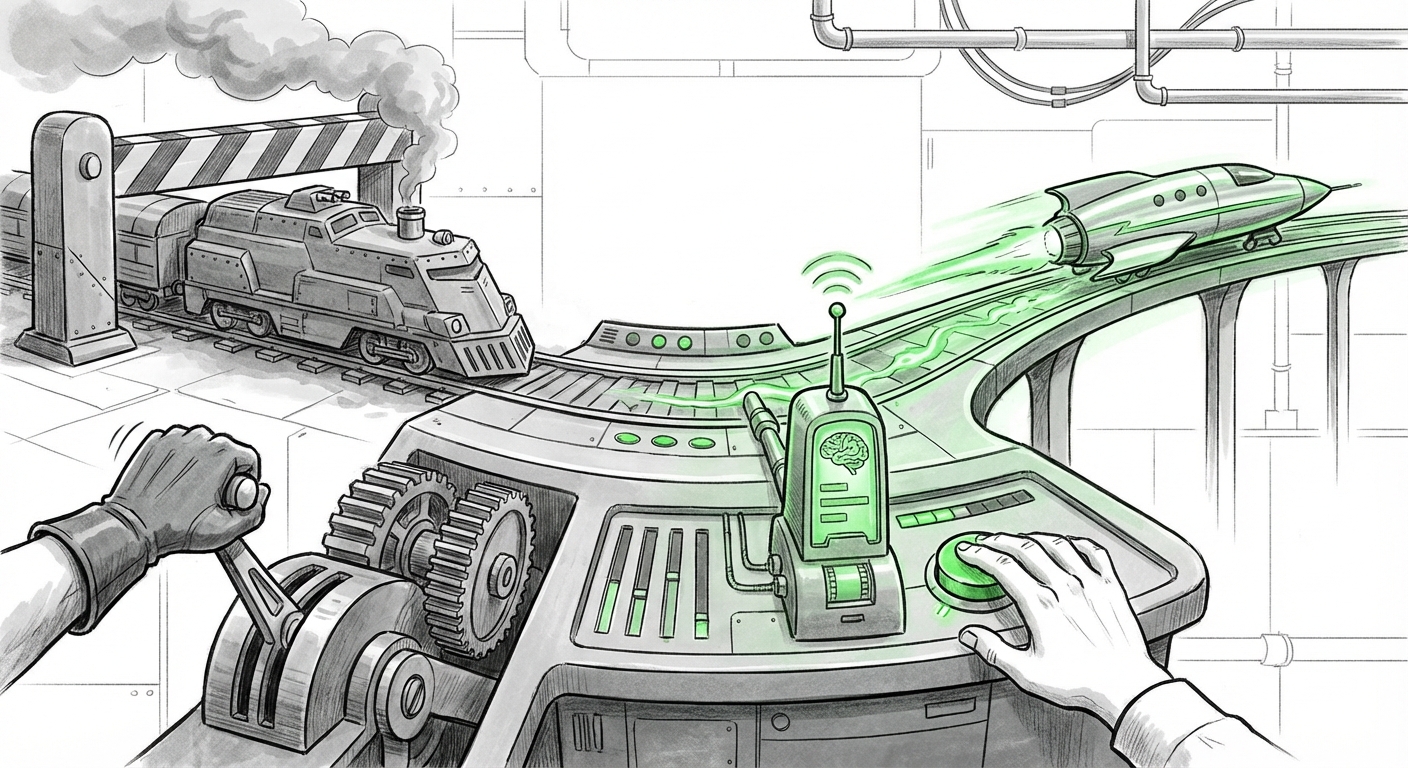
Unlocking Asynchronicity in Continuous Batching: The Quiet Change That Could Make AI Cheaper for Everyone
When people talk about the future of artificial intelligence, they usually talk about bigger models, smarter training data, and flashy new features. Almost nobody talks about the plumbing. But the plumbing is where the money is going, and where the next wave of real-world AI progress will come from.
In mid-2026, a new wave of engineering work is focused on a deceptively technical idea: unlocking asynchronicity in continuous batching. That phrase sounds like it belongs in a computer science lecture hall. In practice, it decides whether an AI chatbot answers you in half a second or three seconds. It decides whether a company pays a fortune to serve one million users or serves them for a fraction of the cost. And it decides whether AI can scale to the billions of daily requests the world is heading toward.
This article breaks down what continuous batching is, why asynchronicity is the missing piece, and what it all means for businesses, builders, and everyday users of AI.
The Part of AI Nobody Sees
Most AI news focuses on training, the long, expensive process of teaching a model to do something. But once a model is trained, the far bigger job begins: serving it. Every time someone types a question into an AI assistant, writes code with an AI helper, or asks a customer service bot for help, they trigger an inference request. That request has to travel to a server, get processed, and come back as a stream of words.
Training a model is a one-time cost. Inference is forever. Every day, millions, soon billions, of these requests pile up. The efficiency of the systems handling them is now one of the biggest cost drivers in the entire AI industry.
This is why the work around continuous batching matters so much. It is not a new model. It is not a new feature you can see. It is the machinery that decides how much useful work gets squeezed out of every expensive AI chip.
Continuous Batching, Explained Simply
Imagine a bus system. If the buses only leave when every seat is full, and each passenger rides to a different stop, the bus sits idle waiting for late passengers. That is the old way of handling AI requests, fixed batching. A group of requests gets bundled together, and the whole group must finish before the system moves on to the next group.
The problem is that AI requests are not the same length. One person asks for a one-line answer. Another asks for a 500-word essay. With fixed batching, everyone in the group is stuck waiting for the slowest request to finish.
Continuous batching fixes this. Think of it like a bus that lets passengers get on and off at every stop, all the time. As soon as one request finishes, a new one slots into its place. The hardware keeps working at full tilt instead of waiting around. For AI serving systems, this has been one of the biggest efficiency wins of the last few years.
But continuous batching still has hidden bottlenecks. And that is where the new push toward asynchronicity comes in.
The Waiting Problem: Why "Continuous" Isn't Always Continuous
Even with continuous batching, there are moments where the system has to stop and wait. It might be waiting for data to move from one place to another. It might be waiting for a piece of memory to be reshuffled. It might be waiting for one internal step to finish before the next can begin.
During those waits, the most expensive hardware on Earth, the chips doing the actual AI math, sits idle. On a factory floor, that would be unthinkable. In AI data centers, it happens constantly, and the cost adds up fast.
The core insight behind unlocking asynchronicity is simple: stop making steps wait for each other when they don't have to. If one part of the pipeline can prepare the next request while another part is still generating text for the current one, you do both at once. The system stops taking turns and starts overlapping.
What "Asynchronicity" Really Means Here
In plain terms, asynchronicity means tasks do not block each other. In a synchronous design, step B waits for step A to finish. In an asynchronous design, step B starts preparing as soon as it has what it needs, even if step A is still running.
Applied to continuous batching, this changes the shape of the whole serving pipeline. Scheduling decisions, memory handling, and the actual generation of words can begin to move independently. The scheduler no longer has to pause the whole system to swap work in and out. New requests can be queued, prepared, and slotted in without freezing the work already in flight.
The result is a system that behaves less like a strict assembly line and more like a busy kitchen during dinner rush, everyone working in parallel, nobody standing around waiting for the person next to them.
Why This Is Harder Than It Sounds
Making things asynchronous is rarely simple. When tasks overlap, they can clash. Two requests might want the same memory at the same time. A scheduler might make a decision based on information that is already out of date. Bugs become harder to spot because the system no longer runs in a neat, predictable order.
This is why the work is significant. It is not just about adding a feature, it is about redesigning how the pieces of an inference server talk to each other. Getting it right takes careful engineering, but the payoff is enormous.
Why This Matters for Business
For any company running AI at scale, serving costs are a constant headache. Every millisecond of wasted compute turns into real money on the monthly cloud bill. Improving how requests are batched and scheduled directly attacks that cost.
The implications are practical:
- Lower cost per request. When the hardware stays busy, each answer costs less to produce. That savings can be passed on to customers, or spent on serving more of them.
- Faster responses. Smarter scheduling means less time waiting in line. Users notice. A chatbot that feels snappy gets used. One that lags gets abandoned.
- Better handling of spikes. Real traffic is bursty. A system that adapts smoothly handles sudden rushes without falling over or slowing to a crawl.
- More predictable service. Smoothing out waits helps the slowest requests, which are usually the ones customers complain about most.
- Room to grow. Efficient serving means the same hardware can support far more users, critical as AI features become standard in every app.
Put together, these are not small wins. They are the difference between an AI product that works economically and one that bleeds money with every new user.
What This Means for the Future of AI
The AI industry is entering a new phase. The early era was about proving that models could be built. The current era is about making them affordable and reliable enough to run everywhere, all the time.
Asynchronicity in continuous batching sits at the heart of that shift. It points toward a future where:
- AI runs on smaller, cheaper hardware. If serving becomes more efficient, you do not need as many top-end chips to handle the same load. That opens the door to running capable AI in more places, including on-premises and at the edge.
- Real-time AI becomes normal. Voice agents, live translation, and instant coding assistants all depend on fast, steady responses. Better serving makes these experiences feel natural instead of laggy.
- Costs fall for everyone. When the biggest expense in AI, inference, gets cheaper, more businesses can afford to build with it. That is how a technology moves from novelty to infrastructure.
- Energy use drops. Idle hardware still draws power. Keeping chips busy for useful work rather than waiting is one of the most direct ways to cut the energy footprint of AI.
- The gap between research and product shrinks. Clever serving tricks mean new model capabilities can reach users faster, without waiting for an expensive infrastructure rebuild.
In other words, this is not a niche optimization. It is part of the foundation that determines how quickly AI reaches the mainstream.
Actionable Insights: What Teams Should Do Now
If you run AI systems or plan to, here is where to focus:
- Measure idle time. Before optimizing anything, find out how much of your hardware capacity is sitting unused during serving. That number tells you how much room there is to improve.
- Track tail latency, not just averages. Average response time hides the pain. Look at the slowest requests, because those are the ones users remember.
- Treat serving as a first-class engineering problem. Many teams spend heavily on the model and almost nothing on how it is served. That balance is changing, and for good reason.
- Plan for bursty traffic. Design systems that stay efficient when demand jumps, not just when it is steady.
- Watch the infrastructure layer closely. The biggest leaps in AI economics are coming from serving systems, not just bigger models.
What to Watch Next
Keep an eye on how scheduling and memory management evolve in inference systems. The move toward asynchronous designs is a signal that the industry is treating serving efficiency as a competitive battleground, not an afterthought. Expect more work on overlapping tasks, smarter queues, and systems that adapt on the fly instead of following rigid rules.
There is also a risk to watch. As systems become more asynchronous, they become harder to debug, harder to predict, and harder to test. Teams that adopt these techniques will need strong monitoring and clear visibility into what the system is doing at any moment. Efficiency gains that come with hidden fragility are not really gains at all.
The Bottom Line
The most important AI breakthroughs of the coming years may not be the ones you can see. They will be in the invisible machinery that decides how fast, how cheaply, and how reliably AI can answer the world's questions. Unlocking asynchronicity in continuous batching is exactly that kind of breakthrough, unglamorous, deeply technical, and enormously consequential.
For businesses, it means AI features that were once too expensive to justify become routine. For developers, it means more headroom to build ambitious things. For everyone else, it means the AI tools we already use get faster, steadier, and cheaper to run.
The race to build smarter models gets the headlines. The race to run them efficiently is what will decide who wins.