Why Data Centers Are Such a Big Part of Meta's AI Approach, And What It Means for the Future of AI
When most people picture artificial intelligence, they picture a chatbot, a smart feed, or a robot. They rarely picture a building. But the real story of AI in 2026 is a story about buildings, huge ones, full of computers, drawing enormous amounts of electricity. That is the story behind Meta's AI approach, which leans heavily on data centers as its foundation.
This matters far beyond one company. Meta's choice to build its AI strategy around physical computing infrastructure tells us something important about where the technology is going, who will win, and what businesses of every size need to prepare for.
AI Is a Compute Problem Before It Is a Brain Problem
There is a simple truth underneath all the excitement about AI: smart software needs a lot of computing power. Building an AI model means running massive numbers of calculations over huge amounts of data. Running that model for real users, every single time someone types a question or scrolls a feed, means doing it all over again, over and over, millions of times a day.
None of that happens in the cloud as if by magic. The "cloud" is just other people's computers, sitting in very real buildings, plugged into very real power lines. So when Meta makes data centers a central part of its AI approach, it is not adding a side project. It is building the engine that everything else depends on.
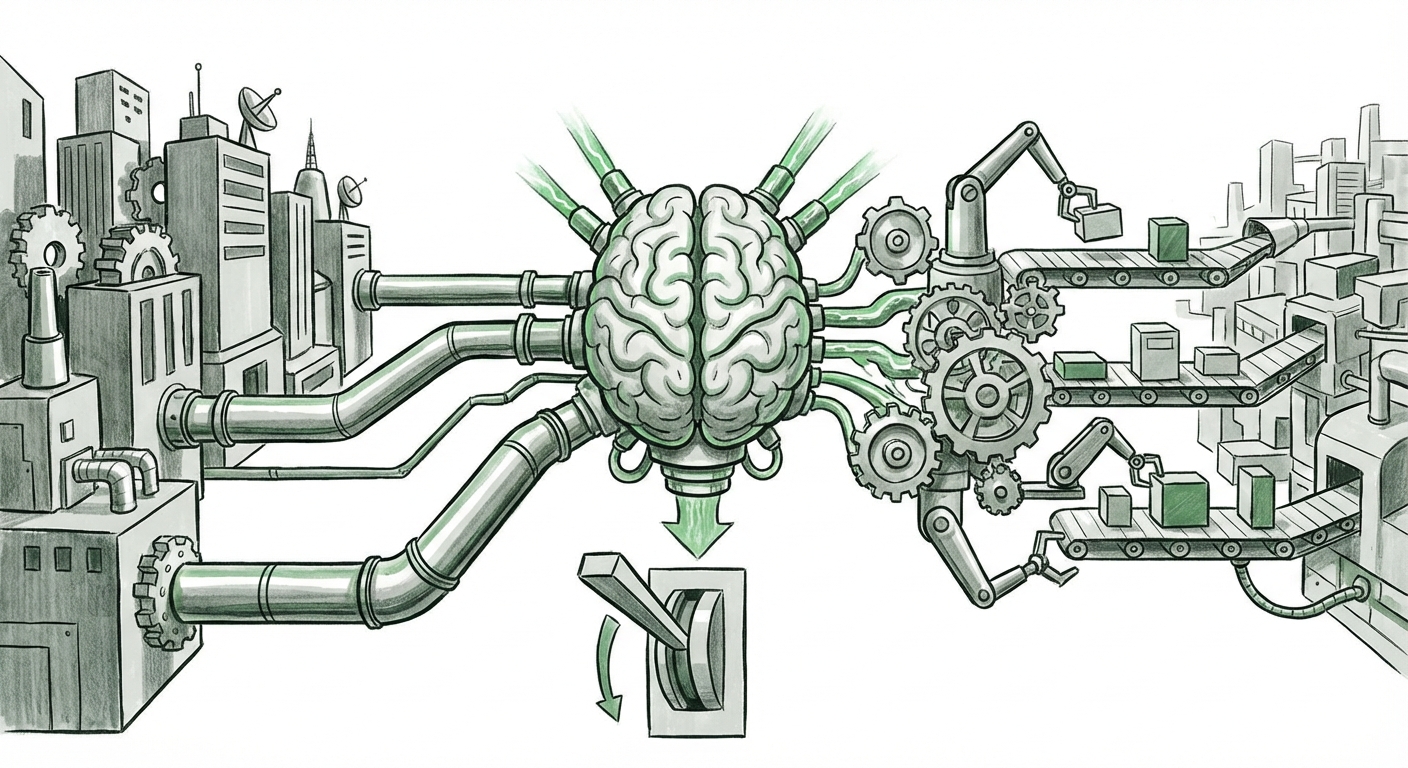
The logic is straightforward: if AI is the product, compute is the factory. And whoever owns the factory controls how much product they can make, and how cheaply.
Data Centers Have Changed Jobs
For decades, a data center was basically a giant filing cabinet. It stored websites, emails, photos, and databases. Its main job was to remember things and hand them back quickly.
AI data centers do something different. They are closer to factories than libraries. They take in three raw materials, electricity, specialized chips, and cooling, and they produce a finished good: predictions. A recommendation. A translation. An answer written in plain language.
That shift changes everything about how these buildings are planned. Storage hardly cares where it sits. Factories care a great deal. They need reliable power, fast connections, cool climates or strong cooling systems, available land, and a workforce that can keep the machines running.
This is why the AI race has started to look less like a software race and more like an industrial one. Software can be copied. A power contract and a finished building cannot.
Why Meta Would Rather Build Than Rent
Any company that needs computing power has a basic choice: rent it from someone else, or build it yourself. Renting is faster and cheaper at small scale. Building is slower and far more expensive up front, but it comes with control.
For a company whose AI work runs at enormous scale, that control is worth a great deal. Four reasons stand out.
- Cost at scale. When you use computing power constantly, owning the hardware can cost less per unit of work than renting it forever. The savings grow with volume.
- Supply and speed. Renting means waiting in line behind other customers. Owning means you decide what gets built next and when it turns on.
- Tight fit with the product. Computing that sits close to a company's own data and services can move information faster and more efficiently. For a business built on feeds and recommendations, that efficiency shows up in the user experience.
- Strategic independence. If your AI depends on someone else's capacity, your roadmap depends on someone else's roadmap. That is a risky place to be.
Put simply: renting compute is like renting a kitchen. It works until the restaurant gets busy, and then you are cooking on someone else's schedule.
The Cost Curve Nobody Can Outrun
There is a detail in AI economics that many business leaders still miss. Training a model is expensive, but it happens once. Running a model, sometimes called inference, happens forever, every time a user does something.
That flips the usual way of thinking. A company might spend heavily to build a powerful model and then discover that the real, ongoing bill is the millions of small calls made to it every day. Each one burns electricity and chip time. Multiply by a global user base, and the data center becomes a permanent, always-on cost center.
This is one reason infrastructure sits at the center of Meta's AI approach. If you cannot make each individual AI answer cheaper over time, your costs grow in lockstep with your success. That is a strange kind of problem, and the only real fix is better, more efficient, better-located computing.
Power, Water, and Land: The New Bottlenecks
The limits on AI are no longer only about clever algorithms. They are physical.
AI chips run hot and they run constantly. Keeping them cool takes energy and often water. Connecting a large site to the electric grid can take years, and in some regions the grid is already tight. Land near cheap, reliable power is limited, and communities have started asking hard questions about what these facilities bring and what they take.
The result is that AI companies are quietly becoming energy companies. They sign power deals. They look at where the wind blows and the sun shines. They invest in cooling techniques and in chip designs that do more work per watt.
This is the part of the AI story that will shape the next decade. Not just how smart the models get, but whether there is enough electricity, cooling, and grid capacity to run them.
What This Means for the Future of AI
1. Compute Becomes the Real Moat
Building a good model is now something many skilled teams can do. Building the infrastructure to serve it to hundreds of millions of people, cheaply and reliably, is much harder. That means the advantage shifts from who has the best idea to who can actually deliver it at scale, day after day.
2. A Two-Tier AI World
If frontier AI requires enormous physical plants, then only a small number of organizations can compete at the very top. Everyone else will work in the second tier, building on top of rented capacity, focusing on specific problems in specific industries, or running smaller models that need less power. That is not a weakness. It is where most of the practical value will be created.
3. Efficiency Becomes the Hottest Area of Research
When energy and chips are the constraint, the most valuable breakthroughs are the ones that make AI do more with less. Smaller models that perform well. Smarter ways to route requests. Better cooling. Chips designed for one job instead of many. Expect the next wave of excitement to be about efficiency as much as raw capability.
4. The Split Between Cloud and Device
If running AI in a data center is expensive, some of it will move to the device in your pocket. Simple tasks can run locally, for free and instantly, while heavy tasks go to the big buildings. The future is likely a mix of both, with software deciding which is which.
5. AI Becomes Geopolitical
Who controls chips, power, and land controls AI capacity. That turns ordinary infrastructure decisions into national and international ones, and it makes supply chains a topic for boardrooms, not just engineers.
Practical Implications for Businesses
You do not need to build a data center to be affected by this. Here is what it means in practice.
- Do not assume AI gets cheaper forever. Prices reflect real costs, power, chips, cooling. When demand outruns supply, prices can rise or capacity can tighten.
- Know your own workload. Are you training models, or mostly asking them questions? The second is usually where the ongoing bill lives.
- Treat your AI vendor like a supply chain. Ask about capacity, reliability, and what happens during peak demand. A provider that runs out of room is a provider that slows you down.
- Watch the physical footprint. Companies with sustainability promises now have to include AI computing in their numbers. Energy use and water use are becoming reporting items, not footnotes.
- Plan for localization. Rules about where data lives and where computing happens are tightening. Flexibility in where your AI runs is becoming a real advantage.
Actionable Insights You Can Start On Now
- Measure cost per task, not cost per month. Track what each AI action actually costs so you can spot waste early.
- Match model size to the job. Using the biggest model for a simple task is like hiring a jet to deliver a letter.
- Cache and batch where you can. Reusing answers and grouping requests cuts computing demand dramatically.
- Build infrastructure literacy on your team. Someone in the room should understand compute costs, latency, and capacity, not just prompts.
- Design for choice. If your AI setup can switch between providers, models, or even on-device processing, you are insulated from capacity shocks.
- Expect the grid to matter. Follow energy and data center news in the regions where your providers operate. It is now a leading indicator for AI performance and pricing.
The Bigger Picture
Meta's focus on data centers is not a quirk. It is a signal. It says that the AI industry has entered its industrial phase, where the winners are decided as much by concrete, copper, and kilowatts as by code.
For the future of AI, that means progress will be steadier and more expensive than the early hype suggested. It also means the technology will spread unevenly, clustering where power and land are available and affordable. For businesses, it means AI strategy and infrastructure strategy are becoming the same conversation.
The good news is that this phase rewards planning. Companies that understand how AI is actually delivered, and what it truly costs, will build smarter products, avoid nasty surprises, and stay standing when the easy capacity runs out. The ones that treat AI as free magic will learn the lesson the hard way.