Debunking the Biggest Data Center Myths: What It Really Means for the Future of AI
Ask most people what a data center looks like, and they will picture a boring room full of humming computer racks. Ask them what one does, and the answer gets even thinner. That gap between image and reality is exactly where the biggest myths about data centers have taken root, and those myths are now shaping how businesses, communities, and governments think about artificial intelligence.
This matters more than ever. AI does not live in the cloud in any magical sense. Every prompt, every generated image, every automated decision runs on real machines, in real buildings, drawing real power and real water, sitting on real land. As AI moves from a curiosity to the engine of modern business, the data center has quietly become one of the most important pieces of infrastructure on Earth.
So let's pull apart the myths one by one, and look at what the truth means for where AI is heading.
Myth 1: A Data Center Is Just a Big Room Full of Servers
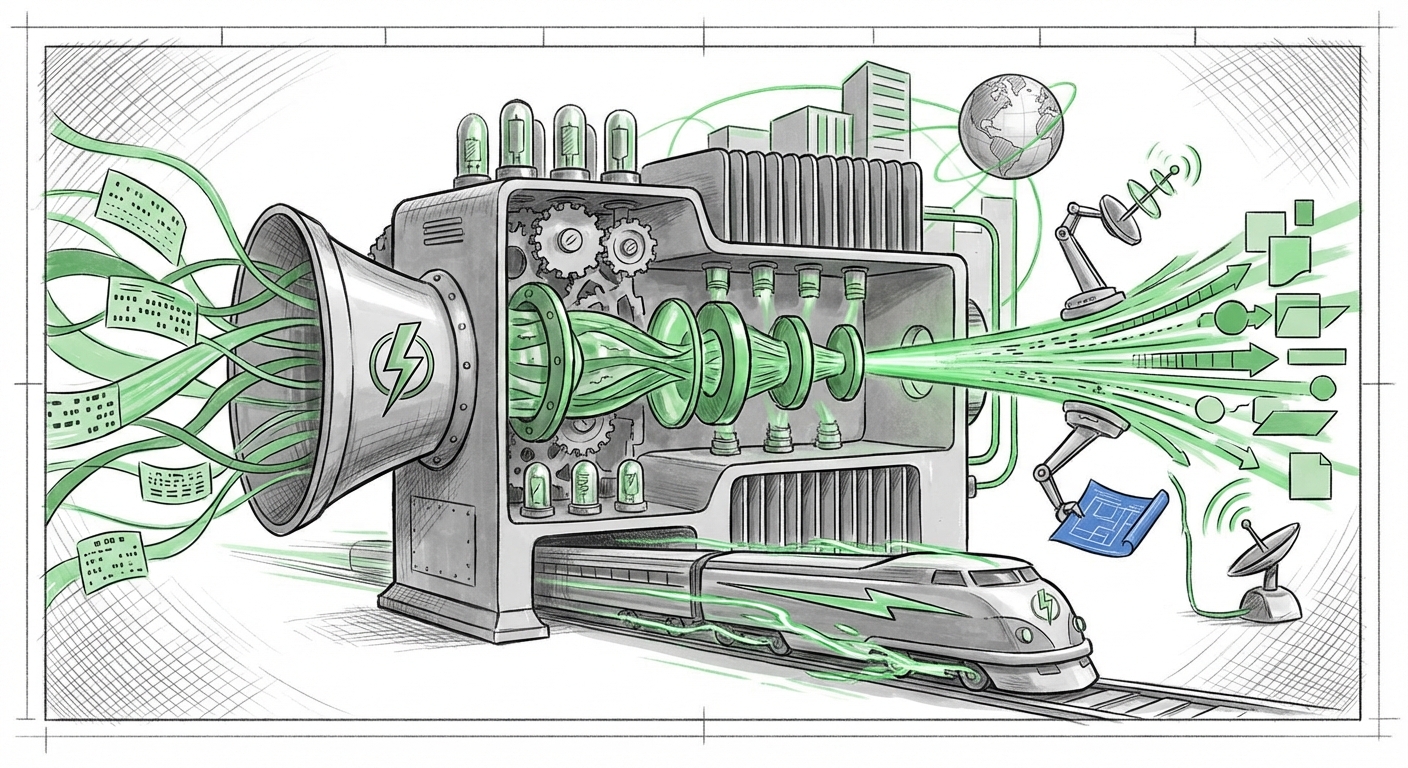
This is the myth everything else grows from. People imagine a warehouse stacked with computers, like an oversized office closet. The reality is closer to a power plant that happens to compute.
Modern AI data centers are industrial facilities built around three things: electricity, cooling, and connection. The computing hardware is only one part of the picture. The bigger engineering challenge is getting massive amounts of power in, keeping heat out, and moving enormous volumes of data in and out without delays. Transformers, substations, backup generation, cooling loops, water systems, and fiber routes are not accessories to the building, they are the building.
The reason this myth matters: it makes the whole industry look simple. If data centers were just rooms full of servers, anyone could build one anywhere, instantly, at low cost. They cannot. And every AI roadmap that assumes unlimited, instant compute is built on a fantasy.
Myth 2: "The Cloud" Has No Physical Footprint
Cloud computing feels weightless because the interface is weightless. You click a button in a browser and a model answers. But that button press travels through cables to a physical place, often several physical places, where processors spin up, memory fills, and heat is produced.
The cloud is not a place. It is a billing and orchestration layer wrapped around physical infrastructure. When companies say they are "moving to the cloud," they are really renting capacity inside someone else's building, in someone else's power market, under someone else's local regulations.
Once you see the cloud as physical, a lot of AI strategy changes. Questions about latency, data residency, regional power availability, and supplier concentration stop being abstract governance topics and become engineering constraints.
Myth 3: Efficiency Gains Will Solve the Growth Problem
There is a comforting story that goes like this: chips get more efficient every year, cooling gets smarter, so the total footprint of computing will eventually level off. Efficiency improves, so the problem fades.
This is the oldest misconception in infrastructure. When something becomes cheaper and more efficient to use, people do not use the same amount of it, they use far more. Cheaper compute invites bigger models, more users, more use cases, and entirely new categories of work that nobody was doing before.
Efficiency gains are real and important, but they tend to expand demand rather than cap it. That is why data center growth keeps outpacing the predictions that were supposed to slow it down.
Myth 4: Location Is Just a Real Estate Decision
Placing a data center used to be mostly about land prices, tax incentives, and proximity to fiber. Those still matter. But AI-scale facilities have added harder constraints on top.
- Power availability: A site with no spare grid capacity can sit dark no matter how cheap the land is.
- Water and cooling: Cooling choices depend on local climate, water supply, and community tolerance.
- Latency: Some AI workloads must sit close to users or to data sources to be useful at all.
- People: These facilities need skilled technicians, engineers, and operators, a real constraint in many regions.
- Permits and politics: Local approval is now a genuine bottleneck, and community trust is part of the build cost.
The takeaway for AI planners: compute capacity is becoming a regional resource, not a global one. Where your models run will increasingly determine what your models can do.
Myth 5: Data Centers Only Matter to Tech Companies
For years, data centers were a technology-industry concern. That era is over. Banks run fraud models there. Hospitals run imaging analysis. Retailers run forecasting and recommendation. Manufacturers run quality inspection. Logistics firms run route optimization. Governments run services on them.
When capacity gets tight, or when power costs or hardware lead times shift, the effects ripple far outside the tech sector. AI features get delayed, prices change, and roadmaps slip. Businesses that thought of compute as somebody else's problem are discovering it is a line item, a risk, and sometimes a competitive advantage.
Myth 6: You Can Build First and Deal With Consequences Later
The final myth is that data center expansion is purely a technical exercise. In practice, it is now a social and political one. Communities ask fair questions: What happens to our electricity rates? What about water? What about noise? What jobs does this create, and who gets them?
Projects that ignore those questions tend to slow down, get redesigned, or get blocked. Projects that engage early and honestly tend to move. For AI companies, community relations has become an engineering dependency.
What This Means for the Future of AI
Strip away the myths and a clearer picture of AI's future appears. The next phase of AI will not be defined only by model breakthroughs. It will be defined by physical limits, power, land, water, hardware supply, and skilled people.
1. Compute Becomes a Strategic Asset
When capacity is constrained, access to compute becomes a form of leverage. Companies that can secure long-term power agreements, land, and hardware will have options that others simply do not. Expect compute to be treated less like a utility bill and more like a supply chain to be managed, hedged, and secured.
2. Smaller and Smarter Models Rise
Constraint drives creativity. When running a giant model everywhere is expensive or impossible, the pressure shifts toward efficient models, task-specific systems, and on-device processing. Not every problem needs the biggest model available. A lot of them need the right model, running close to the data, at a cost that makes sense.
3. The Edge Gets More Important
If central data centers face power and permitting limits, some AI work moves outward, to phones, laptops, cameras, vehicles, factory floors, and store back rooms. This is not a rejection of the cloud. It is a balancing act between central scale and local responsiveness.
4. Energy Becomes the Core AI Story
Energy is no longer a background detail in the AI conversation. It is becoming the main constraint that shapes what gets built, where it gets built, and how quickly. Deals for power, cooling innovation, and on-site generation are becoming as strategically important as chip design.
5. Transparency Beats Marketing
As AI infrastructure grows, scrutiny grows with it. Companies that publish clear information about energy use, water use, and local impact will find it easier to build. Those that rely on vague sustainability language will keep running into resistance.
Practical Implications for Businesses
You do not need to own a data center to be affected by these shifts. Here is what they mean in practice:
- Model your AI costs as variable, not fixed. Compute pricing, power costs, and hardware availability can move. Build that into your planning.
- Know where your AI actually runs. Map which regions host your models and data. Understand the power, regulatory, and latency picture in each.
- Design for flexibility. Avoid locking yourself to one provider, one region, or one chip type if your workload allows alternatives.
- Right-size your models. Use the smallest system that reliably does the job. It saves money and reduces your exposure to capacity crunches.
- Ask vendors harder questions. Where is this hosted? What is the redundancy? What happens in a regional power event?
- Treat resilience as a feature. If your business depends on AI, you depend on infrastructure. Plan for outages the same way you plan for any other operational risk.
Practical Implications for Society
The bigger picture is a negotiation between three things: the benefits of AI, the local costs of the infrastructure that powers it, and who gets to decide.
Communities are right to ask for real answers, not slogans. Regulators are right to want consistent rules rather than a patchwork. And the AI industry is right that without more capacity, the promised benefits, better healthcare tools, faster research, more productive businesses, will arrive slower and be shared less evenly.
The countries and regions that figure out this balance first will have a durable advantage. Not because they have the fanciest models, but because they can actually run them at scale, reliably, at a cost that works.
Actionable Insights: What to Do Next
- Audit your AI dependency. List every product, process, or decision that relies on AI, and trace it back to the infrastructure behind it.
- Build a compute contingency plan. Identify what you would do if capacity, cost, or availability changed suddenly.
- Invest in efficiency skills. Prompt design, model selection, caching, and workload tuning reduce compute demand, and cost.
- Talk to your infrastructure partners early. Capacity planning works better as a conversation than as an emergency.
- Follow energy, not just models. The biggest AI headlines in the coming years may come from power and cooling, not from benchmarks.
- Stay skeptical of simple narratives. Both "AI is free and weightless" and "AI will break the grid" are oversimplifications. The truth is messier and more manageable.
Conclusion
Data centers have gone from back-office plumbing to the beating heart of the AI economy. The myths that surround them, that they are simple, invisible, self-solving, and someone else's problem, are comforting, and they are wrong.
The truth is more useful. AI runs on physical infrastructure with physical limits, and those limits will shape the next decade of innovation just as much as any new model architecture. The organizations that understand this will plan better, spend smarter, and move faster when the ground shifts.
The future of AI will not be decided in the cloud. It will be decided in the places where the cloud actually lives.