Liquid AI's New Open-Weight d1 Models Skip the Chat: Why "Zero Output Tokens" Could Reshape How AI Gets Used
For the past few years, almost every big AI release has followed the same pattern. A company ships a chatbot-style model, you type a question, and the model types back an answer, one word at a time. The wow factor came from how well it could write.
Liquid AI's newest release points somewhere else entirely. The company has put out two open-weight models called d1-3B and d1-omni-600M. They are described as multimodal decision models, and they come with a headline feature that sounds almost like a typo: zero output tokens.
That phrase is the real story. It signals a shift away from AI as a writing partner and toward AI as a decision-maker, a system that looks at the world, picks an action, and moves on. If that shift holds, it changes where AI lives, what it costs, and who can build with it.
What Liquid AI Actually Released
Two models were released under open weights. Open weight means the actual model files are available to download. You don't have to send your data to someone else's servers. You can run the model on your own hardware, inspect it, fine-tune it, and build products on top of it without asking permission.
The two names tell you about scale. d1-3B sits in the small-to-mid range, while d1-omni-600M is far smaller, small enough to imagine running on a laptop, a phone, or a cheap device sitting on a factory floor. The "omni" tag usually signals that a model handles more than one kind of input, which fits the multimodal description.
Together, the pair covers two very different deployment realities. One model for machines with real compute. One model for machines with almost none.
The Part Everyone Will Talk About: Zero Output Tokens
To understand why this matters, you have to understand how normal language models work. A chatbot produces tokens, small chunks of words. To write a paragraph, it runs its math hundreds of times, once for each token. That is why answers take a few seconds and why long answers cost more money than short ones.
A decision model works differently. It looks at an input, an image, a sensor reading, a line of text, a mix of all three, and produces a decision. Not a paragraph. Not a sentence. Just a choice, a label, an action, or a small structured output.
Zero output tokens means the model never gets into the business of writing things out token by token. It decides, and it's done.
The consequences stack up fast:
- Speed. No long generation step means answers come back in a flash. That matters enormously for anything happening in real time.
- Cost. Fewer computations per request means a lower bill, whether you're paying a cloud provider or paying for electricity.
- Energy. Token generation is where a lot of the power draw comes from. Cutting it out makes small models practical in places where power is tight.
- Privacy. A fast, small, open model can sit on the device. Your camera feed or your customer data never has to leave the building.
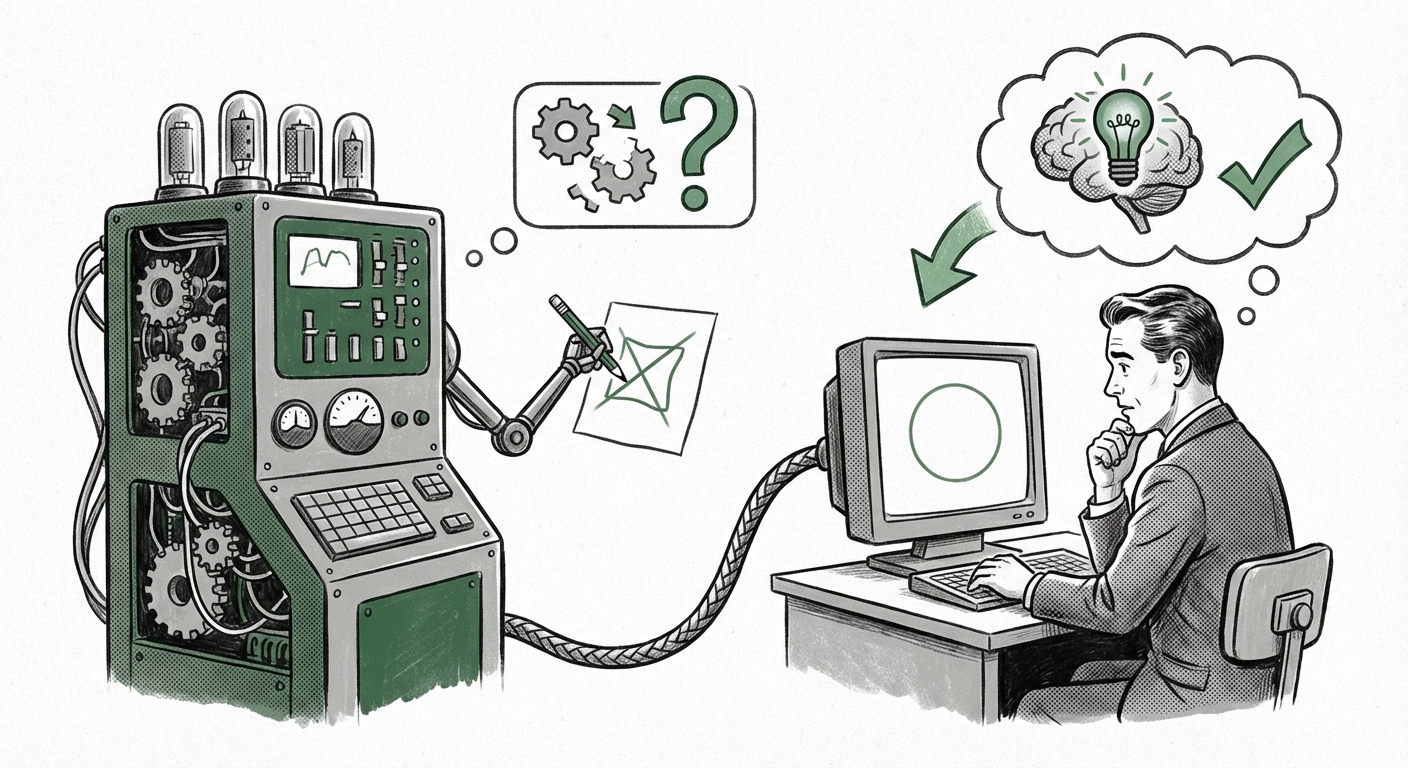
There is a trade-off, and it's worth naming. When a model writes out its thinking, you can read it. When a model just outputs a decision, you can't see the reasoning the same way. That makes testing, auditing, and explaining decisions harder, a problem that will follow decision models everywhere they go.
Why "Decision Models" Is a Different Category
Most AI products today are judged on how well they talk. Decision models are judged on whether they choose correctly.
Think about the difference in the real world. A writing assistant helps you draft an email. A decision model can look at a photo of a part coming down a conveyor belt and flag it as flawed. It can watch a camera feed and decide whether a shelf is empty. It can read a form and route it to the right department. It can sit inside a robot and decide where to step next.
These are not chat problems. They are action problems. And action problems have hard requirements that chat models were never built to meet: they must be fast, cheap, predictable, and able to run without an internet connection.
That's the gap Liquid AI appears to be aiming at. The company is not competing to write the best poem. It is competing to make the best tiny decision-maker you can drop into a machine.
Multimodal Is Table Stakes Now
The "multimodal" label means these models take in more than text. In a decision context, that's not a bonus feature, it's the whole point. Most decisions in the physical world start with a picture, a sound, a temperature reading, or a movement.
When a single small model can handle several input types at once, you stop needing a chain of separate systems. Instead of one model to read the image, another to process the text, and a third to make the call, you get one compact model doing the whole job. Fewer moving parts means less latency, fewer failure points, and a simpler build for developers.
Two Sizes, Two Different Futures
The split between d1-3B and d1-omni-600M is a deliberate bet on where AI is heading.
The bigger sibling: local power
A 3B-class model is the kind of thing that runs well on a single modern GPU, a beefy laptop, or a modest server. That puts serious AI capability inside a small business, a clinic, a retail back office, or a research lab, no cloud contract required. For companies with strict data rules, that alone is the selling point.
The smaller sibling: everywhere else
A 600M-class model is where things get interesting. That size opens the door to phones, tablets, cameras, drones, industrial sensors, and cheap embedded chips. When a model this small can make real decisions, AI stops being something you visit and becomes something woven into the objects around you.
What This Means for Businesses
The practical message for anyone running a company is simple: the cost of adding intelligence to a product just dropped, and the barrier to running it yourself just dropped too.
Three shifts are worth planning for.
1. AI moves from the cloud to the edge
Many decisions currently travel to a data center and back. Open, small, token-free decision models let those decisions happen on-site. For factories, vehicles, stores, and clinics, that means faster responses and no dependency on a network connection.
2. Data stops leaving the building
Open weights plus local hardware equals a real privacy story. Regulated industries, health, finance, legal, government, have been stuck on the sidelines of AI adoption largely because of data rules. Locally run decision models give them a path forward.
3. Builders get a foundation instead of a rental
Open weights let teams fine-tune a model on their own data and own the result. No surprise price changes, no service shutdowns, no waiting on a vendor's roadmap. For anyone building a long-lived product, that control is worth a lot.
What It Means for Society
Cheap, fast, private decision-making could be genuinely good for people. Better screening tools in rural clinics. Safer machinery. Smarter energy use in buildings. Assistive tech that responds instantly and keeps personal data on the device.
It also raises hard questions. When thousands of small models quietly make decisions about people, who gets flagged, who gets routed, who gets approved, there is no chatbot transcript to review. Regulators and the public will need new habits: logging decisions, testing models before deployment, and keeping a human in the loop for anything that affects someone's life.
Efficiency is not automatically fairness. A fast wrong decision is still wrong.
Actionable Steps You Can Take Now
- List your decision bottlenecks. Find the places in your business where a human looks at something and picks a category. Those are prime candidates for a decision model.
- Pilot on a small, low-risk task. Start with something measurable, like sorting images or triaging requests, rather than anything customer-facing or regulated.
- Check your hardware reality. If on-device AI matters to you, figure out what devices your team and customers actually use. Small models change what's possible.
- Build your evaluation set early. Since these models don't explain themselves in words, your test data becomes your main safety net. Collect real examples with known correct answers.
- Decide your open-versus-API stance. Open weights offer control; hosted APIs offer convenience. Know which one your business actually needs before you commit engineering time.
- Write down your human-in-the-loop rules. Decide in advance which decisions a model can make alone and which need a person to sign off.
The Bigger Picture
The last wave of AI was about conversation. This next one looks like it will be about action.
Conversation made AI impressive. Action will make it invisible. The most important AI in your life five years from now may never write you a sentence. It will sit inside a camera, a machine, a phone, or a car, watch what's happening, and quietly make the call, in milliseconds, on cheap hardware, with your data never leaving the room.
Releasing these models as open weights, at two very different sizes, and with a design that skips token generation altogether, pushes that future closer. It hands builders the pieces instead of renting them the outcome.
The chat era was loud. The decision era may be silent, and far more consequential.