Local AI Models Can Now Triage a Whole Code Repository for Free, What It Means for the Future of AI
Something quietly important happened in the world of open-source software. A team set out to see whether local AI models, the kind that run on your own machine instead of in a giant company's data center, could handle the messy, thankless job of triaging an entire code repository. The repository in question was OpenClaw. The headline result, published in June 2026, landed with a provocative flourish: they got local models to do it for free.
That little asterisk after "FREE" is doing a lot of work, and we will get to it. But first, understand why this matters so much. Triage is the boring plumbing of open-source projects. Every day, new bug reports, feature requests, pull requests, and questions pile up. Somebody has to read them, sort them, label them, spot duplicates, decide what is urgent, and figure out who should look at what. It is essential work. It is also exhausting, never-ending, and almost never paid for.
If local AI can take over that job, the implications ripple far beyond one repository. This is a story about who gets to use AI, what it costs, and whether the future of software development belongs to big cloud providers or to anyone with a decent computer and a willingness to tinker.
Why Triage Is the Perfect First Job for Local AI
Not every task is a good fit for a small model running on your own hardware. Writing a complex new feature from scratch? That still tends to favor the biggest, smartest models available through the cloud. But triage is different, and it is different in ways that make it almost tailor-made for local AI.
Think about what triage actually involves. You read a report. You decide: is this a bug, a feature request, or a question? Is it a duplicate of something already filed? How urgent does it look? What part of the codebase does it touch? Does it have enough information for someone to act on it, or does it need a follow-up question?
These are classification and summarization tasks, not creative writing tasks. They are repetitive. They follow patterns. They produce short outputs. And critically, they happen at enormous volume. That combination, high volume, low complexity, short answers, is exactly where small, efficient models shine.
There is also a privacy dimension that turns out to matter enormously. Bug reports often contain sensitive details: snippets of proprietary code, internal system names, customer data, security vulnerabilities that should not be public yet. Sending all of that to a third-party API means trusting someone else's servers with your project's secrets. Running the model locally means the data never leaves the building. For maintainers who worry about leaks, that alone can be the deciding factor.
Reading the Asterisk: What "Free" Really Means
Now, that asterisk. Calling something "free" when you are running models on your own hardware is a bit like calling a home-cooked meal free. The ingredients cost money. So does the stove. So does the electricity.
When we say local AI is free, we usually mean free at the point of use. There is no per-token bill. There is no monthly subscription. There is no meter running every time you process a thousand issues. You can run the same job once or ten thousand times and the marginal cost stays flat. That is a genuine and powerful difference from cloud APIs, where costs scale directly with usage and can explode the moment a project grows popular.
But the honest accounting includes other things:
- Hardware. You need a machine with enough memory and compute to run the models. That is a real upfront cost, though it is one many developers and companies have already paid for other reasons.
- Electricity and heat. Running inference locally draws power continuously. It is usually cheap, but it is not zero.
- Setup and maintenance time. Downloading models, configuring tooling, tuning prompts, and keeping everything updated takes human hours. Those hours have value.
- Quality tradeoffs. Smaller local models will not match the very best cloud models on every task. You accept "good enough and private" over "best possible and rented."
The real takeaway is not that local AI is magically costless. It is that the cost structure changes shape. Instead of a variable bill that grows with every request, you get a fixed cost you control. For open-source maintainers operating on donated time and tiny budgets, that shift is transformative.
The Big Shift: From Renting AI to Owning It
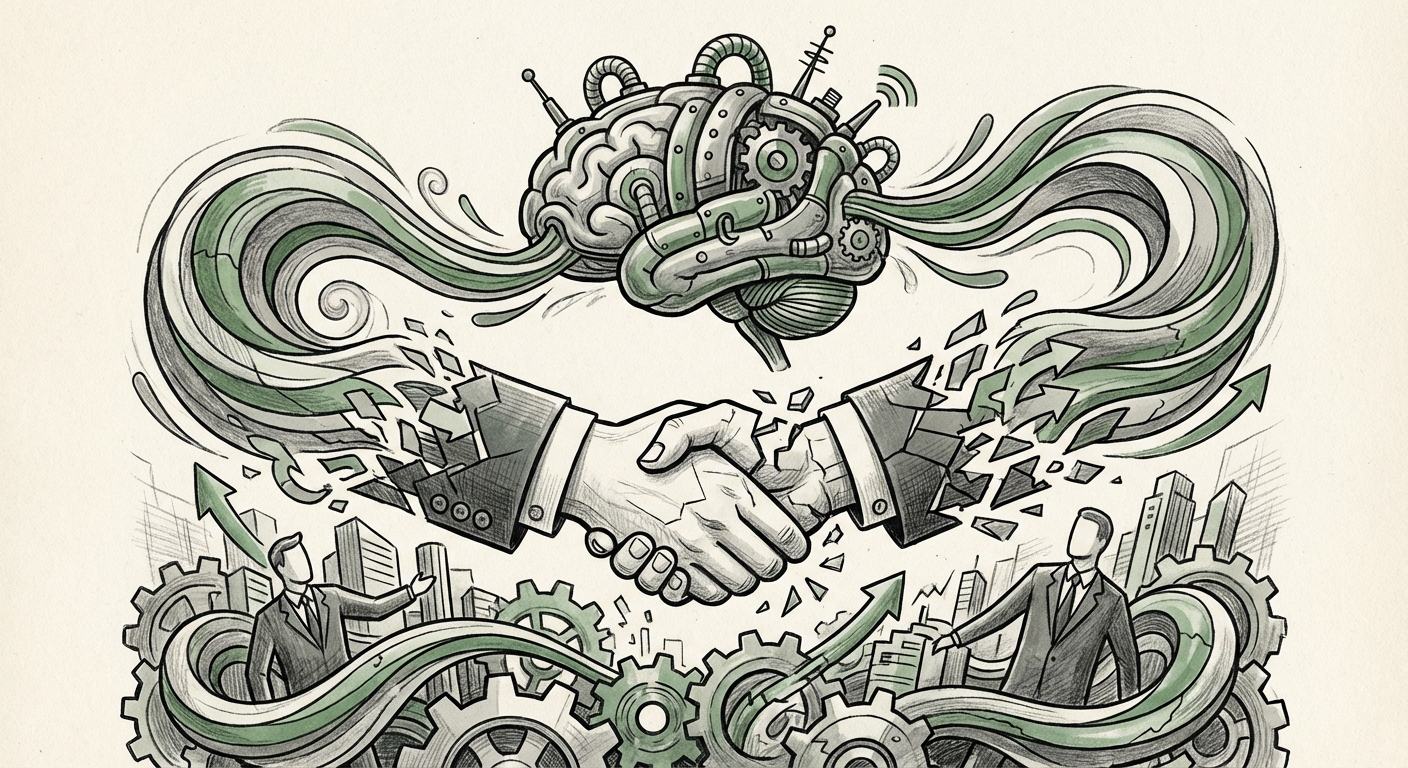
Zoom out and you can see this experiment as a small piece of a much larger movement. For the past few years, the dominant story in AI has been centralization. The most capable models lived behind APIs, owned by a handful of very large companies. If you wanted serious AI capability, you rented it.
That model is now being challenged from below. Open-weight models keep getting smaller and smarter. Consumer hardware keeps getting more capable. The tooling for running models locally keeps getting easier. The result is that a growing slice of real-world AI work, classification, extraction, summarization, routing, first-pass review, can now be done offline, on hardware you already own, with no data leaving your control.
This does not mean cloud AI is going away. Far from it. The hardest problems still belong to the biggest models. But it does mean the AI landscape is splitting into tiers. Frontier cloud models handle the genuinely difficult, high-stakes work. Local models handle the high-volume, low-stakes plumbing. And the boundary between those two tiers keeps moving in favor of local.
What This Means for Developers and Maintainers
For anyone who maintains an open-source project, the practical implications are immediate and appealing. Imagine waking up to a repository where every new issue has already been labeled, sorted by likely urgency, checked against existing reports for duplicates, and summarized in a single line. Human reviewers then spend their limited energy on the interesting problems instead of the sorting.
That is not a fantasy. It is what the OpenClaw experiment points toward, and it is achievable without a budget line. The trade is straightforward: spend some setup time, gain an always-on assistant that never gets tired and never sends your data anywhere.
There is a secondary benefit that is easy to overlook. When triage runs locally, you can customize it freely. You can teach it your project's specific conventions, your own labeling scheme, your own definition of "urgent." Cloud services lock you into their interfaces and their pricing; local models are yours to shape.
What This Means for Businesses
Businesses should pay close attention, because the same logic that applies to a code repository applies to entire internal workflows. Companies sit on mountains of repetitive text-processing work: support tickets, contract review, intake forms, compliance checks, invoice routing, internal help desk requests. Much of it follows patterns and produces short outputs.
Those are precisely the tasks where local models can replace expensive per-request API calls with a fixed infrastructure cost. For a company processing high volumes, the savings can be substantial, and they come with a compliance bonus. In regulated industries, being able to say "this data never left our network" can be worth more than the money saved.
The strategic point is this: AI capability is becoming a thing you can own rather than rent. That changes the math on build-versus-buy decisions, and it changes who inside an organization can greenlight an AI project. You no longer need a large cloud budget. You need a clear use case and some engineering time.
The Limits Worth Being Honest About
None of this means local models solve everything. They struggle with long, tangled reasoning. They can be confidently wrong. They need guardrails so that a mislabeling does not silently bury an important bug report. They require monitoring to catch drift and errors over time.
The right posture is augmentation, not replacement. Let the local model do the first pass. Keep a human in the loop for anything consequential. Treat the model as a tireless junior assistant rather than an authority. Done that way, the value is real and the risk stays manageable.
Actionable Steps You Can Take Today
If this story has you thinking about your own workflows, here is a practical path forward:
- Identify your triage bottleneck. Find the repetitive sorting, labeling, or summarizing task that eats the most human hours. That is your first candidate.
- Start small and measure. Run a local model on a sample of real items and compare its output to what a human would have decided. Track accuracy honestly.
- Keep humans in the loop. Use the model to propose labels and priorities, and let a person approve anything that matters. Expand autonomy only as trust is earned.
- Count the full cost. Include hardware, electricity, and setup time when you compare local against cloud. The comparison is often closer than the marketing suggests, and sometimes the local option still wins big.
- Protect sensitive data by default. If your inputs contain anything confidential, local processing is not just cheaper, it is safer.
The Road Ahead
The most important sentence in this whole story might be the one hiding in the asterisk. Local AI is not truly free, but it is unmetered, and that is the part that changes behavior. When a capability has no per-use price, people use it differently. They experiment more. They apply it to small problems that would never justify a subscription. They build it into their daily habits.
That is how a technology stops being a novelty and starts being infrastructure. The OpenClaw experiment is a snapshot of a moment when code triage, long the unpaid, unglamorous backbone of open-source software, became something a local model could handle on its own, on hardware a regular developer already owns.
Expect this pattern to repeat across every domain that has a triage problem. Support desks. Legal intake. Security alerts. Research screening. Each one has the same shape: high volume, low complexity, sensitive data, and a workforce stretched too thin. Each one is a candidate for the same treatment.
The future of AI will not be a single giant brain in the cloud answering every question. It will be a layered system: frontier models for the hard thinking, and a swarm of small local models quietly handling the drudgery, privately, cheaply, and on your own terms. That future is already arriving. The only question is how quickly you put it to work.