MIT Barcodes Zombie Cells: What This Breakthrough Means for the Future of AI
MIT researchers have found a way to barcode zombie cells, the stubborn, worn-out cells that refuse to die and quietly poison the tissue around them. On the surface, this sounds like a biology story. Look closer, and it is one of the most important AI stories of the year.
Here is why. When you can label something, you can count it. When you can count it, you can measure it. When you can measure it, you can teach a machine to predict it. Barcoding zombie cells hands artificial intelligence something it has always struggled to get in biology: clean, trackable, high-volume data about a process that drives aging and disease.
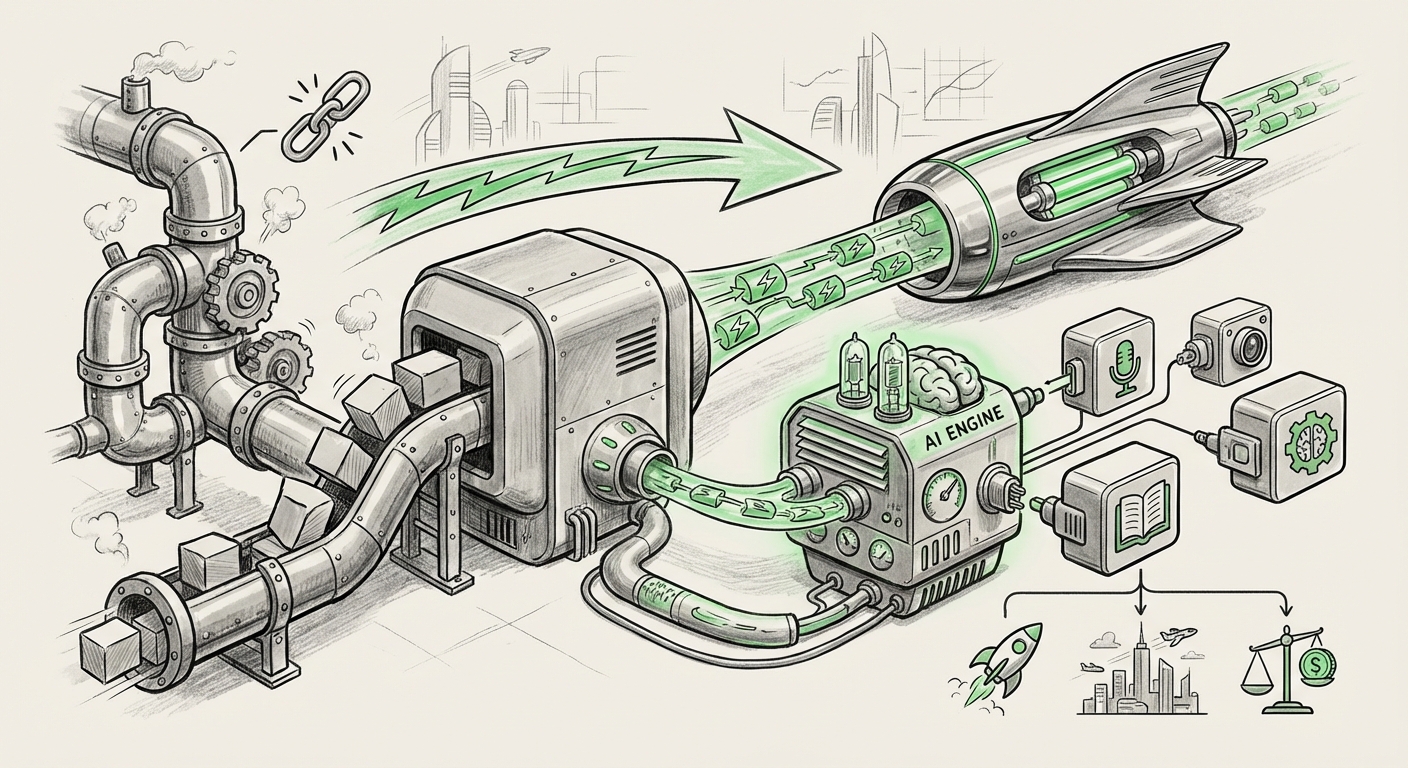
That shift, from fuzzy observation to precise, machine-readable labels, is exactly the kind of moment where AI stops being a side tool and starts becoming the engine.
First, What Are Zombie Cells?
Your body is constantly making new cells and retiring old ones. Most retired cells shut down and get cleared away. But some don't. They stop dividing, yet they stay alive. They sit in your tissues, release inflammatory chemical signals, and disrupt the healthy cells nearby. Scientists call them senescent cells. Everyone else calls them zombie cells, because that is basically what they are.
Zombie cells build up as we age. Researchers have long connected their accumulation to many age-related problems, from stiff joints and weakened muscles to organ decline and broader inflammatory stress on the body. The idea behind a whole class of experimental medicines, senolytics, is simple and huge: find these cells, kill them, and let the tissue recover.
The catch has always been the same. Zombie cells are rare, they look a lot like normal cells, and they do not wear a uniform. Finding them reliably has been the hard part.
What "Barcoding" Actually Means
In biology, a barcode is not a printed stripe. It is a unique molecular tag, a signature that lets a researcher tell one cell apart from another, or one group apart from the rest. Barcoding is how modern labs turn a mushy dish of cells into a dataset.
The MIT work applies that idea to zombie cells. The goal is to give senescent cells a detectable, distinctive marker so they can be spotted, distinguished from their healthy neighbors, and followed over time. Instead of hunting for a vague signal, researchers get something closer to a label that a machine can read.
That distinction matters enormously. A vague signal is a guess. A label is data.
Why This Is Really an AI Story
Biology has quietly become one of the most data-hungry fields on the planet. A single modern experiment can generate millions of measurements. Single-cell studies profile thousands of individual cells at once. Imaging runs produce terabytes of pictures of tissue. No human team can look at all of it.
AI already does this work. It classifies cells, spots patterns invisible to the eye, and predicts which treatments will change which cells. But AI is only as good as its labels. If you cannot tell which cells are senescent, your model learns noise. Barcoding zombie cells fixes the input problem at the source.
Once zombie cells carry readable tags, several AI capabilities get a serious upgrade:
- Detection at scale. Computer vision models can scan tissue images and flag barcoded cells automatically, turning slow manual counting into fast, repeatable analysis.
- Better prediction. Machine learning models can learn the early warning signs that a normal cell is about to become senescent, before it becomes a problem.
- Cleaner comparisons. When every cell is labeled, AI can measure exactly how a drug changes the zombie population instead of guessing from averages.
- Faster discovery loops. Automated labs run experiments around the clock. With reliable labels, AI can decide what to test next and the loop gets tighter.
The Bigger Shift: Biology Is Becoming Machine-Readable
The most important trend here is not about one cell type. It is that biology keeps getting converted into a format software can reason over.
DNA became sequence data. Proteins became structure data. Cells are now becoming labeled, tracked, machine-readable objects. Each conversion has triggered a wave of AI progress, because each one turns a mysterious process into something a model can learn from.
Zombie cells were one of the last holdouts, messy, rare, and hard to identify. Barcoding them closes another gap. And every gap closed expands what AI is allowed to work on.
From Models to Digital Twins of Aging Tissue
Once senescent cells are reliably labeled, the next step is simulation. If AI knows where zombie cells sit, how they behave, and how they respond to intervention, it can build a model of aging tissue that runs in software. Researchers could test a hundred treatment ideas in simulation before touching a living system. That compresses years of lab work into weeks of computation.
AI That Designs the Cure, Not Just Finds It
Labeling is the front end. The back end is drug design. With clean data on which cells are senescent and what makes them vulnerable, AI models can propose molecules that hit those cells and leave healthy ones alone. That precision problem, killing the zombie without hurting the neighbor, is exactly the kind of multi-variable puzzle machine learning is good at, and humans are slow at.
Practical Implications for Business
You do not need to run a biotech lab for this to matter. The ripple effects land in several places.
Pharma and Biotech R&D
Aging-related disease is one of the largest markets in medicine. Any tool that makes senescent cell research faster and cheaper lowers the cost of finding new treatments. Companies that adopt AI-driven, label-rich discovery pipelines early will out-test and out-learn slower competitors. In drug discovery, learning speed is the moat.
Diagnostics and Health Data
If zombie cells can be reliably identified, they can be measured in patients. Measurable things become biomarkers. Biomarkers become tests. Tests become products, and become the training data for models that predict who is at risk and when to intervene.
Insurance, Employers, and Health Systems
Any technology that meaningfully changes the trajectory of age-related decline touches healthcare costs. That creates opportunity and uncomfortable questions about how predictive health data gets used, who has access to it, and who gets left out.
The AI Infrastructure Layer
Machine-readable biology means more compute, more storage, and more specialized models. The winners will not just be the labs. They will be the companies supplying the tools ��� data platforms, imaging software, lab automation, and the AI systems that tie it all together.
What This Means for Society
It is easy to let the zombie cell story turn into hype about immortality. That is the wrong frame. The realistic promise is not endless life. It is healthier years, fewer chronic conditions, more independent living, less strain on families and health systems that are already stretched by aging populations.
But there are real cautions:
- Biology is not software. What works in a controlled experiment may fail in a living human body. Timelines in this field are long, and most candidates fail.
- Equity matters. If treatments that target aging arrive first as premium options, they widen health gaps instead of closing them.
- Data ethics will follow. Machine-readable cells produce machine-readable health profiles. Consent, privacy, and ownership rules need to be settled before, not after.
- Hype costs money. Every breakthrough like this draws capital to overstated claims. Investors who cannot separate a labeling tool from a cure will lose.
Actionable Insights
If you are trying to figure out what to do with this, here is a practical playbook.
- For researchers: Treat labels as infrastructure. Investing in annotation quality and standardized tagging pays back across every downstream model you build.
- For biotech leaders: Ask whether your data is machine-readable. If your key biological signals live in human eyes and PDFs, you cannot scale.
- For investors: Look past the headline and at the data layer. The durable value sits in platforms that make biology measurable, not in a single result.
- For enterprise AI teams: Watch biology closely. The techniques being built here, labeling rare events, learning from tiny samples, closing automated experiment loops, transfer directly to manufacturing, logistics, and risk detection.
- For everyone: Expect a steady drumbeat of these stories. Judge them by whether they make a hidden process measurable. That, not the press release, is the real signal.
The Road Ahead
Barcoding zombie cells will not cure aging by itself. What it does is more foundational: it turns one of biology's messiest problems into something a machine can see, count, and learn from. That is the pattern that has defined every major AI advance in science, make the world readable, then let the models do what they do best.
The labs that embrace this will move faster. The businesses that build on it will find new markets. And society will eventually face the question that always follows a real breakthrough: not whether we can, but who gets to benefit.
Zombie cells just got a name tag. The machines are already learning to read it.