Microsoft Turns Windows Search Into a Chatbot: What This Means for the Future of AI
For years, the search box in Windows has been the most complained-about feature in personal computing. You type the name of a file you saved last week, and you get a web result, a settings page you didn't ask for, and a Bing ad. You type a simple question, and you get a list of links instead of an answer. Everybody used it. Almost nobody liked it.
Now Microsoft says it may have finally fixed it, by turning search into a chatbot. Instead of matching keywords to file names, the search box behaves like a conversation. You ask in plain language. It answers in plain language. And it goes and finds what you meant, not just what you typed.
On the surface, that sounds like a small quality-of-life upgrade. It isn't. It's one of the clearest signals yet of where AI is heading: out of the chat window and into the everyday tools we already touch a hundred times a day. Here's what that shift means, and why it matters far beyond Windows.
Why Search Was Broken for So Long
Traditional search runs on an idea called keyword matching. The computer takes the words you typed and looks for those same words somewhere on your machine or on the web. That works fine when you remember exactly what you called a file. It falls apart the moment you don't.
Real people don't remember file names. They remember meaning. "That budget spreadsheet from the spring." "The photo with the dog on the beach." "The setting where I turn off notifications." A keyword engine can't help with any of those, because none of the words you'd naturally say appear in the file name or the settings menu.
So users developed workarounds. They built messy folder systems. They renamed files with weird prefixes. They gave up on the built-in search and opened a file manager instead. Search became a feature people tolerated rather than used.
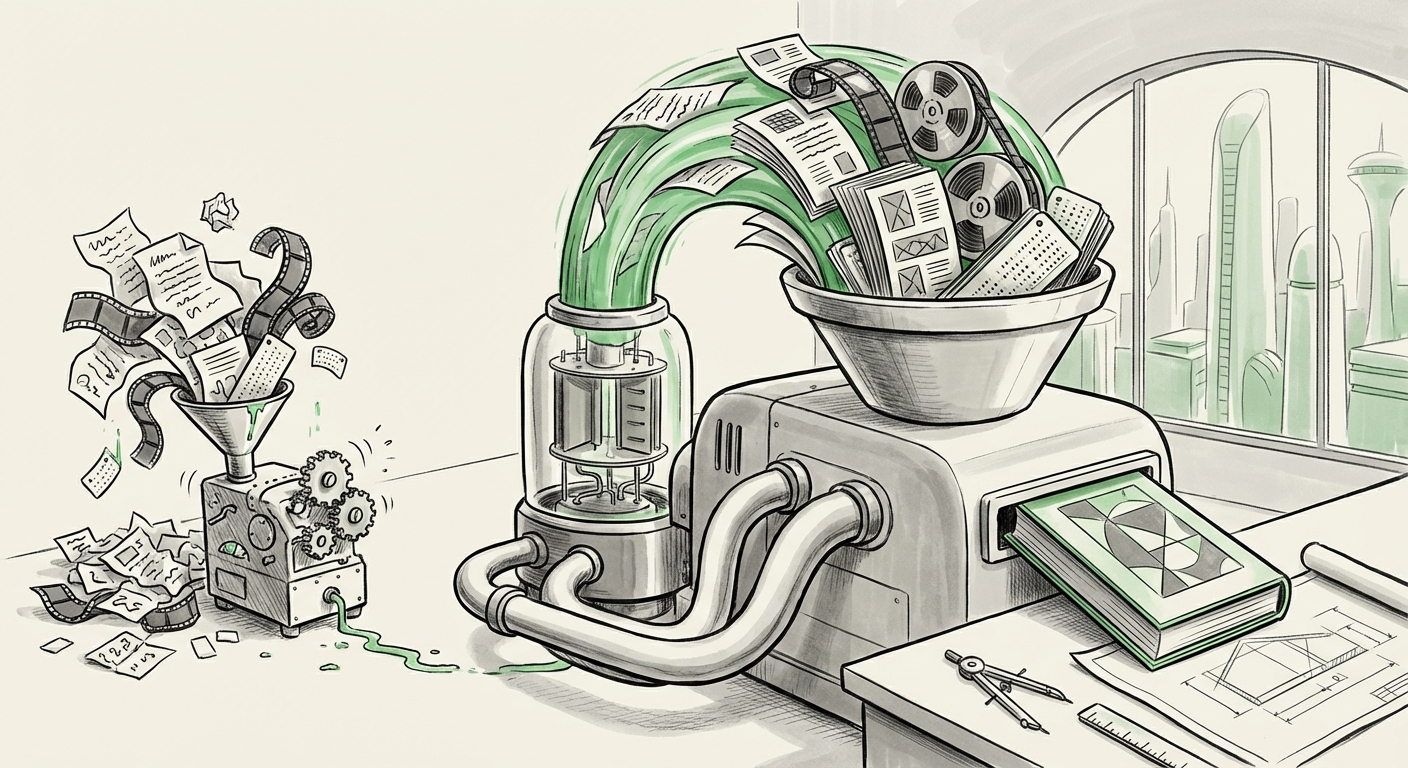
A chatbot changes the rules, because a chatbot works on meaning. It understands that "the budget thing from spring" probably means a spreadsheet with a date in the first half of the year. It can ask a follow-up question if it's unsure. It can look in more than one place at once, your files, your settings, your apps, the web, and blend the results into one answer.
That's the real fix. Not a faster search box. A different kind of search altogether.
What Actually Changes When Search Becomes a Conversation
Three things shift at once, and each one has bigger consequences than it first appears.
1. The interface disappears
When search understands plain language, you no longer need to know where anything lives. You don't need to learn the menu structure. You don't need to remember that a particular toggle sits three clicks deep in a settings panel. You just say what you want.
This is a quiet but enormous change. Software has always demanded that humans learn its logic. Conversational search flips that. The machine learns ours.
2. The operating system becomes an assistant
A search box that can act on your request is not really a search box anymore. It's the front door to everything the computer can do. Once that door is conversational, the operating system stops being a place you navigate and starts being a helper you talk to.
That's a much bigger ambition than fixing a frustrating feature. It reframes the entire desktop as one large AI surface.
3. Trust becomes the product
When a chatbot answers a question about your own files or settings, being wrong is expensive. A bad web result is annoying. A wrong answer about where your document went, or which setting you just changed, breaks confidence fast.
So the hard part of this fix was never the language model. It was making the answers reliable enough that people stop double-checking them.
The Bigger Trend: AI Is Leaving the Chat Window
For the past few years, most people met AI in a dedicated chat box. You opened a website or an app, typed a prompt, got a response, and closed the tab. It was powerful, but it was separate. A destination.
That phase is ending. The pattern now is embedding, putting AI inside the tools people already use, so there's no destination at all. Search bars. Email. Spreadsheets. Documents. Photo libraries. The assistant is becoming a layer across everything, rather than a place you visit.
Microsoft turning Windows search into a chatbot is a textbook example of this pattern, and it's a telling one, because search is the most-used, least-loved utility on the planet. If conversational AI can win there, where users arrive annoyed and impatient, it can win almost anywhere.
It also signals a shift in how AI companies compete. The race is no longer only about whose model is smartest. It's about whose model is closest to the moment of need. Being embedded in the operating system is about as close as it gets.
What This Means for the Future of AI
If this approach works, several things follow.
Voice and typing start to merge. A search box that handles natural language is only a small step from a search box that handles spoken language. The reason people didn't talk to their computers before is that computers didn't understand. That excuse is fading.
Context becomes the main event. The value of an AI assistant comes from what it knows about your situation, your files, your habits, your past requests. The model matters, but the context layer matters more. This is why the operating system is such a valuable place to stand.
Small models get their moment. Not every request needs a giant model in a distant data center. Finding a file is a modest task. Expect a split: fast local AI for everyday lookups, bigger cloud AI for the hard stuff. That's better for speed, cost, and privacy all at once.
Discovery changes shape. When an AI answers directly, the list of links becomes optional. That's a profound shift for anyone whose business depends on being found on the web.
Practical Implications for Businesses
You don't need to run a software company for this to matter. Here's where it lands in the real world.
- Internal search is the next target. If employees get used to asking questions and getting answers on their own machines, they'll expect the same from company systems. A knowledge base that requires exact keywords will feel ancient.
- File and data hygiene still matters. Conversational search is more forgiving, but it is not magic. Teams with clear naming, consistent structure, and decent metadata get far better results than teams without.
- Support costs can drop. A lot of internal help-desk tickets are really "where is this" and "how do I change that." Conversational search absorbs a chunk of those questions before they become tickets.
- Search visibility strategy has to change. If more questions get answered inside an assistant instead of on a results page, marketing needs to think about how to be the source an AI pulls from, not just how to rank.
- Governance moves up the agenda. An assistant that can see your files and change your settings needs clear rules about what it's allowed to touch. Write those rules before rollout, not after.
Practical Implications for Society
The social effects are subtler but real. When the computer adapts to human language, the barrier to using technology drops. People who struggled with menus and folder trees, older users, new users, anyone who isn't a power user, get a fairer shot at the same tools.
But there's a cost too. Skills that people built up over decades, like knowing how to organize files or find things manually, become less necessary. That's usually fine. It's just worth noticing, because the same pattern has played out before with maps, phone numbers, and spelling.
The bigger question is trust. If people stop verifying AI answers about their own devices, the accuracy bar has to be high. A search tool that confidently points you to the wrong document isn't just unhelpful. It quietly teaches people to stop relying on the tool at all.
Actionable Insights: What to Do Now
Whether you're a business leader, a developer, or just someone who uses a computer all day, a few moves make sense.
- Try it before you judge it. Conversational search rewards different habits. Ask full questions instead of fragments and see how it performs for you.
- Clean up your file structure anyway. Better organization makes AI search dramatically better. It's still the highest-return hour you can spend.
- For teams, test it on real workflows. Pick two or three common tasks, finding a document, changing a setting, locating a policy, and measure the time saved. Real numbers beat opinions.
- Set privacy and permission boundaries early. Decide what the assistant can read, what it can change, and what it must ask about first.
- Build for conversation, not keywords. If you make software or content, write it the way people speak, not the way they used to search.
- Keep a human in the loop for anything important. Treat AI answers as a strong first draft, not a final verdict, at least until the track record is proven.
The Honest Caveats
Microsoft's own framing is careful, and it should be. "May have finally fixed" is not "fixed." Making a chatbot understand you is the easy half. Making it consistently right, about your files, your settings, your intent, is the hard half, and it takes time to prove.
There's also a question of whether people actually want to chat with their operating system. Some will love it. Others just want a fast list of results and nothing more. The best outcome is probably both: conversation when you need it, plain search when you don't.
And there's the familiar risk of an assistant that's confidently wrong. In a search box, that's not a minor flaw. It's the whole ballgame.
Conclusion
Turning Windows search into a chatbot looks like a fix for an annoying feature. It's really a statement about where AI is going. The assistant is leaving its own window and moving into the tools we already use, starting with the one we touch more than any other.
If Microsoft pulls it off, the lesson won't be about Windows. It will be that AI earns its place not by being impressive in a demo, but by being useful in the middle of an ordinary day. The search box is a strange place for that revolution to start. It may also be the perfect one.