Semantic Chaining Jailbreaks: How Attackers Are Quietly Breaking AI Image Generators
Every image generation model ships with safety rules. You are not supposed to be able to ask it for certain kinds of pictures. For years, those rules mostly held up. Attackers tried misspelled words, weird symbols, and coded slang, and the models learned to block them.
Now there is a smarter attack. It is called semantic chaining, and it does not break any single rule. Instead, it strings together a series of completely harmless requests until the model talks itself into producing something it would have refused outright if asked directly. The pieces are all innocent. The destination is not.
This matters far beyond a few curious researchers. Image generators are now used in advertising, product design, journalism, insurance, real estate, and everyday creative work. If their guardrails can be walked around with a conversation, then every company using them inherits a new kind of risk, and every person who trusts a picture inherits a new reason to be careful.
What Makes Semantic Chaining Different
Most safety systems for image models work like a bouncer at a door. They look at what you are asking for right now and check it against a list of banned things. Bad word in, request blocked. Bad concept in, request blocked.
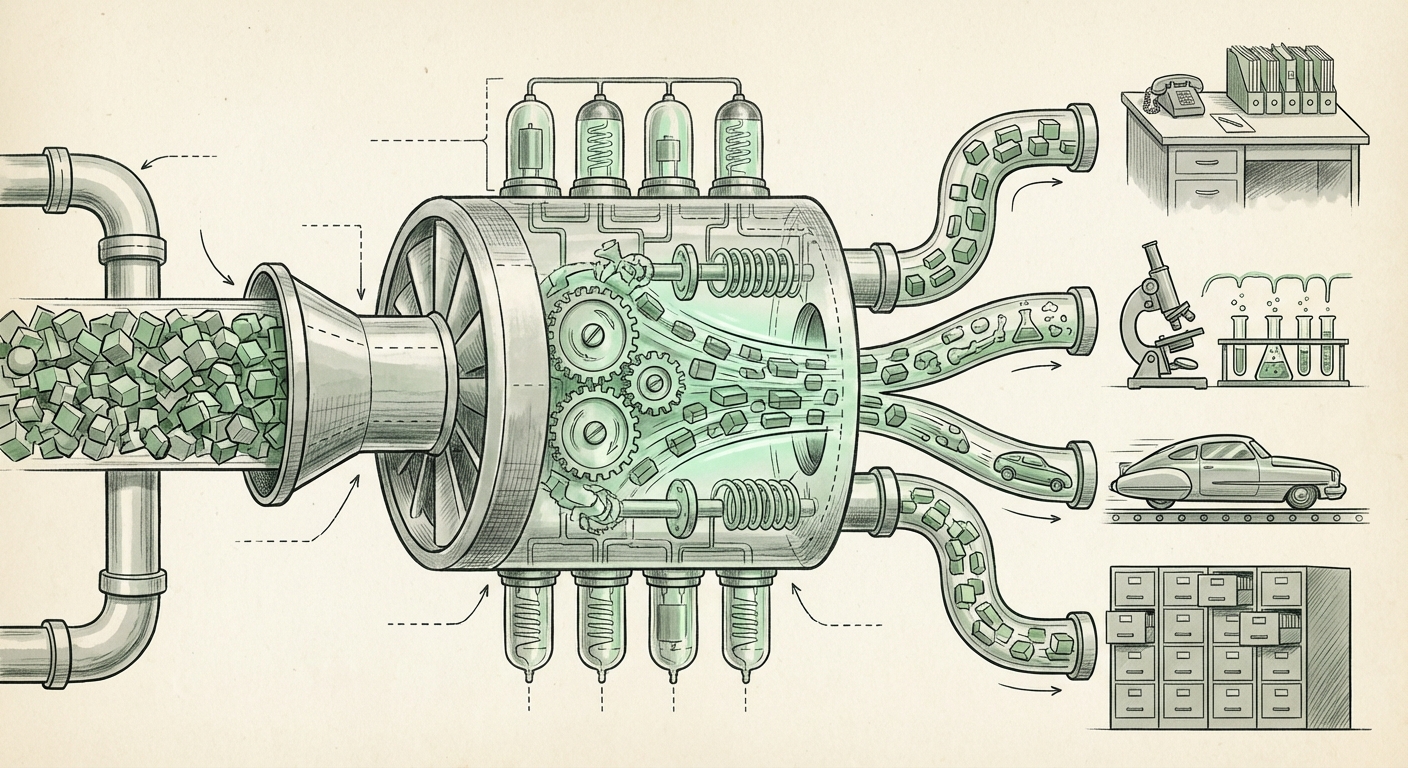
Semantic chaining slips past that bouncer by never showing up with the bad thing in hand. The attacker breaks a forbidden goal into a chain of small, reasonable-sounding steps. Each step is a normal request a model would happily answer. The trick is that each step quietly shifts the model's "state", the working context it uses to understand what is going on, a little closer to the target.
By the time the final request arrives, the model is no longer judging it in isolation. It is judging it against everything that came before. And in that context, the final ask looks like the natural next move rather than a violation.
How the Chain Actually Works
The mechanics are simple once you see them. Attackers lean on a handful of familiar techniques, stacked on top of each other.
1. Decomposition
A single forbidden goal gets chopped into parts that are each fine on their own. No individual piece trips a filter because no individual piece is a problem. The danger only exists in the combination.
2. Gradual drift
Each new prompt moves a little further than the last. The change between step one and step two is tiny. The change between step one and step twenty is enormous. Filters that check prompts one at a time never see the jump because there is no jump, just a slope.
3. Context carryover
Image models that support back-and-forth conversation remember earlier turns. That memory is a feature for normal users and a weapon for attackers. The model's own earlier answers become the "evidence" that the current request is acceptable.
4. Abstraction laundering
Attackers wrap the goal in abstract language, artistic styles, fictional framing, technical descriptions, hypothetical scenarios. The words stay clean even as the intent gets sharper. The model reads the words. It does not reliably read the motive.
5. Reframing as continuation
Instead of asking for something new, the attacker asks the model to "continue," "adjust," or "make it more like the last one." Continuation feels cooperative. Refusal feels arbitrary. Models are often trained to be cooperative.
Why Keyword Filters Cannot Keep Up
The hard truth is that semantic chaining is not a bug in a specific product. It is a structural weakness in how most guardrails are built.
Blocklists are built around content. Semantic chaining attacks intent. Content lives in the words of one prompt. Intent lives across many prompts and depends on where the conversation is heading. That is a much harder thing to measure, and most systems were not designed to measure it at all.
There is also a basic numbers problem. Every added turn in a chain multiplies the number of possible paths. A filter has to catch all of them. An attacker only has to find one that works. That asymmetry always favors the attacker unless the defense gets smarter than the filter.
The Bigger Trend: Safety Is Moving From Prompts to Conversations
Semantic chaining is the clearest sign of a shift that is happening across AI generally. The first generation of AI safety was about single inputs. The next generation has to be about sequences.
Text models already face this. Agentic systems that take actions over time face it even more. Image models are catching up fast as they gain memory, editing tools, and multi-step workflows. Once a model can iterate on its own output, it can be walked somewhere it would never go in one shot.
The lesson generalizes well beyond pictures. Any AI system that remembers context, accepts follow-ups, or refines its own work is exposed to the same class of attack. That includes coding assistants, writing tools, customer service bots, and design platforms. The chain does not care what the model draws. It only cares that the model is willing to keep going.
What This Means for the Future of AI
Expect three big changes.
Defenses will become intent-aware
Companies will move from checking single prompts to watching entire sessions. That means scoring a conversation for where it is heading, not just what it says right now. It also means flagging sudden topic drift, repetitive reframing, and step-by-step escalation. This is harder engineering, but it is the only approach that actually matches the threat.
Provenance will become standard
If guardrails can be walked around, the next line of defense is knowing where an image came from. Watermarking, signed metadata, and content credentials will shift from nice-to-have features to baseline expectations. Buyers will ask for them. Regulators will push for them. Platforms will need them to keep trust.
Red teaming will become a permanent job
Safety is no longer something you build once and ship. It is something you test continuously against people who are actively trying to break it. Expect every serious AI company to run standing adversarial teams whose only job is to find the next semantic chain before someone else does.
Practical Risks for Businesses
If your company uses image generation, semantic chaining is now a governance issue, not just a technical one.
- Brand safety: A tool that can be steered toward prohibited content can be steered toward content that damages your reputation, even if your own team never intended it.
- Liability: If a generated image causes harm, "the model did it" is a weak defense. The tool was yours; the output was yours.
- Compliance: Regulated industries need an auditable record of what was requested and what was produced. Chains that happen inside a chat window are easy to lose track of.
- Fraud and impersonation: The same techniques that bypass a filter can help create convincing fake imagery. That risks identity misuse, fake testimonials, and false documentation.
- Third-party exposure: Many companies access image models through APIs or embedded tools. Their safety posture is now part of your risk surface.
How Society Feels the Effects
The public impact is simpler to describe and harder to fix: trust in images erodes.
People have already learned to be skeptical of photos. Semantic chaining pushes that skepticism further, because the outputs can be genuinely hard to spot. That creates real costs. Journalists struggle to verify. Courts struggle to weigh evidence. Ordinary people struggle to tell whether a picture of a person, place, or event is real.
The risk is not only what gets made. It is also what gets denied. When convincing fakes are cheap, real evidence becomes easier to dismiss. That is a quieter harm, and it is often the more damaging one.
Actionable Steps You Can Take Today
For teams building with AI
- Log full sessions, not just final prompts. You cannot spot a chain if you only keep the last link.
- Add multi-turn monitoring that flags rapid topic drift and repeated reframing.
- Test your systems with adversarial red teams on a regular schedule, not once at launch.
- Keep a human in the loop for high-stakes image approvals.
For business leaders
- Write a clear policy covering what AI-generated imagery can and cannot be used for.
- Ask vendors directly how they defend against multi-step prompt attacks. Vague answers are a red flag.
- Build review steps into any workflow where an image could affect a customer, a contract, or a public statement.
For everyone else
- Assume any image could be generated, and verify before you share.
- Look at the context, not just the picture. Who posted it, why, and what else have they shared?
- Support and ask for provenance tools, visible labels and signed metadata help everyone.
The Bottom Line
Semantic chaining is not a dramatic exploit. It is something more interesting: a demonstration that safety rules based on single prompts are not enough for models that think in conversations. The attack works because AI systems are built to be helpful, contextual, and cooperative. Those are the exact qualities that make them useful, and the exact qualities an attacker can lean on.
The fix will not be a single filter or a bigger blocklist. It will be a shift in how the industry thinks about safety: from checking answers to understanding journeys. The companies that make that shift early will build products people can actually trust. The ones that do not will keep discovering that their guardrails were only ever a speed bump.