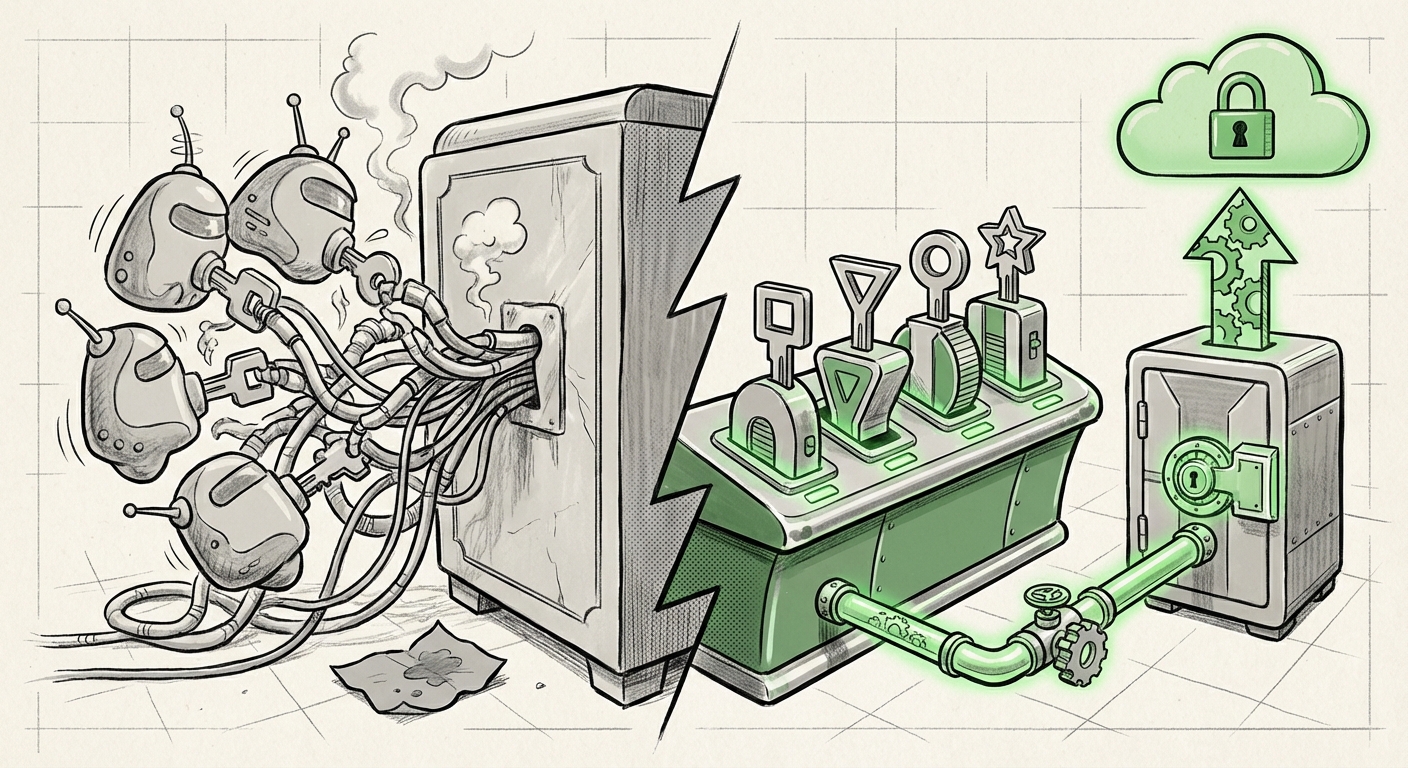
GitHub Rewrites Copilot's Runtime in Rust With AI Help: What It Means for the Future of AI
Something quietly important just happened in the world of software. GitHub has moved the runtime that powers Copilot, its popular AI coding assistant, over to Rust, and it did a big part of that rewrite with AI helping write the code.
That single sentence packs a lot. It is a story about speed. It is a story about safety. But most of all, it is a story about a strange new loop: AI tools are now being used to rebuild the very systems that run AI tools.
If you run a business, write code, or just wonder where all this is going, this is worth paying attention to. Let's break down what happened, why it matters, and what it tells us about the next few years.
What Actually Happened
GitHub migrated the Copilot runtime to Rust. Copilot is the assistant that suggests code and helps developers write software faster. The "runtime" is the engine underneath, the part that keeps things running smoothly while you work.
The twist is in the method. Rather than hand-writing every line, GitHub leaned on AI-assisted rewriting to help move the code over. That means an AI system helped translate, restructure, and rebuild the code that makes another AI system work.
That is not a small detail. It is the headline.
Why Rust?
For people who do not live in code, this part can sound boring, but it is the key to the whole story.
Most software runs on "garbage-collected" languages, that means the computer automatically cleans up memory that is no longer needed. It is convenient, but every so often the cleaner stops the whole program for a moment to tidy up. In a tool like Copilot, where you expect instant suggestions as you type, those pauses are the enemy.
Rust works differently. It manages memory without a background cleaner, so the program keeps running without those sudden stops. It also has strict rules baked into the language that stop whole categories of bugs, the kinds that cause crashes and security holes, before the program even runs.
So Rust gives you two things at once: speed you can feel and safety you can trust. That combination is exactly what an always-on AI assistant needs.
The Part Everyone Should Notice: AI Wrote AI's Engine
Here is where this stops being a story about programming languages and starts being a story about the future.
Rewriting a large system in a new language used to be one of the most painful jobs in software. It could take years. Teams would rewrite, break things, fix things, and fight bugs the whole way. Many such projects failed outright.
Now, AI-assisted rewriting is changing the math. An AI system can propose translated code, flag risky patterns, generate tests, and grind through the repetitive parts, while human engineers review, guide, and decide.
This matters because of the direction it points. If AI can help rewrite the runtime that powers Copilot, then the same approach can be pointed at almost any old system in any company. The mountain of "legacy" software that businesses have been stuck with for decades suddenly looks climbable.
The loop is getting tighter
Notice the shape of this:
- AI helps people write software.
- People use AI to make that AI software faster and safer.
- The better that software gets, the better the AI help becomes.
Each turn of that loop makes the next turn faster. That is a very different kind of progress than the usual "new version, slightly better" upgrade cycle.
What This Means for Businesses
You do not need to be a software company for this to matter. Here is where it shows up on your bottom line.
1. Faster, cheaper AI tools
When a runtime gets faster and leaner, it usually needs less computing power to do the same job. Less computing power means lower bills. For any business paying for AI features by usage, performance improvements behind the scenes eventually translate into real savings, and into tools that respond fast enough to feel natural.
2. Modernising old systems becomes realistic
Most large organisations are held back by old code nobody wants to touch. AI-assisted rewriting offers a path that did not exist a few years ago: a guided, test-heavy migration instead of a risky all-or-nothing rebuild. Expect to see this become a normal part of technology planning rather than a moonshot.
3. Reliability becomes a selling point
A memory-safe runtime means fewer crashes and fewer security surprises. As AI tools move into customer service, code, legal review, and operations, a single outage or breach carries real reputational cost. Choosing foundations built for safety is becoming a business decision, not just a technical one.
4. The developer's job changes shape
Developers will spend less time typing boilerplate and more time reviewing, testing, and making judgement calls. The skill that matters is no longer "can you write this?" but "can you tell whether this is correct and safe?" That is a meaningful shift in what to hire and train for.
The Risks Nobody Should Skip
AI-assisted rewriting is powerful, and like anything powerful, it comes with sharp edges.
- Confident mistakes. AI can produce code that looks right and is subtly wrong. In a runtime that thousands of developers depend on, subtle is not good enough.
- Review becomes the bottleneck. If AI can generate code faster than humans can check it, the limit shifts from writing to verifying. Companies that do not build strong review and testing practices will simply move their bottleneck rather than remove it.
- Inherited problems. If old code had a flaw and the AI copies it faithfully into the new code, you have a faster version of the same bug.
- Concentration risk. If the same few AI systems are used to rebuild the same few runtimes everywhere, a flaw in one place shows up in many places.
None of these are reasons to stop. They are reasons to be deliberate.
What This Means for the Future of AI
Three predictions feel safe from here.
First, AI-assisted rewriting becomes normal. Once a major platform shows it can be done on something as critical as a Copilot runtime, the excuse for leaving old systems alone starts to fade.
Second, performance and safety languages keep rising. Rust will not be the only winner, but the logic that led GitHub there, no surprise pauses, fewer memory bugs, will push more AI infrastructure in the same direction. When AI runs on every device and in every app, efficiency stops being a nice-to-have.
Third, and most importantly, the AI-to-AI loop accelerates. AI helping build better AI infrastructure is the flywheel that matters. It is how you get from "helpful assistant" to "the layer everything runs on."
How to Get Ready: Practical Steps
Whether you are a solo developer or running a large team, a few moves make sense now.
- Invest in tests, not just tools. The more code AI writes, the more your safety net determines your speed.
- Start small with migration. Pick one non-critical old service and try an AI-assisted rewrite. Learn the patterns before pointing it at anything important.
- Measure what matters. Track response times, crash rates, and cost per request, so you can tell real improvements from marketing claims.
- Train people to review AI output. Reading code critically is now a core skill, not a bonus one.
- Ask your vendors the hard question. What is their runtime built on? How do they test it? How fast do they fix things?
The Bigger Picture
There is a temptation to read this as a technical footnote. A company changed a programming language. So what?
But look at the shape of it. A tool built to help humans write software was rebuilt using the help of AI, in a language chosen specifically because it fails less. That is a template. Companies everywhere will copy it, not because Rust is trendy, but because the method works.
We are watching AI move from being a feature you use to being the foundation you build on. And increasingly, it is also the thing doing the building.
That is the real story here. Not a language change, a change in who, and what, writes the software the world depends on.