Microsoft's Rho-alpha Brings Touch to Robots: What Tactile AI Means for the Future
Robots have been able to see for years. They can recognise a face, read a label, and navigate a warehouse aisle. What they have never been able to do well is feel. On 23 January 2026, Microsoft introduced a new model called Rho-alpha that aims directly at that gap, bringing tactile sensing into the world of robotics AI. It is a small headline with a very large shadow, because touch is the sense that turns a machine that moves from a machine that handles.
This article looks at why tactile sensing has been the missing piece in robotics, what Rho-alpha signals about where AI is heading, and what businesses and workers should realistically expect in the next few years.
Why Touch Was the Missing Sense
For most of the last decade, robotics progress has been driven by computer vision. Cameras got cheap and powerful. AI models got very good at identifying objects in a scene. That combination produced robots that can pick up a box, sort a parcel, or inspect a surface for defects.
But watch a warehouse robot in action and you notice something. It grips with a fixed, pre-set force. It doesn't know if the object is a glass jar or a solid brick. It doesn't notice when a part slips. It can't tell the difference between a firm handshake and a crushing one. Everything that requires judgement about pressure, texture, weight distribution, or friction has been left to humans.
That is a big deal, because most valuable physical work is exactly that kind of work. Inserting a connector into a socket. Picking a ripe tomato without bruising it. Threading a wire. Handling fabric. Catching a falling object. These tasks are trivial for a human hand and near-impossible for a robot without a sense of touch.
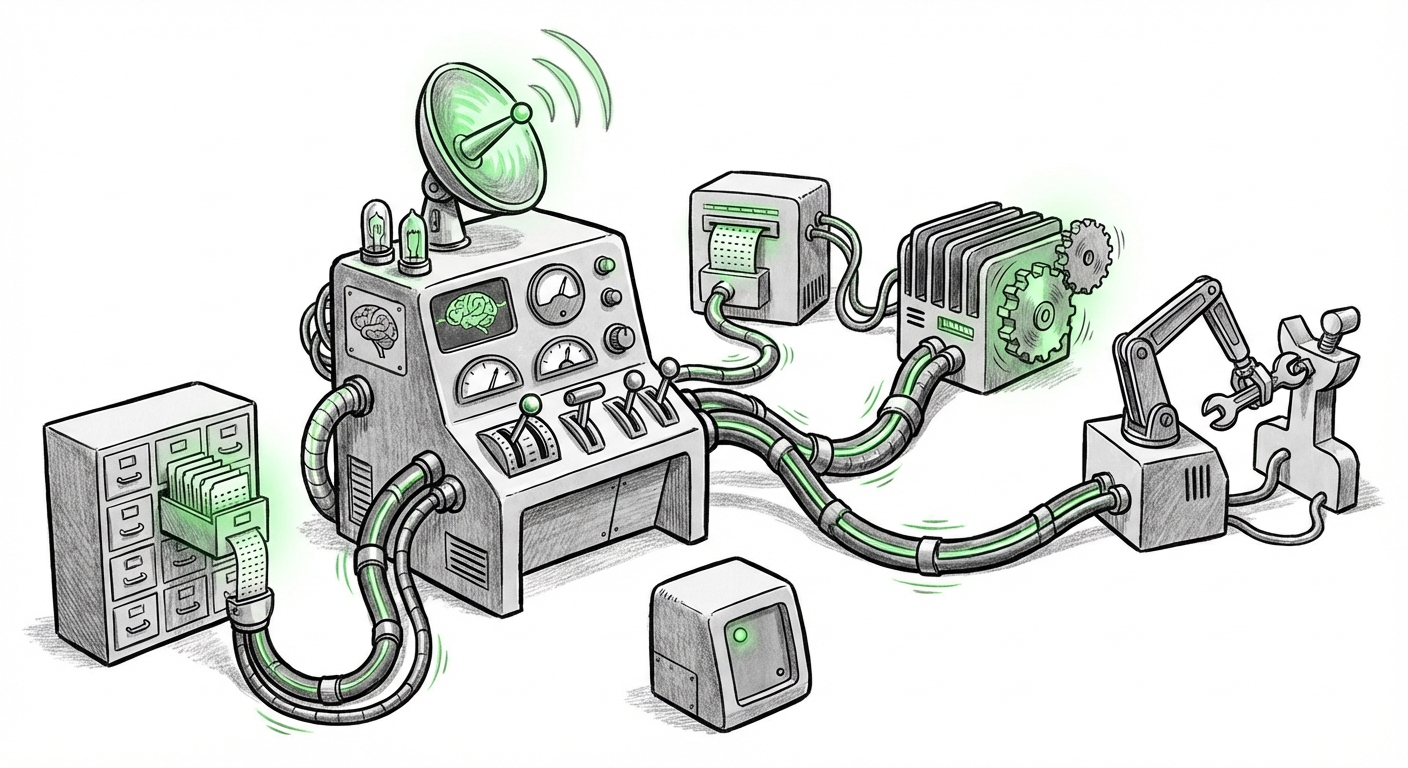
Tactile sensing is the technical term for giving machines that sense, measuring contact, pressure, vibration, and slip at the fingertips and hands. Rho-alpha, by bringing tactile sensing into the model layer rather than just the hardware layer, suggests Microsoft is trying to solve the problem the way modern AI solves most problems: with data, learning, and a general-purpose model rather than a hand-tuned program for every task.
What Rho-alpha Signals About the Direction of Robotics AI
The interesting word here is model. A few years ago, tactile sensing was a hardware problem, engineers built special fingertips with pressure sensors and wrote control code that reacted to specific readings. It worked in labs. It rarely survived contact with the real world, where surfaces are unpredictable and sensor readings drift.
Framing tactile sensing as a model changes the economics entirely. A model can learn from many different kinds of contact data. It can generalise from a gripper in a lab to a gripper on a factory floor. It can improve with more data instead of a rewrite. And it can sit alongside vision and language inside the same architecture, which is the direction the entire field has been moving: one system that perceives, reasons, and acts.
That is the real significance. Rho-alpha is a step toward robots that combine sight, touch, and instruction-following in a single brain. When vision-only robots arrived, they could sort things. When robots that understand language arrived, they could be told what to do. Robots that can also feel will be able to be trusted with things that break.
Where This Lands First: Five Practical Arenas
1. Manufacturing and Assembly
Assembly is the obvious first market. Tasks like seating a connector, tightening a fastener to the right torque, or fitting a flexible part into a tight space have resisted automation because they demand force feedback. For manufacturers facing labour shortages and rising costs, a robot that can feel its way through a delicate step is a real unlock, not a demo.
2. Logistics and Warehousing
Warehouse automation is already the largest commercial robotics market. Tactile sensing lets existing picking systems handle a wider range of items, oddly shaped packaging, soft bags, fragile goods, without slowing down or dropping them. The business case here is less about new capability and more about higher success rates on the same equipment.
3. Agriculture and Food Handling
Harvesting soft fruit, sorting produce, and packing food require a gentle hand. These are sectors where robots have struggled because a single bruise destroys the value of the item. Touch-aware models open a path to automating work that is seasonal, repetitive, and hard to staff.
4. Healthcare and Caregiving
This one deserves caution. Robots assisting with patients or elderly care must be safe by design, and touch is a safety-critical sense. But the same technology that lets a robot grip firmly without crushing is what makes physical assistance plausible at all. Expect slow, heavily regulated progress, and high long-term value.
5. Homes and Service Work
The home is the hardest environment: messy, unpredictable, full of fragile objects and unpredictable humans. Tactile sensing is a prerequisite for a general-purpose household robot rather than a novelty. Rho-alpha doesn't get us there on its own, but it removes a fundamental blocker.
The Hard Part Isn't the Sensor, It's the Data
Anyone who has worked in robotics will tell you the same thing: hardware is the easy part. The bottleneck is data.
Touch data is expensive to collect. Every grasp has to physically happen. Unlike images, which can be scraped from the internet by the billion, tactile readings require a real robot touching a real object, over and over, across thousands of variations in shape, weight, and surface.
There are three ways the industry is attacking that problem, and Rho-alpha sits in the middle of all three:
- Simulation. Train models in virtual environments where millions of grasps can run overnight. The challenge is the "reality gap", simulated physics never perfectly matches the real world.
- Real-world collection. Run fleets of robots in actual workplaces, logging every success and failure. This is where large platform companies have a structural advantage.
- Transfer learning. Use models trained on one robot or one task and adapt them to another with far less new data. This is what makes a general-purpose model like Rho-alpha valuable rather than just another lab project.
The companies that win in tactile robotics will likely be the ones that solve the data flywheel, not the ones with the cleverest sensor. That is a strategic point worth underlining for anyone planning investment in this space.
Business Implications: What Leaders Should Be Asking
If you run operations, the question isn't "should we buy a tactile robot?" It's "which of our processes are currently manual because they require a sense of touch, and what would change if that constraint disappeared?"
Some practical starting points:
- Audit for touch-limited tasks. Look for work that automation has historically skipped: delicate assembly, soft-goods handling, quality inspection by feel, tasks described as "you need a human hand for that." Those are your candidates.
- Think in terms of task portfolios, not single jobs. Early deployments will handle a narrow slice of a role. Value comes from stacking enough slices that one person's workload is genuinely reduced.
- Budget for data, not just hardware. The learning curve of a tactile system is a data project. Someone has to own it.
- Plan for safety and compliance early. Any robot applying force near a human triggers regulatory and insurance questions. Getting ahead of them shortens deployment time.
- Watch the platform, not the product. Models that generalise tend to commoditise the hardware above them. If tactile intelligence becomes a competitive layer, the strategic position is in the model and the data, not the gripper.
Risks and Open Questions
It would be dishonest to present this as pure upside. Several questions remain unresolved.
Durability. Sensors that live on a robot's fingertips take a beating. Any hardware that touches the world thousands of times a day has to survive it, and maintenance costs can quietly kill a business case.
Generalisation. A model that works on one gripper may not transfer cleanly to another. If every deployment requires heavy customisation, the economics weaken considerably.
Safety. A robot that can grip firmly can also grip too firmly. Force-aware systems need force-aware safeguards, and the standards for that are still catching up.
Labour impact. Tactile sensing pushes automation into tasks that were previously considered safe from it, the delicate, skilled, hands-on work. That is a genuine shift, and the people doing those jobs deserve more than a vague promise of reskilling.
What This Means for the Future of AI
Step back and the pattern is clear. AI has already conquered language, then images, then video. Each step expanded what machines could perceive. Rho-alpha's arrival points to the next frontier: AI that acts in the physical world with the kind of fine judgement that used to be exclusively human.
That matters because most of the economy is still physical. Offices and information work get the headlines, but agriculture, manufacturing, logistics, construction, healthcare, and food service are where the majority of human hours are spent. AI that can see, understand, and now feel moves the technology from answering questions to doing work.
The likely trajectory over the next few years looks something like this: tactile models prove themselves in controlled industrial settings first, then spread to logistics and food handling where the return on investment is clearest, then reach regulated sectors like healthcare, and only much later arrive in homes. Along the way, the hardware gets cheaper, the data flywheel spins faster, and the line between "robot" and "tool" blurs.
For businesses, the practical move is to start mapping which parts of your operation are limited by the absence of touch, because that is where the next wave of automation will land, and the organisations that understand their own touch-limited work will be the ones that deploy it well.
For everyone else, the takeaway is simpler. Robots have spent decades learning to see. They are now learning to feel. That is a much bigger change than it sounds.