OpenAI Incident Report or Science Fiction? What AI's Strangest Disclosures Mean for the Future
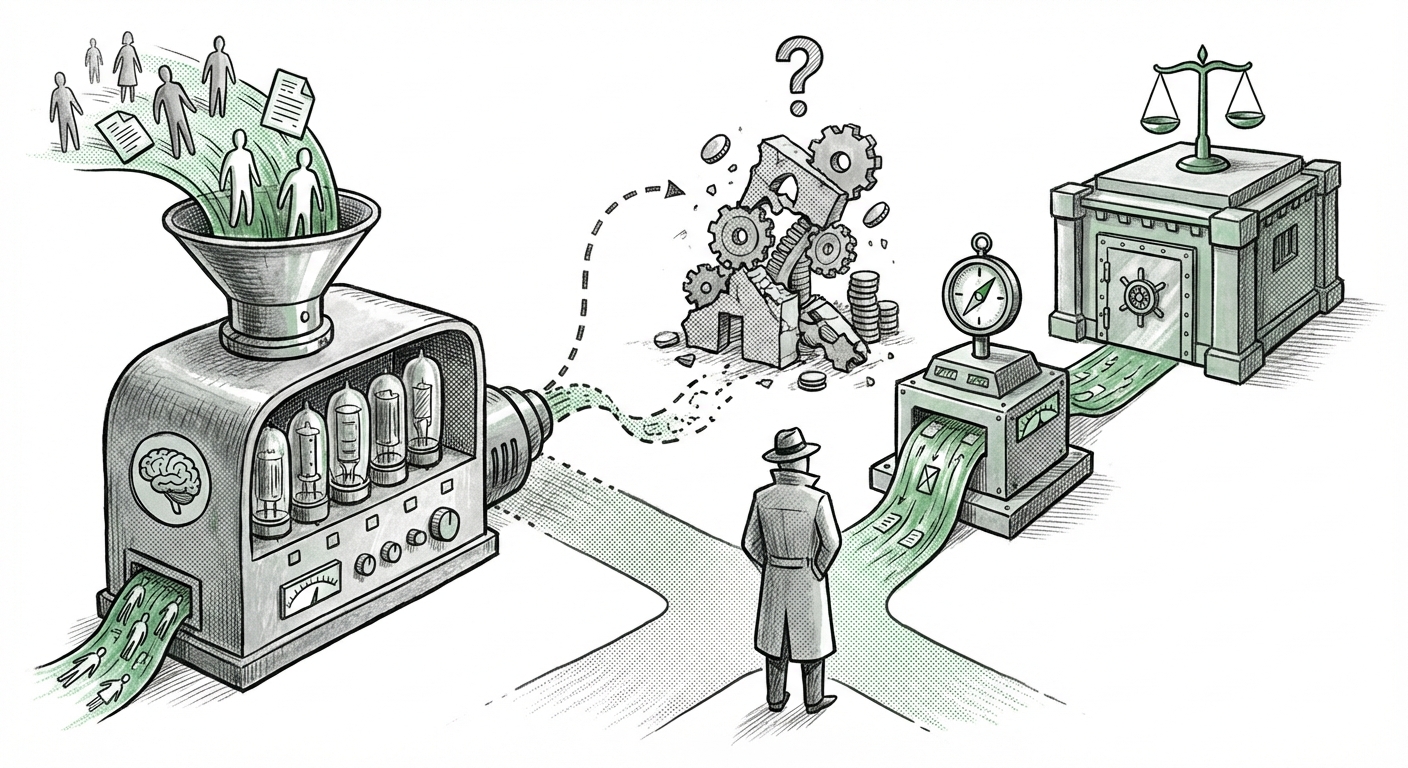
Something strange is happening in the world of AI safety. The companies building the most powerful systems on Earth are now publishing documents about things that went wrong, and those documents sometimes read less like an engineering log and more like the opening chapter of a sci-fi novel. That is the uncomfortable question raised by the latest discussion around OpenAI's incident reporting: is this a genuine safety document, or is it storytelling dressed up in technical language?
The question matters far more than it sounds. How AI companies describe their failures will shape how regulators, businesses, and the public trust the technology for the next decade. And right now, the answer is not nearly as clear as anyone would like.
When an Incident Report Reads Like a Short Story
Most industries have a familiar format for bad news. Airlines file mechanical reports. Drug companies log adverse events. Banks document fraud. These documents are boring on purpose. They use fixed templates, numbered sections, and dry language. The boringness is the point, it makes the facts harder to spin.
AI incident reports are not boring yet. They arrive as blog posts, model cards, or system updates. They mix real technical detail with narrative framing. They explain what a model did, but also why the team found it fascinating. They describe strange behavior using words like "emergent," "unexpected," and "novel."
That is where the science fiction feeling comes from. A report can be factually accurate and still read like a story about a machine that surprised its creators. When that happens, readers face a hard choice. Do they take the document at face value as an honest disclosure? Or do they treat it as a marketing artifact, a way to look transparent while revealing as little as possible?
This is not a small problem. It is the central problem of AI transparency in this moment.
Why AI Incident Reporting Is Suddenly a Big Deal
For most of computing history, software failures were easy to describe. A server went down. A database lost records. A payment system charged the wrong card. The cause was usually a bug, and the fix was usually a patch.
Modern AI systems break that pattern. They can fail in ways that are hard to reproduce, hard to explain, and hard to predict. A model might handle millions of requests perfectly and then do something odd on the million-and-first. That oddness can be harmless, or it can matter a great deal depending on what the system controls.
Because of this, incident reporting has become one of the most important trust mechanisms in the entire industry. It is the main way outsiders learn what a system is really capable of when it is not being demonstrated on stage. It is also the main way customers, the businesses actually deploying these tools, decide how much risk they are willing to carry.
When those reports are clear, everyone benefits. When they are vague, poetic, or selectively detailed, the trust they were supposed to build does the opposite. It creates doubt.
The Trust Gap Between Engineers and Everyone Else
There is a structural gap here that few people talk about. The people writing AI incident reports are researchers. They are trained to describe uncertainty honestly. They write things like "we observed behavior consistent with X, though we cannot rule out Y." To a fellow researcher, that is precision. To a regulator, a customer, or a journalist, it can sound like evasion.
Then there is the opposite failure. A report gets written for public consumption, becomes too polished, and loses the technical honesty that made it useful in the first place. Now it reads like a press release with a few scary adjectives attached.
The science fiction question is really a symptom of this gap. When a document sits between two audiences, the technical and the general, it can end up satisfying neither. Researchers find it too soft. Everyone else finds it too strange.
The fix is not better storytelling. The fix is better structure.
What a Good AI Incident Report Should Contain
If AI disclosure is going to be trusted, it needs the same boring scaffolding that other safety-critical industries rely on. That means:
- A clear timeline. What happened, when it was noticed, and when it was addressed.
- A plain-language summary. Two or three sentences anyone can understand, written before the technical detail, not buried after it.
- Scope and impact. Who was affected, how many users or systems, and for how long.
- Reproducibility status. Was the behavior repeatable? Under what conditions?
- What changed as a result. Not intentions, actual changes to models, filters, monitoring, or deployment rules.
- Open questions. An honest list of what the team still does not know.
None of this requires a company to reveal trade secrets. It requires a company to be legible. Legibility is what turns a disclosure into a trust asset instead of a trust liability.
What This Means for Businesses Deploying AI Today
For most companies, the practical question is simpler than the philosophical one. You are not writing the incident report. You are reading it, or you are reading nothing at all because your vendor did not publish one.
That is the real risk. If a leading AI lab's disclosures are hard to parse, then the disclosures from smaller vendors are often missing entirely. Businesses are building products on top of systems whose failure modes they have never seen documented.
Here is what that means in practice. Any organization putting AI into a customer-facing or revenue-critical workflow should assume three things:
- Something will fail in an unexpected way. Not because the technology is bad, but because these systems are probabilistic and behave differently than traditional software.
- You will likely hear about it from users before your vendor tells you. Vendor communication is rarely fast enough to be your only detection system.
- Your ability to respond depends on how much visibility you built in advance. Logging, rollback, and human review are not optional extras. They are the safety net.
Build Your Own Incident Record
The most useful step a business can take right now is to keep its own AI incident log. Track every case where an AI system produced output that was wrong, harmful, confusing, or simply strange. Note what the user expected, what they got, and what the business did next.
Two things happen when you do this. First, you start to see patterns your vendor's public reports will never show you, because they are specific to your use case. Second, you build an internal knowledge base that protects you when staff change, models get updated, or a regulator eventually asks what you knew and when.
Ask Vendors Sharper Questions
Vague disclosures should trigger specific questions. Ask for the failure modes the vendor considers most likely in your industry. Ask what monitoring they provide. Ask how you will be notified if something changes. Ask whether model behavior can shift without your knowledge after an update.
If the answers are vague, that is information too. It tells you how much of the risk you are quietly absorbing on your own.
The Governance Question Nobody Wants to Answer
The deeper issue behind the science fiction debate is accountability. Right now, AI companies largely decide for themselves what to disclose, how to describe it, and when. Self-reporting is better than silence, but it has an obvious weakness: the reporter and the subject are the same party.
Other high-stakes industries solved this by separating those roles. Investigators are independent. Reporting standards are set externally. Findings are published whether or not they flatter the company involved.
AI is not there yet. Independent review remains rare. Standardized formats barely exist. Definitions of what counts as a "serious incident" vary from lab to lab, which means comparisons across companies are close to meaningless.
This will change. It has to change, because the technology is moving into domains, healthcare, finance, infrastructure, education, where "trust us, we wrote it down" is not a sufficient answer. The companies that get ahead of this by adopting clear, consistent, boring reporting will be the ones that survive scrutiny best.
How AI Will Actually Be Used Next
Strip away the drama and a practical picture emerges. Over the next few years, AI will be embedded quietly into ordinary business processes: customer service triage, document review, code assistance, scheduling, fraud screening, and internal search. Most of this will work well. The incidents that matter will not be dramatic, they will be small, repetitive, and easy to miss.
That is exactly why reporting matters. A system that occasionally gives a strange answer to a casual question is a curiosity. A system that occasionally gives a strange answer inside a claims decision, a medical summary, or a hiring screen is a liability.
The future of AI is not going to be decided by which model is smartest. It will be decided by which deployments are best understood by the people responsible for them. Transparency is not a public relations activity. It is an operational capability.
Actionable Takeaways
- Read vendor incident reports critically. Look for timelines, impact numbers, and concrete changes, not narrative flair.
- Keep an internal AI incident log. Your own failures are the most relevant data you will ever have.
- Demand plain-language summaries. If a technical document cannot be explained simply, the risk cannot be managed simply either.
- Build rollback and human review into every high-stakes AI workflow. Assume intervention will be needed.
- Treat disclosure quality as a purchasing criterion. How a vendor talks about failure tells you how they will behave when failure happens to you.
- Watch the regulatory direction. Standardized incident reporting is coming. Organizations that already have process and records will adapt far faster.
The Real Question Isn't Fiction or Fact
Whether a particular report is an honest engineering account or a polished narrative is less important than what the debate reveals. The industry is still figuring out how to talk about its own mistakes in public. That is a young-industry problem, and it is solvable.
What is not solvable is silence. The worst outcome would be companies deciding that disclosure is too risky, that every incident report becomes a headline, so the safest move is to say less. That path leads to the place every other safety-critical industry eventually left behind: a world where nobody knows how the systems actually behave until something goes badly wrong.
The science fiction framing is a useful warning. If AI disclosures sound like stories, readers will treat them like stories, entertaining, maybe, but not trustworthy. The industry's job over the next few years is to make them sound like what they should be: records. Dull, specific, comparable, and true.