OpenAI's Math Solutions Aren't Meeting the Field's Standards Yet: What This Means for the Future of AI
For the last few years, one of the loudest claims about artificial intelligence has been simple: the machines are getting good at math. Math has become the proving ground for AI reasoning, a place where answers are either right or wrong, where you can't bluff your way to a passing grade, and where progress can be measured cleanly. So when the word comes down that OpenAI's math solutions still aren't meeting the standards the field expects, it matters far more than it might sound. This isn't a minor technical footnote. It's a signal about how close we really are to machines that can reason, and how much of the hype has run ahead of the evidence.
The gap between what AI systems can do on math and what mathematicians, logicians, and evaluation researchers consider acceptable work is now one of the most important stories in technology. Understanding it is essential for anyone trying to figure out where AI is genuinely heading, and where it's still falling short.
Solving Problems Is Not the Same as Doing Math
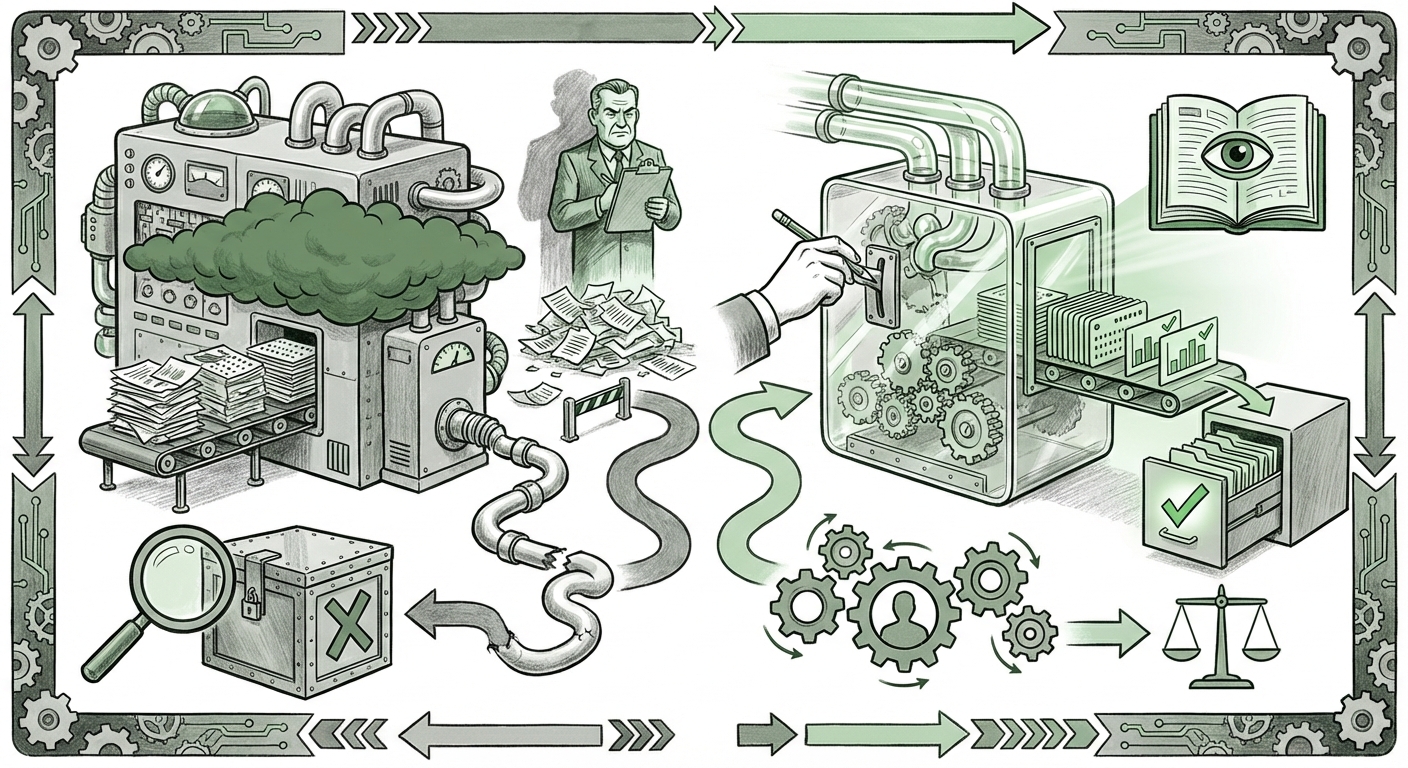
Here's the core tension. An AI model can produce an answer that looks like a clean mathematical solution. It can walk through steps, use notation correctly, and arrive at a number or a result that seems plausible. From the outside, that looks like math. But mathematicians apply a much stricter test. A real solution has to be correct all the way through, not just at the final answer. Every step must follow from the one before it. Nothing can be skipped, hand-waved, or quietly assumed.
That's where AI systems keep stumbling. They are excellent at producing text that resembles a proof or a derivation. They are far less reliable at producing one that actually holds together under scrutiny. A single flipped sign, an unstated assumption, or a leap in logic can break the whole thing. And because these systems are built to generate fluent, confident-sounding output, the errors are often hidden inside language that reads beautifully.
This is why the current shortfall lands the way it does. It isn't that the models can't produce impressive-looking math. It's that impressive-looking isn't the standard. The field's standard is correctness you can verify, step by step, without trust.
Why the Bar for Math Is So Much Higher Than Everywhere Else
In most domains, AI can get away with being roughly right. A chatbot that summarizes a document with a small error is still useful. A marketing tool that writes a slightly clumsy paragraph is still saving time. But math doesn't offer that kind of tolerance. In math, being almost right is being wrong.
That makes mathematics one of the best available tests of whether AI can truly reason, and one of the harshest. If a system claims a result, the result can be checked. If it claims a proof, the proof can be examined. There is no room for a confident tone to carry the day. Mathematicians have therefore become some of the most important critics of AI claims, precisely because their field offers no place to hide.
When solutions don't meet the field's standards, several things are usually going on:
- Steps are skipped. The model jumps from a problem to a conclusion without showing the reasoning that connects them.
- Logic is fragile. Individual steps may look reasonable in isolation but don't chain together into a valid argument.
- Verification is missing. A correct answer isn't checked against a rigorous method, so errors slip through unnoticed.
- Confidence outpaces correctness. The system's tone doesn't reflect how reliable the underlying work actually is.
- Results don't generalize. A system may handle a familiar problem while failing on a variation that requires the same underlying understanding.
Each of these is a different problem, and fixing one doesn't automatically fix the others. That's a big part of why progress on mathematical reasoning has been slower and messier than the headlines have suggested.
What "Not Yet" Really Tells Us About AI's Trajectory
The most important word in this story is yet. The shortfall is a statement about the present, not a verdict on the future. And that distinction matters enormously for how we plan.
First, it confirms something the research community has suspected for a while: fluency and reasoning are not the same skill. A system can be extraordinarily articulate about mathematics while still being unreliable at it. Once you accept that, a lot of AI behavior suddenly makes sense, including why models can sound authoritative while being wrong.
Second, it shows that math is functioning exactly as it should: as a hard test. Benchmarks that are easy to pass stop being informative. Math resists that decay because correctness is objective. As long as AI solutions fall short of mathematical standards, we have an honest measuring stick for genuine reasoning progress.
Third, it reframes what the next breakthrough will look like. The next leap probably won't be a model that sounds smarter. It will be a model whose work survives checking by people who are trained to find flaws. That is a much harder bar to clear, and a much more meaningful one.
Practical Implications for Businesses
If you're running a company and wondering whether any of this affects you, the answer is yes, just not in the way the hype cycle suggests.
Don't build on unverified reasoning
Any workflow that depends on AI producing a chain of correct reasoning, financial modeling, engineering calculations, compliance analysis, medical decision support, scientific research, should still include a human check or an automated verification step. The current state of math performance is a direct warning that confident output is not the same as correct output. Systems that verify results are worth more than systems that merely generate them.
Buy for verification, not for vibes
When evaluating AI tools, ask a blunt question: how does this prove its answers are right? A vendor that can show you a verification path, a checker, a test, a traceable chain of steps, is offering something fundamentally different from one that shows you an impressive demo. The math gap is a reminder that the demo is not the product.
Match the tool to the tolerance for error
AI remains extremely valuable in domains where being roughly right is fine: drafting, summarizing, brainstorming, translating, and customer support triage. The mistake is assuming that because a system is excellent in those areas, it's equally reliable in domains where precision is non-negotiable. The standards gap in mathematics draws a clear line between the two.
Watch the verification layer, not just the model
The most important progress in AI reasoning may not come from bigger models. It may come from better ways to check them, formal verification, step-by-step validation, and tools that can catch a broken argument before it reaches a human. Businesses that understand this will invest in checking, not just generating.
What This Means for Society
There's a public dimension here too. Much of the public conversation about AI has been shaped by dramatic demonstrations, systems that appear to solve hard problems, pass exams, or produce sophisticated analysis. When specialists in a field push back and say the work doesn't meet their standards, it's a healthy correction.
It doesn't mean AI is useless. It means the honest picture is more complicated and more interesting than the extremes. On one side are claims that machines now reason like experts. On the other are claims that they're just autocomplete. The reality is a system that can be startlingly capable and startlingly unreliable in the same breath. Learning to hold both truths at once is the skill of this decade.
This also has implications for education and expertise. If AI can produce plausible mathematical writing but not reliable mathematics, then the human skill of judging correctness becomes more valuable, not less. The people who can tell a real argument from a convincing-looking one will be the ones who keep AI useful and safe.
Actionable Takeaways
- Treat confident AI math as a draft, not a result. Always verify before it feeds a decision.
- Ask vendors how they verify. Verification capability is the real differentiator in reasoning-heavy tools.
- Invest in human review where errors are costly. Every AI system has a failure mode; make sure yours is caught.
- Track the field's standards, not the marketing. Progress in AI reasoning will be measured by specialists who test claims rigorously.
- Stay patient but engaged. The gap is real, and so is the trajectory. Build for today's capabilities and prepare for tomorrow's.
The Bottom Line
The news that OpenAI's math solutions aren't yet meeting the field's standards is not a reason to dismiss AI. It's a reason to understand it better. Mathematics is the cleanest test we have of whether a machine can reason rather than merely sound like it can, and right now, the honest answer is that the sound is still ahead of the substance.
That will change. When it does, it won't be because a model learned to talk about math more impressively. It will be because its work finally holds up when the people who know the field best take it apart. That's the milestone worth watching. And it's the one that will tell us, more clearly than any demo, that AI has genuinely crossed from imitation into understanding.