AI in Sports 2026: What South Carolina's Rout of Florida Teaches Us About the Future of AI
On October 10, 2026, LaNorris Sellers sparked South Carolina's rout of No. 16 Florida. If you are a football fan, that sentence tells you everything you need to know. If you are a business leader watching the AI industry, that same sentence tells you something much bigger, but only if you look past the scoreboard.
A ranked opponent falling on the road is not new. What is new is how fast that story reached you. Within moments, the highlights were clipped. The win-probability chart flipped. The recap was written. The debate started. Very little of that happened because a human sat down and made it happen. Increasingly, it happened because machines were watching the game alongside us.
College football has quietly become one of the best places on Earth to see the future of artificial intelligence in action. It is a live, chaotic, high-stakes environment with millions of eyes on it. If AI can keep up there, it can keep up almost anywhere.
Why a Football Score Is Really an AI Story
Think about what happens during a single play. Cameras track every player. Sensors record speed, distance, and acceleration. Broadcast systems log the down, the distance, the clock, and the score. All of that becomes data, and all of that data is fed into software that has to decide, in real time, what matters.
That is the core job of modern AI: turning a flood of raw information into a fast, useful answer. Sports just happens to be a place where the flood is enormous and the clock never stops.
Games like South Carolina's win over Florida are perfect stress tests. A top-16 team losing badly is exactly the kind of event that breaks models trained on history. The pre-game forecast almost certainly leaned toward Florida. The game itself went the other way. That gap, between what the model expected and what actually happened, is where the most important lessons live.
Real-Time Is the New Baseline
Ten years ago, "fast" meant a halftime show. Today, fans expect numbers on the screen before the referee has finished the call. Win probability, drive efficiency, player tracking, these graphics are no longer hand-built. They are generated by models that update continuously.
This shift is not limited to sports. It is happening in retail, logistics, finance, and healthcare. The expectation is the same everywhere:
- Instant answers instead of next-day reports.
- Live context instead of last quarter's snapshot.
- Systems that react instead of systems that record.
Businesses that still treat AI as a tool for writing summaries after the fact are already behind. The companies pulling ahead are the ones using AI while the game is still going.
The Content Machine Never Sleeps
One of the biggest changes of the past two years is how much of the media you consume is machine-assisted. Recaps, stat breakdowns, social posts, and translated versions of the same story can all be drafted automatically within seconds of a final whistle.
This is not about replacing writers. It is about changing what a writer does. When a machine can produce the first draft of a routine recap, the human role moves up the chain. People become editors, fact-checkers, and storytellers. They decide what the story means, not just what happened.
That pattern is repeating across every industry that produces content at scale. Customer support, internal reporting, product descriptions, marketing copy, the first pass is increasingly automated. The value shifts to judgment.
And judgment is exactly what a shocking upset demands. When No. 16 Florida gets routed, the facts are easy. Explaining why it matters is the hard part, and that is still a human job.
Predicting the Unpredictable
Here is the uncomfortable truth that every blowout teaches: AI does not predict the future. It estimates probabilities.
Models learn from what has already happened. They are extremely good at finding patterns in the past. They are much weaker when reality decides to do something it has never done before. Upsets are, by definition, the moments when the pattern breaks.
This matters far beyond sports. A supply chain model that has never seen a certain kind of disruption will underestimate it. A fraud system trained on old schemes will miss new ones. A hiring tool trained on past decisions will repeat past biases.
The lesson is not that AI is bad at forecasting. It is that good organizations treat AI output as one input among many, not as a final answer.
What This Means for Businesses
The sports world adopted AI early for three simple reasons: there is a lot of data, there is a lot of money on the line, and the audience is unforgiving. Most industries are now heading for the same conditions.
Here is what that looks like in practical terms:
- Speed becomes a product feature. Customers increasingly judge companies on how quickly they respond, not just how well.
- Personalization becomes expected. The same engine that serves you highlights of a game you care about can serve you the products, articles, and offers you care about.
- Cost structures change. Tasks that once required a team can sometimes be handled by a small team plus good tools.
- Trust becomes the bottleneck. When machines produce more of what people read and decide on, verifying it becomes the scarce skill.
The Risks Nobody Should Ignore
Fast systems make fast mistakes. A model that generates a recap in three seconds can also generate a wrong stat in three seconds. In a live setting, errors spread just as quickly as truth.
There is also a quieter risk: over-trust. When a number appears on a screen with a clean graphic and a confident font, people believe it. That is true in sports, and it is far more dangerous in medicine, law, and finance.
Athlete data raises its own questions. Tracking cameras and wearable sensors collect detailed information about real people, their bodies, their movements, their health. Who owns that data, how long it is kept, and who can access it are questions most organizations have not fully answered.
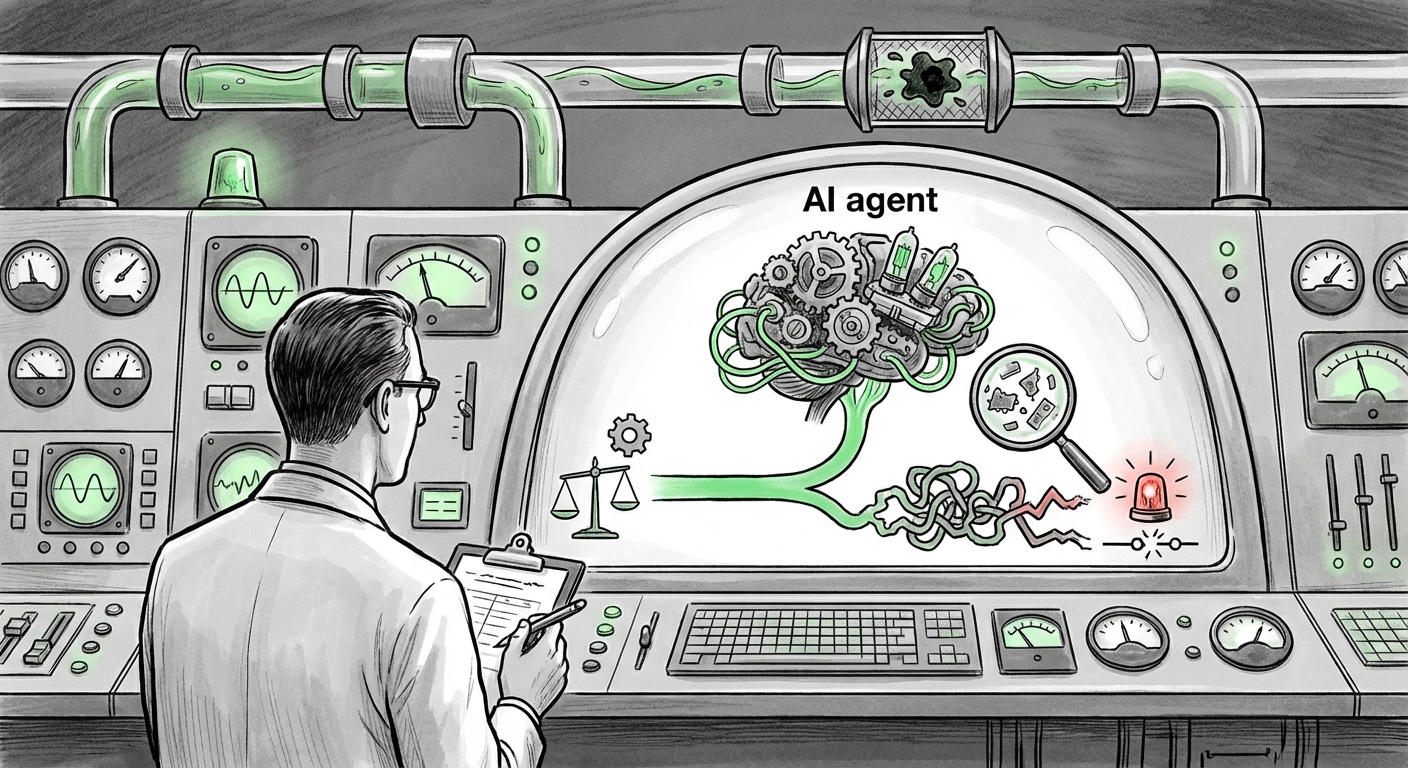
The teams that handle this well will not be the ones with the fanciest models. They will be the ones with clear rules about what AI is allowed to decide on its own.
Practical Steps to Get Ready
If you want to apply the lessons from a game like South Carolina's win over Florida to your own organization, start here:
- Find your real-time moment. Identify the decision in your business that currently happens too slowly, and ask what AI could do in the middle of it.
- Build a verification layer. Decide in advance who checks AI output and how. Never let a machine-generated number reach a customer without a clear owner.
- Keep humans on meaning. Let AI handle volume. Keep people focused on interpretation, strategy, and relationships.
- Plan for surprise. Test your systems against scenarios that have never happened. Assume your model's confidence is not the same as correctness.
- Watch your data rights. If your AI depends on personal or biometric data, get the legal and ethical questions answered before scale, not after.
What to Watch Next
Three trends will shape the next phase:
Multimodal systems. Models are no longer text-only. They can watch video, read a chart, and listen to audio at the same time. That is what makes instant, accurate highlight and analysis generation possible at all.
Agentic workflows. Instead of answering one question, AI systems are starting to chain actions together, pull the data, check the source, write the draft, format the post. This is where the biggest jumps in productivity are appearing.
Edge computing. More processing is moving closer to where events happen, which cuts delay. In a stadium, that means faster graphics. In a factory, it means faster safety alerts.
The Bottom Line
LaNorris Sellers sparking South Carolina's rout of No. 16 Florida is a sports headline today. But the machinery behind that headline, the tracking, the instant analysis, the automated content, the probability models that got it wrong, is a preview of how nearly every industry will operate.
The teams and companies that win will not be the ones that distrust AI or worship it. They will be the ones that use it for speed, keep humans in charge of meaning, and stay humble about what even the best model cannot see coming.
Upsets are not a bug in the system. They are a reminder that the future is still being written, sometimes by a quarterback, and sometimes by the people smart enough to know what their tools can and cannot do.