Anthropic Just Made AI Agents Easier to Build, And That Changes Everything
Something important happened in the world of artificial intelligence recently. Anthropic, the company behind some of the most widely used AI models in business today, has made it significantly easier to build AI agents. That's a small sentence with a very big meaning.
If you're not deep in tech news, here's the plain version: an AI agent is a piece of software that doesn't just answer questions. It does things. It can look things up, fill out forms, send emails, move data around, check its own work, and finish a multi-step task from start to finish without a human holding its hand the whole time.
Until recently, building one of those agents was a painful job. It took skilled engineers, months of work, and a lot of duct tape. Now the company that many businesses already trust with their AI workloads has lowered that barrier. The question is no longer "can we build an agent?" It's "what should we build one to do, and what happens when everyone can?"
The Real Shift: From Chatbots to Digital Coworkers
For the past couple of years, most people's experience with AI has been conversational. You type a question. You get an answer. You copy the answer somewhere else and keep working.
That model is useful, but it's limited. It puts the human in the middle of every single step. The AI is a helper that waits politely to be asked.
Agents break that pattern. Instead of one request and one reply, an agent works through a chain of steps. It plans. It acts. It checks the result. If something fails, it tries again a different way. It can use tools, search, databases, calendars, internal company systems, the same way a person would.
Think of the difference between a calculator and an accountant. A calculator does exactly what you tell it, one operation at a time. An accountant understands the goal, gathers what's needed, does the work, and flags anything unusual. Agents are the industry's attempt to move from calculator to accountant.
Anthropic's move matters because it signals that the tools for building these "digital coworkers" are maturing. What used to be a research project is becoming a product.
Why Building an Agent Used to Be So Hard
It helps to understand what actually goes into an agent, because the difficulty explains why this news matters.
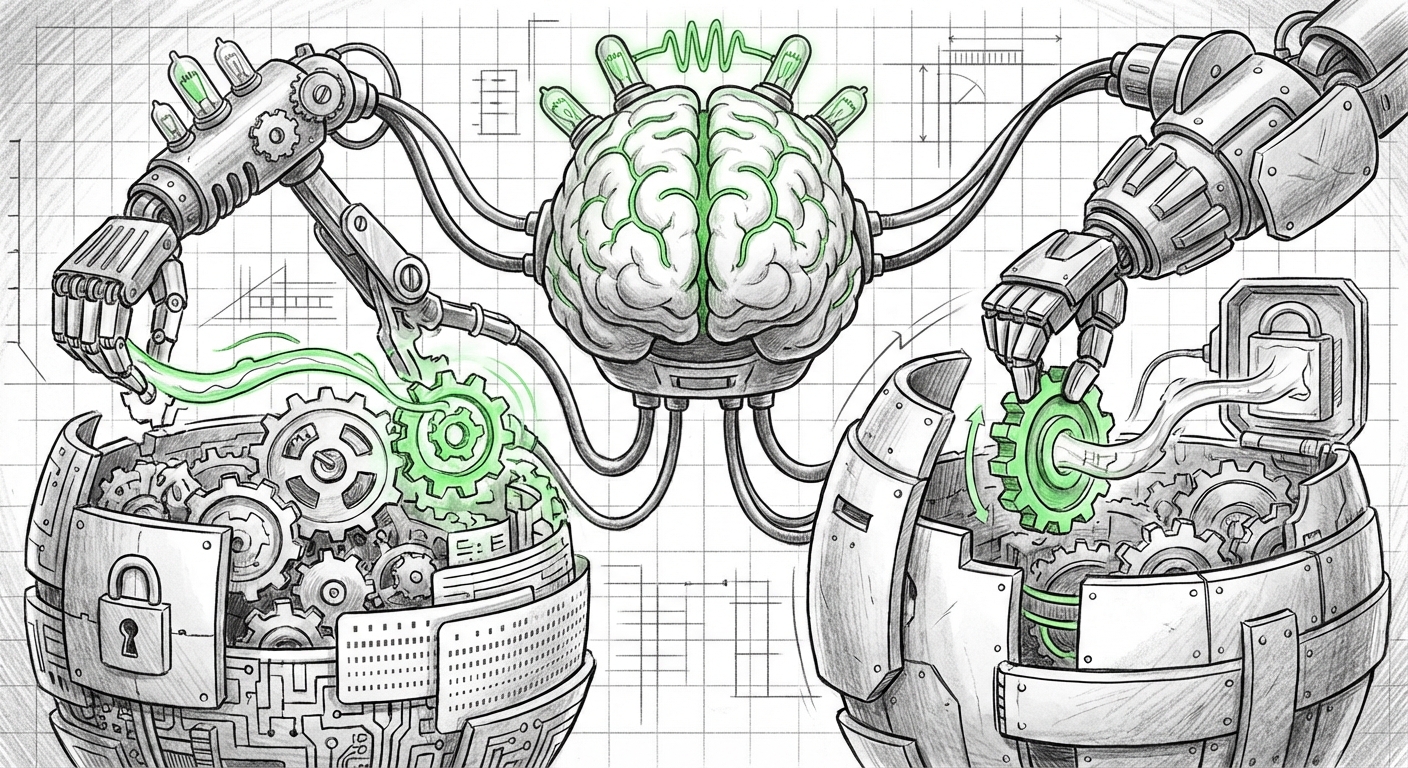
An agent needs a few core pieces working together:
- A brain: a powerful language model that can reason about a goal and decide what to do next.
- Hands: connections to real tools, email, search, spreadsheets, company software, so the agent can actually take action.
- Memory: a way to remember what happened earlier in the task so it doesn't repeat mistakes or lose the thread.
- Guardrails: limits on what the agent is allowed to do, so it can't wander into dangerous territory.
- A loop: the logic that runs the whole thing over and over until the job is done.
Each of those pieces used to require custom engineering. Teams would spend weeks just getting the loop to work reliably. Then they'd spend more weeks on memory. Then more on safety. By the time they had something usable, the underlying models had changed and they were starting over.
When a major lab makes agents easier to build, it usually means one thing: the boring parts are being handled for you. The repeated plumbing, the tool connections, the memory handling, the retry logic, the safety checks, gets bundled into a cleaner building block. Developers can then focus on the part that actually creates value: what the agent is supposed to accomplish.
What Changes When the Barrier Drops
For Developers
The job shifts. Less time is spent wiring things together; more time goes into design, testing, and evaluation. That means the most valuable skills become:
- Breaking a messy human workflow into clear, step-by-step tasks an agent can follow.
- Writing good tests to see whether the agent actually works, and catching it when it quietly fails.
- Deciding where a human must stay in the loop and where automation is safe.
In other words, the developer becomes less of a plumber and more of a designer of systems that behave well when nobody is watching.
For Businesses
This is where the impact gets big. The ability to build agents used to be limited to companies with large engineering teams and big budgets. As the tools get simpler, a small business with a sharp operations person can start experimenting too.
That opens doors for practical, unglamorous wins, the kind that actually show up on the bottom line:
- An agent that reads incoming customer emails, sorts them, and drafts replies for a human to approve.
- An agent that keeps product data consistent across several internal systems.
- An agent that prepares a weekly report by pulling numbers from multiple places and flagging anything that looks off.
- An agent that watches for unusual activity in a system and raises a flag early.
None of these are science fiction. They're the kind of work that eats up hours every week, and they're exactly what agents are good at.
For Society
The honest answer is that this cuts both ways. When the cost of automating a task falls, more tasks get automated. Some of those tasks are dull and repetitive, and automating them is a genuine relief. Others are the first rung on a career ladder.
The organizations that handle this well will be the ones that treat agents as a way to change what people do, not simply as a way to reduce headcount. That's not just a nicer story, it's usually the better business decision, because humans remain far better at judgment, relationships, and handling the weird cases that break every system.
The Risks Nobody Should Ignore
Making agents easier to build also makes them easier to build badly. A few risks deserve serious attention.
Agents that act are riskier than chatbots that talk. A chatbot that gives bad advice wastes your time. An agent that takes a wrong action can send the wrong email, change the wrong record, or delete the wrong file. The blast radius is bigger.
Confident mistakes are the hardest to catch. Language models can sound completely sure of themselves while being completely wrong. In a chat, that's annoying. In an agent running a workflow, it can quietly corrupt data for weeks.
Agents can be tricked. If an agent reads content from the outside world, web pages, emails, documents, someone can plant instructions inside that content and try to hijack the agent's behavior. This is a known area of concern in agent design, and it's one reason guardrails matter so much.
Accountability gets fuzzy. If an agent makes a decision that hurts a customer, who is responsible? The company that deployed it, almost certainly. But that needs to be clear before something goes wrong, not after.
Actionable Steps You Can Take Now
If you're running a team or a business, here's a practical path forward.
- Start with one narrow task. Pick something repetitive, low-risk, and easy to measure. Broad "do everything" agents fail. Tightly scoped ones succeed.
- Keep a human in the loop at first. Let the agent do the work, but have a person approve the output. Widen the agent's freedom only as trust is earned.
- Log everything. If you can't see what the agent did and why, you can't fix it. Good records are your safety net.
- Measure the outcome, not the activity. Don't celebrate "the agent ran 500 times." Celebrate "the agent saved six hours a week and the error rate went down."
- Write down the rules. What is the agent allowed to do? What must it never do? Who checks it? A one-page policy beats a vague good intention.
- Test for failure on purpose. Feed the agent messy inputs, missing data, and confusing instructions. Find the breaking points in a sandbox, not in front of a customer.
What Comes Next for AI Agents
When one major lab makes a capability easier to use, others tend to follow quickly. That's the pattern across the entire AI industry. Lower barriers spread fast, and once something is easy, it gets used in ways nobody predicted.
The likely near future looks like this: agents stop being a specialty project and become a normal part of business software. You won't buy "an agent" the way you buy a laptop. You'll buy a tool that happens to have agents inside it, doing work quietly in the background.
The winners in that world won't be the companies with the most agents. They'll be the ones that picked the right tasks, built strong testing habits, kept humans close to the important decisions, and stayed honest about what was working and what wasn't.
Anthropic making agents easier to build is a signal, not a finish line. It means the era of AI that does things is arriving faster than most organizations planned for. The smart move is to start small now, while the stakes are low and the lessons are cheap.