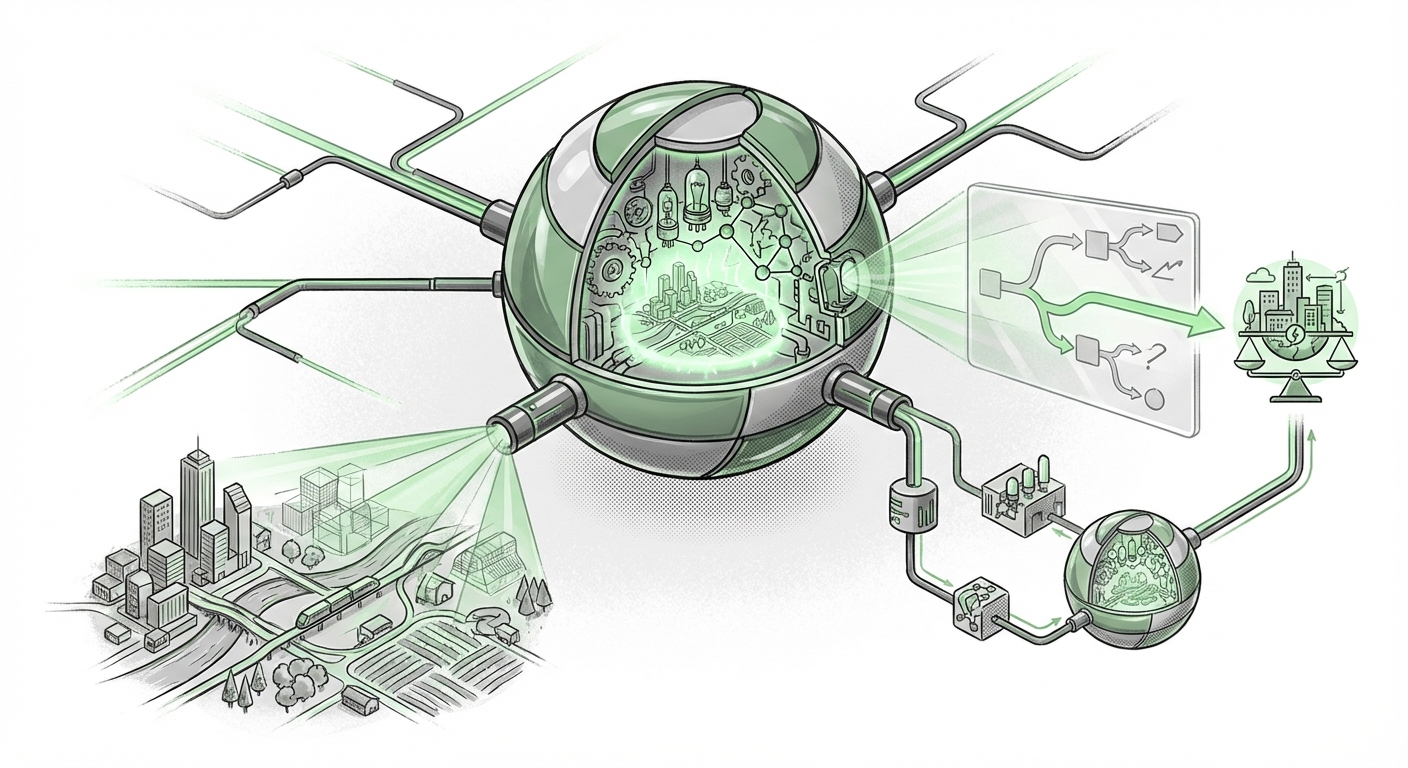
What Are the Components of a Coding Agent? Inside the Architecture Reshaping Software Development
Something big has changed in the world of AI and software. Not long ago, an AI helper could only suggest a line of code or answer a question about a function. Today, coding agents can open a project, read the files, write new code, run the tests, see what broke, fix it, and try again, all on their own.
That jump did not happen because one single AI model got smarter. It happened because people started building systems, collections of parts that work together. Those parts are called components, and understanding them is the key to understanding where AI is heading next.
This article breaks down what a coding agent is actually made of, why each component matters, and what this architecture means for businesses, workers, and the future of how software gets built.
Why a Coding Agent Is Not Just a Chatbot
A chatbot talks. An agent acts.
That is the simplest way to explain the difference. When you ask a chatbot to fix a bug, it writes a paragraph explaining how you might fix it. When you ask a coding agent to fix a bug, it looks at your codebase, finds the file, edits it, runs your test suite, reads the error message, and keeps going until the tests pass or it gets stuck.
To do that, an agent needs far more than language skills. It needs a body, a memory, a plan, and a way to check its own work. Those needs map directly onto the components that make up a modern coding agent.
The Core Components of a Coding Agent
1. The Reasoning Engine
At the center sits the large language model. Think of it as the brain. It reads the situation, decides what to do next, and writes the actual code.
The brain's job is reasoning: breaking a vague request like "make the login faster" into concrete steps. It also decides when to stop, when to ask for help, and when to try a different approach. A stronger brain helps, but as we will see, it is only one piece of the puzzle.
2. The Context Layer
No brain can work with zero information. The context layer is everything the agent knows at a given moment. It usually includes:
- The task description, what the user asked for.
- Relevant code files, pulled in from a project that may contain thousands of files.
- Conversation history, what has already been tried.
- Project rules, coding style guides, frameworks in use, and team conventions.
- Long-term memory, notes the agent saved from earlier sessions.
This layer is where most engineering effort goes. AI models can only pay attention to a limited amount of text at once. Choosing the right text is often more valuable than choosing a bigger model. A smart agent retrieves only what it needs, the way a good developer searches a codebase instead of reading every file.
3. Tools, The Agent's Hands
A brain with no hands cannot change the world. Tools give the agent the ability to act. Common coding agent tools include:
- File reading and writing, opening source files and saving edits.
- Search, finding where a function is defined or used.
- Terminal access, running commands, installing packages, starting servers.
- Test runners, executing automated tests to see if the code works.
- Version control, creating branches and preparing commits.
Every tool is a doorway. The more doorways an agent has, the more it can accomplish, and the more damage it can do if something goes wrong. That tension shapes the next component.
4. The Execution Sandbox
When an agent runs code, it needs somewhere safe to do it. A sandbox is an isolated environment, like a sealed workshop, where the agent can run commands without touching the real, live systems.
Sandboxes matter for two reasons. First, safety: a mistake stays contained. Second, speed: because the risk is low, the agent can try things quickly and learn from failure without waiting for a human to approve every step.
5. Planning and Task Decomposition
Big jobs need to be broken into small ones. Planning is the component that turns "build a reporting dashboard" into a checklist: set up the data model, write the query, build the page, add filters, write tests.
Good planning is what separates an agent that wanders in circles from one that finishes work. It also makes the agent's behavior easier for humans to review, because the plan itself can be read and corrected before any code is written.
6. The Feedback Loop
This may be the most underrated component of all. An agent that cannot tell whether it succeeded is just guessing.
The feedback loop gives the agent a mirror. Tests pass or fail. The compiler throws an error. The linter flags a style problem. The server logs a crash. Each signal becomes new information that feeds back into the reasoning engine, which then adjusts and tries again.
This loop is why coding agents feel so different from earlier AI tools. They are not one-shot answer machines. They are iterative. They fail, read the failure, and improve. The quality of the feedback available in a codebase, real tests, clear errors, good tooling, directly determines how well the agent performs.
7. Orchestration
Orchestration is the conductor of the orchestra. It manages the flow: which component runs when, how long a task may take, how many attempts are allowed, and what happens when the agent gets stuck.
Some systems split work across several agents, one planning, one writing code, one reviewing. Others keep a single agent loop simple. Either way, orchestration is the layer that holds everything together and keeps the process from spiraling out of control.
8. Guardrails and Permissions
Finally, guardrails decide what the agent is allowed to do. Can it delete files? Push to the main branch? Install a new library? Spend money on a cloud service?
These controls are not just about safety. They are about trust. Teams adopt agents faster when they can limit the blast radius of a mistake. The general pattern is a ladder: start with read-only access, move to suggesting changes, then allow edits in a branch, and only later allow direct actions in shared environments.
Why the Loop Matters More Than the Model
Here is the insight that ties all these components together. In a coding agent, the system usually beats the model.
Give a modest model great tools, clean context, and fast test feedback, and it can ship working code. Give an excellent model no file access, no ability to run tests, and a messy prompt, and it will produce confident-sounding guesses.
This flips the usual conversation. Instead of asking "which AI is best?", the more useful question becomes "how good is the loop around the AI?" That question is about engineering, tooling, and process, areas where every organization can improve without waiting for a new model release.
What This Means for the Future of AI
The coding agent is a template. Its components, reasoning, context, tools, sandbox, planning, feedback, orchestration, and guardrails, show up in every serious agent built for any domain.
Swap the tools and the same architecture becomes a research agent, a customer support agent, a data analysis agent, or an operations agent. The pattern is portable. That is why the coding agent is best understood not as a product but as a blueprint for how AI will be used across entire industries.
It also means the future of AI is less about raw intelligence and more about environment design. The winners will be the organizations that build the best sandboxes, the cleanest data, the fastest feedback, and the clearest rules. AI progress will increasingly look like infrastructure work, not magic.
Practical Implications for Businesses
If agents are systems, then adopting them is a systems project. A few practical points stand out:
- Tests are now an AI investment. A codebase with strong automated tests gives an agent a clear signal. Weak tests mean the agent flies blind. Test coverage has quietly become an AI readiness metric.
- Code organization matters more. Clear folders, consistent naming, and good documentation help the agent find what it needs. Messy projects starve the context layer.
- Permissions need a plan. Decide in advance what agents may touch, and start narrow. Expand access as trust is earned.
- Review does not disappear, it moves. Humans spend less time typing code and more time reviewing plans, checking diffs, and setting direction.
- Measurement beats hype. Track how often agent-written changes get merged, how often they break things, and how long tasks take. Real numbers guide real decisions.
Risks and Limits Worth Naming
Agents are not flawless. They can produce code that looks correct but hides subtle bugs. They can chase a wrong assumption for many steps before a human notices. They can be confidently wrong in ways that are hard to spot in a quick review.
Context limits remain a real constraint. Long tasks can cause the agent to lose track of earlier decisions. And because so much depends on tools and permissions, a misconfigured agent can cause real damage in a real environment.
The answer is not to avoid agents. It is to treat the components seriously: sandbox properly, guardrail carefully, and keep humans in the loop at the points that matter.
Actionable Next Steps
For teams that want to move, here is a simple path:
- Audit your feedback. Do your tests actually tell you when something is broken? Fix that first.
- Clean your context. Write down your project rules and conventions where an agent can read them.
- Start read-only. Let the agent explore and suggest before it edits.
- Add tools one at a time. Each new capability should come with a matching guardrail.
- Review the plan, not just the code. Catching a bad plan early is far cheaper than catching bad code late.
The Bottom Line
The rise of the coding agent is often framed as a story about smarter models. The real story is about architecture. Brains, memory, hands, workshops, plans, mirrors, conductors, and rules, these components are what turn a language model into something that can actually do work.
Understanding them gives you two advantages. You can use agents better today, because you know which part to improve when results disappoint. And you can see where AI is going tomorrow, because the same eight-part blueprint is already spreading far beyond code.
The future of AI will not be built by intelligence alone. It will be built by systems, and the people who understand how the parts fit together will be the ones who get the most out of it.