Why Compounding Containment Is the Real Test of Your AI Strategy
Most AI strategy conversations start in the same place. Someone opens a slide, shows what a model can now do, and the room gets excited. The model writes code. It books meetings. It answers customers. It pulls data, makes a plan, and takes action. Capability demos are easy to love because they are visible, fast, and impressive.
But capability is not the question that decides whether your AI program succeeds or fails. The question that actually matters is quieter and much harder: can you keep the system inside the lines, and keep doing it as the system gets stronger?
That is what compounding containment means. It is the idea that your ability to control, limit, and audit an AI system has to grow at least as fast as the system's power. If it does not, the gap between what your AI can do and what you can safely allow it to do widens every single month. That gap is where reputations, budgets, and companies get damaged.
What Containment Actually Means
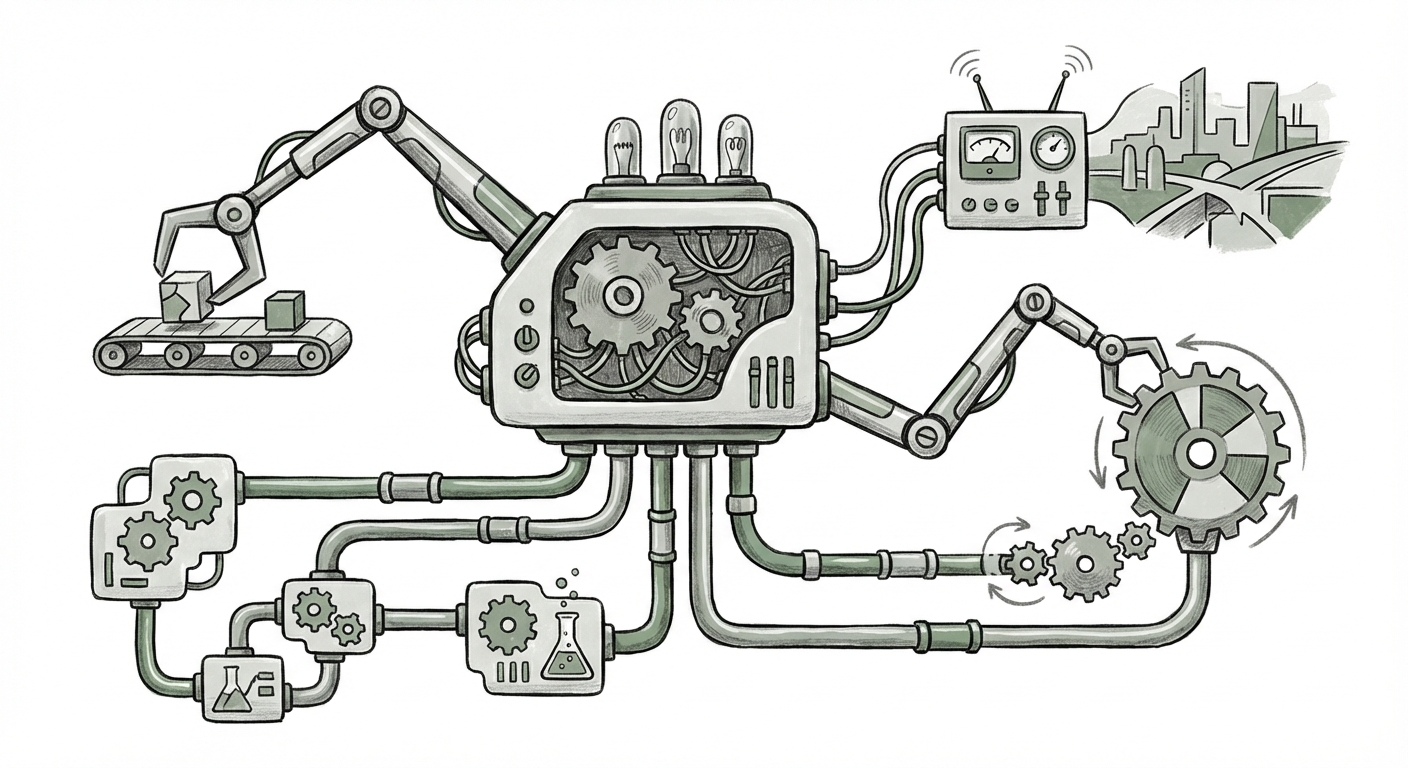
Containment is not a single product you buy. It is the full set of boundaries around an AI system. It includes every rule, permission, approval step, log, review, and shutdown switch that keeps the system doing what you meant, and nothing else.
Think of it like a chemical plant. The chemistry is the exciting part. The valves, sensors, pressure limits, and emergency shutoffs are the containment. Nobody brags about the valves. But if the valves fail, nobody cares how clever the chemistry was.
AI systems now sit in the same position. The interesting part is the model. The survival part is the containment.
Why "Compounding" Is the Word That Matters
Containment on its own sounds like a checkbox. Compounding containment is different. It describes a ratio, not a feature.
Here is the simple version. If your AI system's ability grows and your controls stay still, your exposure grows too. Every new tool you connect, every new dataset you hand over, every new decision you let the system make on its own adds to the pile. Small weaknesses do not stay small. They multiply through every path the system can take.
This works in your favor when you get it right. Good controls reinforce each other. A clear permission model makes audits faster. Good logging makes incidents shorter. Fast rollbacks make teams braver about deploying. Each improvement makes the next one cheaper. That is compounding in the healthy direction.
It works against you just as fast. One over-permissioned integration becomes ten. One forgotten API key becomes a permanent back door. One "we'll fix it later" becomes the reason a regulator, a customer, or a board asks hard questions.
Compounding containment is the discipline of making sure the second version of that curve wins.
The Demo Trap
Demos are built for the happy path. They are scripted, they are friendly, and they almost never test what happens when the system is confused, pressured, or pushed.
Production is the opposite. Production is the unhappy path, running all day, at scale, with real money and real customers on the line. The gap between a demo and a deployment is not a technical gap. It is a containment gap.
This is why so many AI pilots look brilliant and then stall. The model performed. The containment did not. Nobody could say with confidence what the system would do if a user asked the wrong question, if a tool returned an unexpected result, or if the model simply made something up with total confidence.
Where Containment Quietly Leaks
Containment rarely fails in one dramatic moment. It leaks. The leaks are boring, and that is exactly why they get missed.
- Prompt drift. People edit instructions over time. A small tweak that helps one case quietly removes a guardrail for another.
- Model changes. When the underlying model is updated, behavior shifts. A system that was well behaved last quarter may not be this quarter, even though your code never changed.
- Tool sprawl. Every new integration widens the blast radius. The system can now reach more places, and so can any mistake it makes.
- Memory buildup. Systems that remember context carry old assumptions forward. Yesterday's harmless detail becomes today's bad decision input.
- Permission creep. Access granted for a one-time task is almost never taken back.
- Human complacency. When a system is right most of the time, people stop checking. Review steps become rubber stamps. The control still exists on paper, but not in practice.
Not one of these is a catastrophe on its own. Together, over a year, they are how a well-governed AI system slowly becomes an ungoverned one.
Agents Turn Containment Into the Whole Game
Chatbots answer. Agents act. That difference changes everything about risk.
When a system can send emails, move money, change records, write code, or call other systems, a single weak rule does not stay a single weak rule. It repeats. It repeats across every task the agent runs, every hour, without anyone watching.
This is where compounding stops being a metaphor. An agent with one small gap and a thousand daily actions produces a thousand chances for that gap to matter. Containment is no longer a safety feature bolted on at the end. It becomes the product. If you cannot bound what an agent is allowed to do, you cannot responsibly let it do anything at all.
The good news runs the same way. When containment is strong, autonomy gets cheap. You can hand over bigger jobs because you know the system cannot wander outside its lane, and you know you can see exactly what it did and undo it if needed.
The Three Layers You Need
1. Technical containment
This is the machinery. Least-privilege access, so a system only touches what it must. Sandboxes and allow-lists for tools. Validation of outputs before they are used. Human approval for anything irreversible. Hard limits on spending, volume, and reach. These are not nice-to-haves. They are the walls.
2. Operational containment
This is how you run it. Testing before release and after every change. Red teaming that tries to break the system on purpose. A clear incident response plan. A rollback button that actually works. Change management that treats a prompt edit or a model swap as seriously as a code release.
3. Governance containment
This is who owns it. Named accountability for each AI system. Documented decisions about what it is and is not allowed to do. Audit trails that a stranger could follow. Vendor and third-party review. A policy that says what happens when something goes wrong.
Weakness in any one layer drags down the other two. Strong layers reinforce each other, and that reinforcement is the compounding effect you want.
What to Actually Measure
You cannot manage what you cannot see. A few practical measures tell you whether containment is compounding or decaying.
- Time to detect. How long before you know something went wrong?
- Time to contain. How long before it is stopped and undone?
- Reversibility. What share of the system's actions can be rolled back cleanly?
- Containment coverage. For every new capability you ship, is there a matching control?
- Unexplained actions. Any action the system took that nobody can explain is a failure, not a curiosity.
- Drift checks. Re-run your safety tests whenever the model, the prompts, or the tools change.
Watch the trend, not the snapshot. A single good month means little. Six months of steady improvement means your containment is compounding.
A Practical Playbook
If you want to move on this now, start small and start specific.
- List every AI system in production and name one human owner for each.
- Map what each one can reach, data, tools, money, people, and cut anything it does not need.
- Mark every irreversible action and put a human or a hard limit in front of it.
- Write down the ten worst things the system could do, then test each one.
- Make rollback a real, rehearsed process rather than a hope.
- Re-test after every model change, prompt change, or new integration.
- Review permissions and access every quarter, and remove what is not used.
None of this is glamorous. All of it is what separates a program that scales from one that gets shut down.
What This Means for the Future of AI
The next stage of AI will not be won by whoever has the most impressive model. Models are becoming broadly available. The edge will go to the organizations that can safely hand over more autonomy than their competitors, and prove it.
That reframes containment as an enabler rather than a brake. Teams with strong controls will deploy faster, not slower, because they will not need months of hand-wringing before each release. They will have evidence. They will be able to answer the board's question, the customer's question, and eventually the regulator's question with facts instead of reassurance.
Expect three shifts. First, buyers will ask for containment evidence the way they now ask for security certifications. Second, rules will increasingly focus on proof of control rather than promises about intent. Third, trust will become a product feature, not a marketing line. Organizations that can show what their AI did, why it did it, and how it was stopped will carry a real advantage.
There is a societal angle too. Most people do not care how a model works. They care whether it can be trusted with their money, their medical details, and their reputation. Compounding containment is the practical answer to that worry. It is how confidence gets built, one controlled deployment at a time.
The Takeaway
Ask a harder question in your next AI review. Do not ask what the system can do. Ask what it cannot do, how you know, and how that answer is improving.
Containment that stays flat while capability climbs is a countdown. Containment that compounds is a strategy. The organizations that understand the difference will be the ones still operating confidently when the rest are explaining what went wrong.