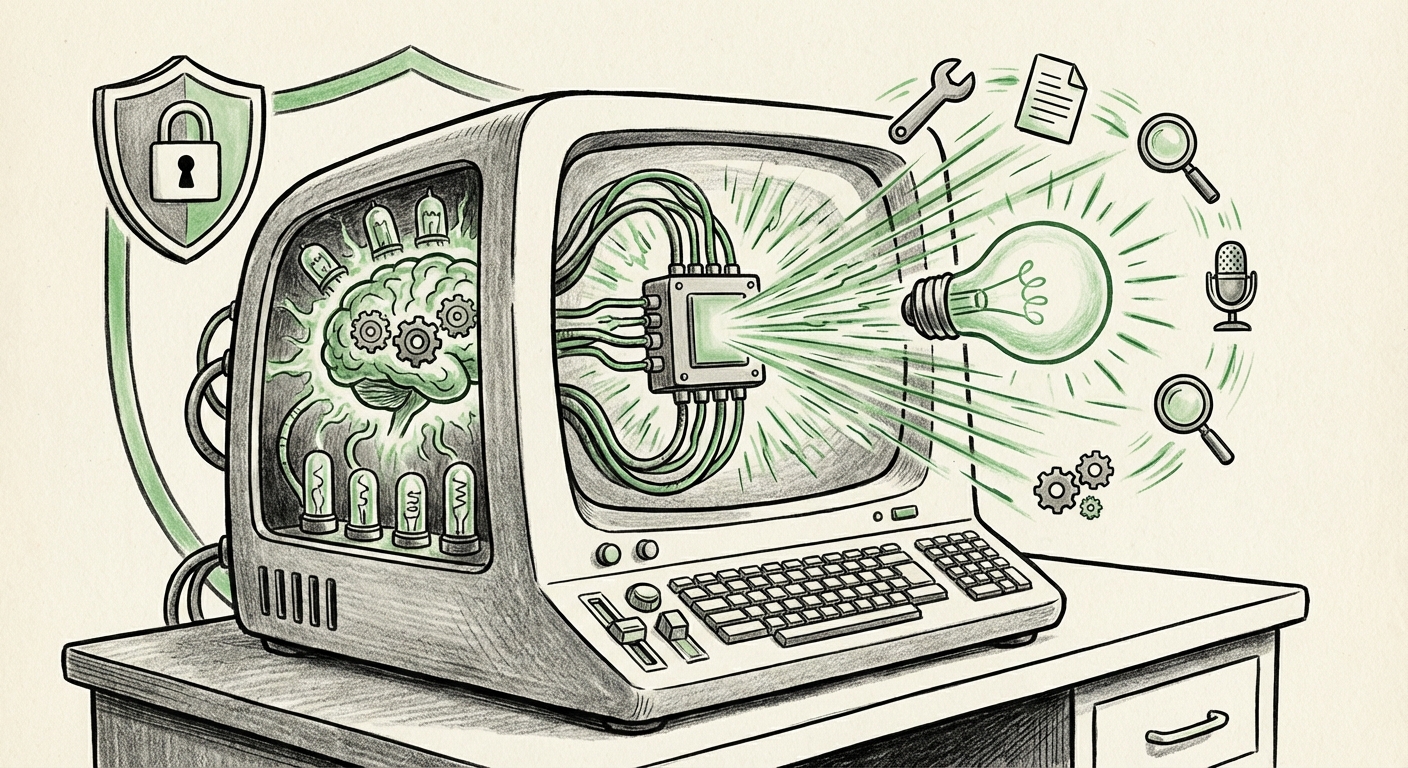
The Cozy Fall Guide Meets AI: How Seasonal Content Is Becoming Personal
On October 10, 2026, a simple piece of content went live under a familiar seasonal banner: Your official guide to cozying up for fall. On the surface, it looks like the kind of article the internet has produced every autumn for the last two decades, warm drinks, soft blankets, shorter days, and a general invitation to slow down.
But look closer at the timing, the framing, and the word "official," and something bigger shows up. Seasonal lifestyle content like this has quietly become one of the most important testing grounds for artificial intelligence. It is where personalization engines, recommendation systems, smart home devices, and generative AI all collide with something deeply human: the desire to feel comfortable.
That collision tells us a lot about where AI is heading, and how ordinary people will actually experience it.
Why "Cozy" Is a Hard Problem for Machines
Comfort sounds easy. It isn't. What makes one person feel cozy is noise to another. Some people want a crackling fire and a thick sweater. Others want a quiet room, a warm lamp, and a low hum of rain. Cozy is personal, sensory, and emotional, and that makes it a genuinely difficult target for AI to hit.
This is exactly why seasonal guides matter as a technology story. They are low-stakes, high-emotion requests. Getting them right requires AI to understand mood, memory, and context, not just keywords. Getting them wrong is annoying but harmless, which makes them the perfect place for systems to learn.
The "official guide" framing is telling too. In a world where anyone can generate an endless stream of fall content in seconds, being labeled official becomes a signal of trust. As AI floods the internet with more writing, more images, and more recommendations, the value of curation goes up, not down.
The Shift From One Guide to Millions of Guides
Ten years ago, a fall guide was written once and read by everyone. Today, the same content can be reshaped in real time for each reader. The same headline becomes a hundred different versions, each one tuned to a different person's climate, schedule, budget, and taste.
This is the core trend: content is moving from broadcast to assembled. Instead of one article that tries to please everyone, AI systems are increasingly building a unique version of an experience for each user, on the fly.
That changes the job of a publisher, a brand, or a retailer. The question is no longer "What should we publish?" It is "What building blocks do we need so that a system can assemble the right thing for the right person at the right moment?"
What that looks like in practice
- Component thinking: Instead of one finished page, teams produce modular pieces, a tip, a product, an image, a short video, that a system can recombine.
- Context awareness: The same guide looks different for someone in a cold climate versus a mild one, or for someone with two hours free versus twenty minutes.
- Continuous tuning: The system learns from what people actually do, what they read, skip, save, or buy, and adjusts the next version.
The Cozy Tech Stack: Where AI Meets the Home
Seasonal comfort isn't only about words on a screen. It's increasingly physical. Smart thermostats, smart lighting, connected speakers, and air quality sensors all shape how a home feels in October and November. Each of those devices is a data source, and increasingly, each one is a decision-maker.
The future here is ambient AI, systems that quietly adjust your environment without being asked. Lights warm up as the sun sets earlier. Heat shifts room by room as people move through the house. A speaker lowers its volume when the room gets quiet. None of this requires typing a command.
The hard part isn't the technology. It's the judgment. A system that optimizes for energy savings might make a home feel cold. A system that optimizes for comfort might waste power. The best AI in this space will balance competing goals, cost, comfort, sustainability, and health, and explain its choices in plain language.
That last point matters more than it sounds. Trust in ambient systems depends on people understanding what the system did and why. Invisible automation that can't be explained tends to get switched off.
The Comfort Algorithm and the Risk of the Filter Bubble
There's a real tension buried in all this. If AI learns that you love cozy fall content, it will give you more of it. That feels great, until it narrows what you see.
Recommendation systems are very good at serving people what they already like. Left unchecked, that can turn a season of discovery into a closed loop of the same five ideas. The fall guide you receive in 2027 might look almost identical to the one from 2026, just slightly better tuned.
The healthiest systems will build in deliberate variety. They will mix the familiar with the new, the proven with the surprising. For businesses, this is both an ethical question and a commercial one. Users who get stuck in a loop stop exploring, and stop buying new things.
What This Means for Businesses
Several practical shifts are coming for any company that touches seasonal demand.
1. Data quality beats data volume
Personalization runs on signals, but more data isn't automatically better. Clean, well-labeled, permission-based data about real preferences is worth far more than a giant pile of noisy clicks. Companies that invest in data hygiene will outperform those that simply collect more.
2. Brand voice becomes a system, not a document
If AI assembles content, it needs to know how your brand sounds in every situation. That means clear rules, examples, and guardrails, written down in a form a machine can use. Style guides are becoming configuration files.
3. Speed of iteration is the new moat
When a system can test ten versions of a seasonal message in a day, the winners are the teams that can learn fast and ship changes quickly. Slow approval chains become a competitive disadvantage.
4. Human taste still decides the goal
AI can generate endless options. It cannot decide what "cozy" should mean for your brand or your customers. That's a human job, and it's becoming more valuable, not less.
5. Trust is the product
When content is assembled automatically, users need confidence that it's accurate, safe, and not secretly pushing them somewhere they don't want to go. Clear labeling, honest recommendations, and easy controls will separate trusted platforms from the rest.
What This Means for Society
Stepping back, the seasonal guide is a small window onto a much larger change. AI is moving from being a tool people open to being a layer that surrounds them. It shapes what they read, what they buy, how warm their home is, and what they think is normal.
That's powerful, and it comes with responsibility. Three concerns deserve attention:
- Manipulation: Systems that optimize for engagement can push people toward choices they wouldn't freely make. Transparency and user control are the antidotes.
- Access: Highly personalized experiences cost money and data. If only some people get them, the gap between customized and generic service widens.
- Skills: If AI decides everything, people lose the ability to choose and to notice when something feels off. Keeping humans in the loop is not nostalgia, it's a safeguard.
Looking Ahead: Five Things to Watch
- Explainable personalization. Systems that can say "here's why I showed you this" will win trust faster than black boxes.
- Hybrid authorship. Human-designed frameworks with AI-generated variations will become the standard for large content operations.
- Ambient comfort as a feature. Expect smart home platforms to compete on how a space feels, not just how efficient it is.
- The "official" premium. Verified, trustworthy curation will be sold as a premium layer on top of free AI-generated content.
- New regulation. Rules around disclosure of AI-generated and AI-shaped content will keep expanding, especially where money and persuasion are involved.
Actionable Steps You Can Take Now
- Audit your seasonal content. Identify which pieces are modular enough to be reassembled for different audiences.
- Define your guardrails. Write down what your brand will and won't say, then encode it into your tools.
- Measure outcomes, not just clicks. Track satisfaction, returns, and repeat visits, not only engagement.
- Give users controls. Let people adjust, reset, and see why they're being shown something.
- Add variety on purpose. Design your recommendation systems to surprise people occasionally.
- Keep a human editor. Someone should be accountable for what the system produces.
The Bigger Picture
A guide to cozying up for fall seems like the softest possible corner of the internet. It's actually a preview. The same mechanics, personalization, ambient automation, assembly, and trust, are spreading into health, finance, education, and work.
What happens in seasonal content first tends to reach everything else later, because the stakes are low enough to experiment. The lessons learned here, about transparency, restraint, and the value of human taste, will shape how AI feels in every part of daily life.
Cozy, it turns out, is a pretty good test of whether a machine actually understands us. And in 2026, that test is only just beginning.