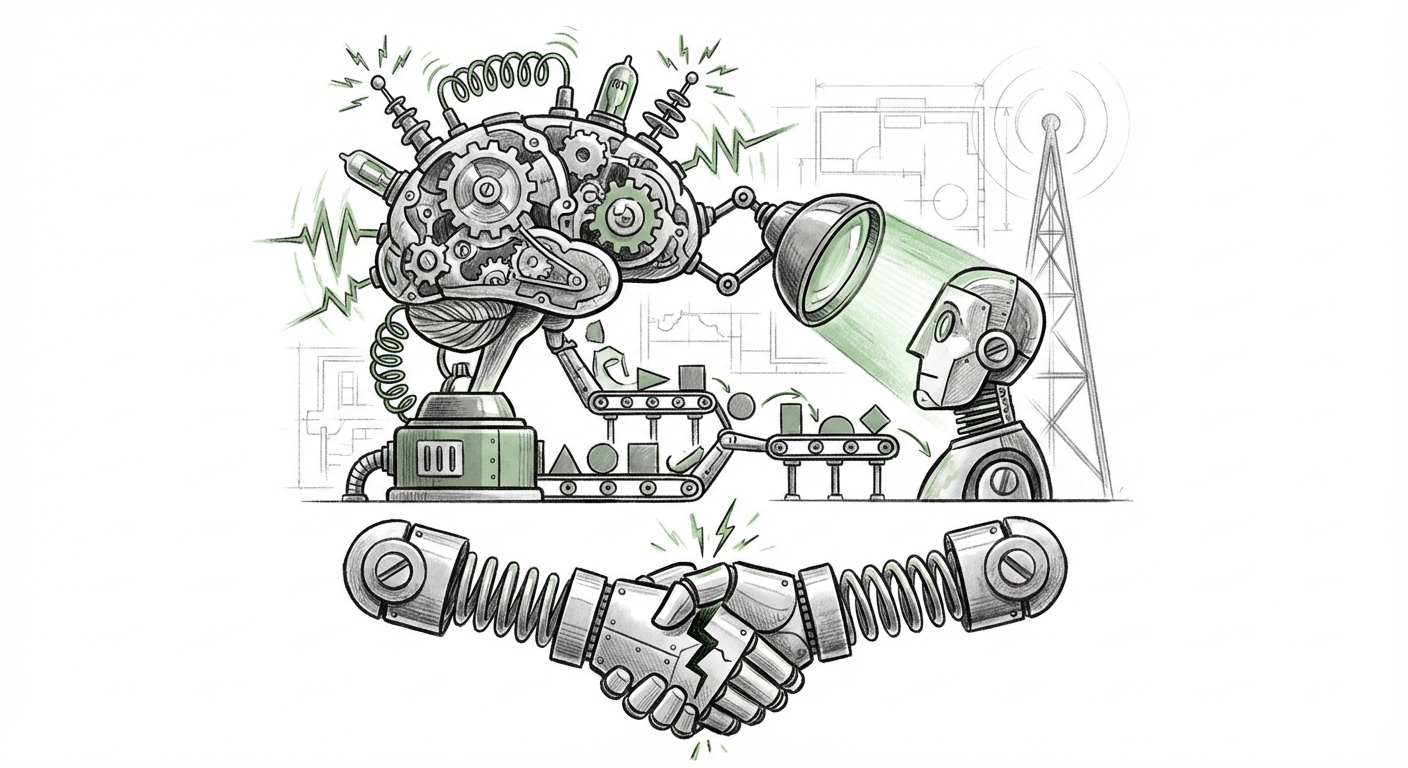
Logitech CEO Hanneke Faber on AI Agents and the Great Tech Divide: What It Means for the Future of AI
Something big is shifting in the world of artificial intelligence. We are moving past the era of chatbots that answer questions and into the era of AI agents, software that doesn't just talk, but actually does things. It books the meeting, fills the form, updates the record, and follows up on the task. And the person leading one of the world's best-known computer accessory companies, Logitech CEO Hanneke Faber, is paying close attention to what that shift means for everyone.
Faber's message blends excitement with caution. On one side is the promise of AI agents that work quietly in the background, saving hours of human effort every day. On the other is a warning about a widening gap, what Faber frames as the great tech divide, between the people and companies who can use these tools and those who get left behind. Understanding both halves of that story is the key to understanding where AI is heading next.
From Chatbots to Agents: The Real Turning Point
For the last few years, most people's experience with AI has been conversational. You type a question, you get an answer. Useful, yes, but passive. The AI waits for you. It doesn't take initiative.
AI agents change that equation. An agent is built to pursue a goal. Give it an objective, "reconcile these invoices," "prepare a summary of this customer's history," "schedule this project's kickoff", and it plans the steps, uses tools, checks its own work, and reports back. It can operate across different apps and services rather than being trapped inside one chat window.
This matters because most of the friction in modern work isn't the thinking. It's the switching. Switching apps. Switching context. Copying data from one place to another. Agents are designed to erase that friction. And that is precisely why executives like Faber see them as the next major platform shift rather than just another feature update.
Why the Agent Era Is Different
Three things make agents fundamentally different from the AI tools that came before:
- They take action, not just advice. The output isn't a suggestion, it's a completed task.
- They run in the background. You don't have to babysit them step by step.
- They connect to real systems. Their value comes from reaching into calendars, documents, databases, and devices.
That third point is where a hardware company like Logitech enters the picture. Agents need a place to live and a way to interact with the physical world. They need microphones that hear clearly, cameras that see context, keyboards and mice that capture intent, and speakers that respond. The devices we touch every day become the front door for AI.
The Great Tech Divide: The Uneven Race
The second half of Faber's framing is the uncomfortable one. New technology rarely spreads evenly. It lands first with the biggest companies, the wealthiest regions, and the most digitally fluent workers. Everyone else waits, sometimes for years.
The great tech divide isn't only about money. It shows up in several forms:
- Access divide: Some organizations have the cloud budgets, data pipelines, and technical staff to deploy agents. Others are still patching together spreadsheets.
- Skills divide: Knowing how to delegate to an agent, how to write a goal, set boundaries, and verify results, is a new skill set that most workers have never been trained for.
- Trust divide: People who have seen AI work reliably will lean on it more. People who have been burned by a bad answer will avoid it entirely.
- Hardware divide: Agents shine when they can see, hear, and act. That requires capable devices, decent connectivity, and secure infrastructure, things not everyone has.
Here's the uncomfortable implication: if agents really do multiply productivity, then the gap between the agent-powered and the agent-less doesn't just stay the same. It widens faster. A company that saves ten hours a week per employee compounds that advantage month after month. A company that doesn't falls further behind with every passing quarter.
That is why the divide is such a serious theme. It's not a fairness footnote. It's a structural risk for economies, workforces, and entire industries.
The Hardware Angle: Why Devices Matter More, Not Less
There's a popular assumption that as AI gets smarter, hardware matters less. If everything lives in the cloud, who cares what laptop, mouse, or webcam you use?
Faber's perspective flips that assumption. When AI agents become the way work gets done, the quality of the input and output becomes the ceiling on the agent's usefulness. A muffled microphone produces a garbage transcript. A blurry camera produces a confused assistant. A laggy input device produces frustration instead of flow.
In other words, the smarter the software gets, the more the physical experience matters. That's a genuinely important strategic insight, and it's why a company built around human-computer interaction has a stake in the agent conversation.
Three Device-Level Patterns to Watch
- Peripherals become AI-aware. Devices will increasingly be tuned for voice, gesture, and presence rather than just raw input.
- Meeting rooms turn into agent surfaces. Summaries, action items, and follow-ups can be captured automatically when the hardware is designed for it.
- Personalization moves to the edge. Some AI processing will happen on the device itself for speed and privacy reasons, not in a distant data center.
For buyers, this means the device refresh cycle is no longer just about speed and battery life. It's about whether your hardware can support the AI workflows you're about to depend on.
Practical Implications for Businesses
If agents are coming and the divide is real, what should a business actually do? Not wait. The most common mistake is treating AI agents as a "someday" project while competitors quietly test and learn.
Start With Narrow, Boring, High-Volume Tasks
The best early agent projects are unglamorous. Think: pulling data from one system into another, summarizing long documents, triaging support tickets, or preparing recurring reports. These tasks are repetitive, measurable, and low-risk, perfect for learning how agents behave before trusting them with anything critical.
Measure Hours, Not Hype
The single most useful metric is time reclaimed. If an agent saves a team five hours a week, that's a real number you can track. If it only feels impressive, it's not a business case yet.
Build Guardrails Before You Build Agents
Agents that take action can also take wrong action. Clear permissions, approval steps for high-stakes decisions, logging, and human review points aren't bureaucracy, they're what makes delegation safe in the first place. The organizations that handle this well will scale faster, not slower.
Invest in the Human Side
Training matters as much as technology. Workers need to learn how to supervise an agent, write clear instructions, spot hallucinations, and know when to step in. This is the quiet half of the great tech divide, and it's the half most companies skip.
What Society Should Prepare For
The agent era raises questions that go well beyond the office.
Work is being re-shaped, not deleted. The tasks that disappear first are the repetitive ones. The tasks that grow are judgment, relationships, and oversight, supervising the agents themselves. That's a real transition, and it's disruptive for anyone whose job is mostly routine digital work.
Trust becomes infrastructure. If agents act on our behalf, we need to know what they did and why. Clear records, transparency, and the ability to undo actions will matter as much as raw capability.
Access is a policy question. If AI agents deliver a real productivity boost, then unequal access to them becomes an economic issue, not just a technology one. Schools, small businesses, and underserved regions all sit on the wrong side of that line unless someone actively closes it.
Attention shifts to the interface. As agents handle more, the human role becomes directing and checking. Designing that interaction well, across screens, voice, and devices, is one of the most important and least discussed challenges of the next decade.
Actionable Insights: What to Do in the Next 90 Days
- Audit your repetitive work. List the tasks your team repeats weekly. That's your agent shortlist.
- Run one small pilot. Pick a single workflow, define success in hours saved, and measure it honestly.
- Check your hardware reality. If your meeting rooms, mics, and cameras can't support AI workflows, that's a fixable but real blocker.
- Write your AI rules now. Decide in advance what agents may do alone and what needs a human signature.
- Train your people early. The skills gap is cheaper to close before it becomes a performance gap.
- Watch the divide in your own market. If you're moving fast, you're gaining. If you're waiting, you're falling behind, there's rarely a neutral position.
The Road Ahead
Faber's framing lands on something that's easy to miss in the daily noise of AI announcements: the technology itself is only half the story. The other half is who gets to use it, how quickly, and with what safeguards.
AI agents are not a distant future. They're the next layer being built on top of the models we already have. They will show up first in narrow, practical workflows, then spread into the everyday tools people already use. And as they spread, the gap between organizations that adopt them well and those that don't will become one of the defining business stories of the decade.
The winners won't be the ones with the flashiest demos. They'll be the ones who pair smart agents with good hardware, clear rules, and trained people, closing the divide instead of widening it. That's the real lesson hiding inside the excitement, and it's the one worth acting on today.