MCP Tools Meet Robot Bodies: Why Reachy Mini Is a Big Deal for the Future of AI
For years, the smartest AI models in the world have been trapped behind a glass screen. They could write, plan, reason, and answer, but they could not reach out and touch anything. That wall is starting to fall. The latest step comes from an open-source project that has connected MCP tools to Reachy Mini, a small, friendly desktop robot. On the surface, it sounds like a niche hobbyist experiment. In reality, it is a preview of something much bigger: AI that does not just talk about the world, but acts inside it.
This article breaks down what happened, why it matters, and what it signals about where artificial intelligence is heading next. Whether you run a business, build software, or simply want to understand the next wave of AI, this shift deserves your attention.
What Exactly Is Reachy Mini, and What Are MCP Tools?
Reachy Mini is a small, open-source robot designed to sit on a desk. It has moving parts, sensors, and a playful, expressive design. It is built for tinkering, the kind of hardware that students, researchers, and hobbyists can program, modify, and learn from. Because it is open, anyone can build new abilities on top of it.
MCP stands for Model Context Protocol. Think of it as a universal plug for AI. Instead of every AI model needing a custom, hand-written connection to every tool, database, or service, MCP gives them one shared standard. A model that speaks MCP can suddenly use a calendar, a weather feed, a file system, a search engine, or a robot arm, as long as that tool also speaks MCP.
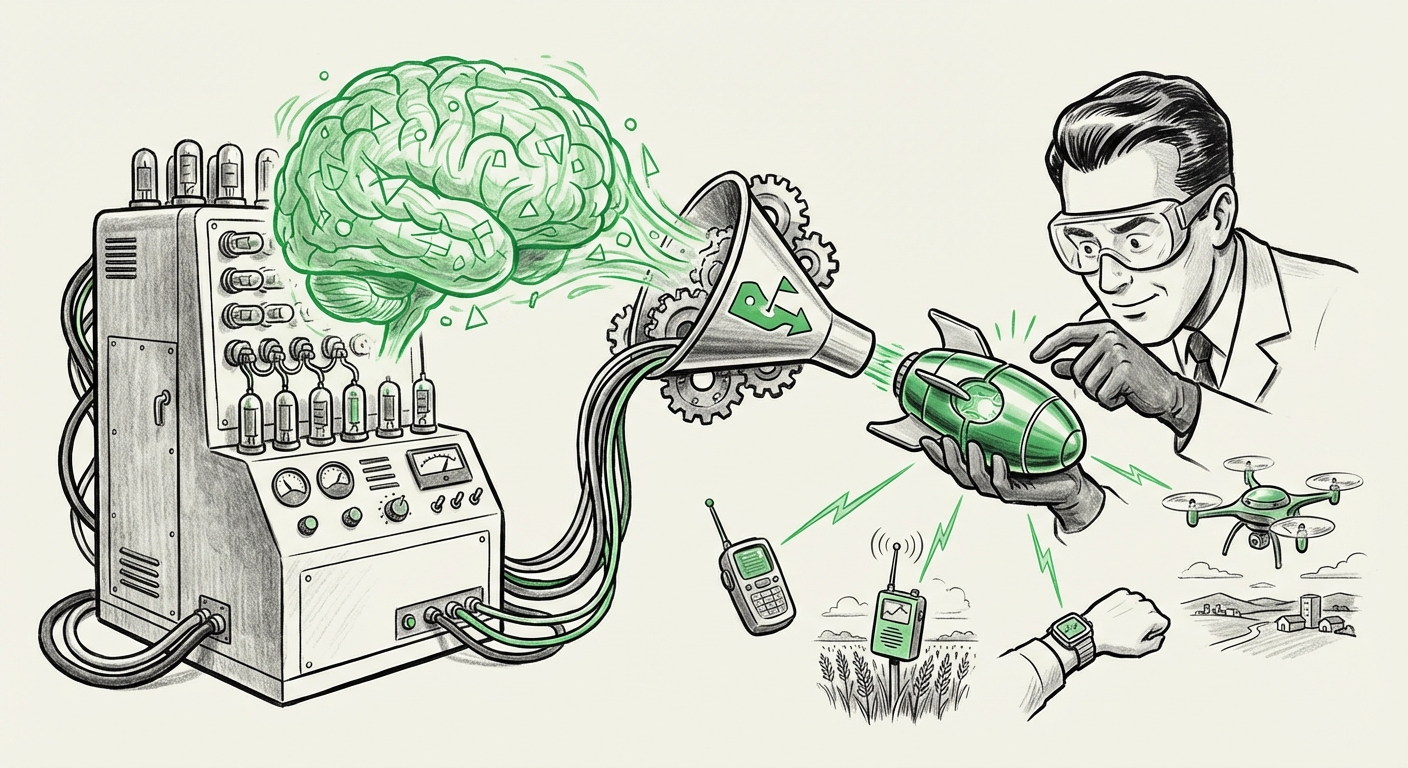
Put those two ideas together and you get something new. Adding MCP tools to Reachy Mini means the robot's language brain can now call real tools and take real actions in a standard way. The AI is no longer just describing what should happen. It can reach into a toolbox of capabilities and make it happen.
From Chatbot to Doer: The Big Shift in AI
The most important trend in AI right now is not bigger models. It is connected models. The industry has quietly agreed on a simple idea: a language model on its own is a brain in a jar, and brains in jars are not very useful.
Tool use changes the math. A model that can call tools can:
- Look up live information instead of guessing from old training data.
- Take actions, sending a message, moving an object, adjusting a setting.
- Chain several small steps together to complete a bigger job.
- Report back what it did, creating a record that humans can check.
When you add a physical body to that recipe, the stakes rise. A tool-using chatbot can send a wrong email. A tool-using robot can knock over a cup. That is exactly why projects like this matter: they let developers practice on something small, safe, and open before the same patterns show up in factories, hospitals, and homes.
Why Open Protocols Beat Closed Ecosystems
Here is the part business leaders should pay close attention to. MCP is a standard, not a product. Standards have a way of winning. When everyone agrees on how two things talk to each other, the cost of connecting them collapses.
The early internet worked this way. So did USB, Wi-Fi, and the web itself. Each time a shared standard appeared, thousands of new products became possible because builders no longer had to solve the same connection problem over and over.
We are watching the same pattern play out for AI and robots. The first wave of AI integration was slow and expensive. Every company built custom bridges between its model and its data. The next wave is plug-and-play. If MCP becomes the default, then a robot, a phone, a spreadsheet, and a customer support system can all be wired into the same AI brain with far less effort.
That is why a small open-source robot project is more than a hobby. It is a testbed for the plumbing of the next decade of computing.
What This Means for the Future of AI
1. AI Moves From Software Into the Physical World
Software AI has already reshaped writing, coding, and customer service. The next frontier is physical. Robots that can understand plain language instructions and act on them will not need expert programmers for every task. A warehouse manager could say, "Sort the small boxes to the left," and the system figures out the rest. The Reachy Mini experiment is an early, low-stakes version of that future.
2. Small Models Get Big Capabilities
When a model can borrow tools, it does not need to know everything itself. A compact model running on modest hardware can call a calculator for math, a database for facts, and a vision tool for seeing. This means powerful AI may soon run on cheap devices, including robots, rather than only in giant data centers.
3. Robots Become Updateable
Old robots were frozen at the moment they shipped. Their skills were fixed. A tool-connected robot is different. New abilities can arrive later as new tools, without changing the hardware. That turns a robot into a platform rather than a product.
4. The Gap Between Demo and Deployment Narrows
Historically, robot videos on the internet looked amazing while real deployments stayed clumsy. Standard tooling shrinks that gap. If the connection layer is solved, teams can spend their time on the hard parts, safety, reliability, and real-world messiness.
Practical Implications for Businesses
The smart move for companies is not to buy a robot tomorrow. It is to get ready for a world where AI actions are normal.
Start Treating AI as a Worker, Not a Search Box
Most businesses today use AI to answer questions. The bigger value comes from letting AI complete tasks, updating records, drafting and filing, monitoring systems, and flagging exceptions. The MCP approach makes those actions standard and auditable.
Design Your Systems to Be Tool-Friendly
Ask a simple question about your internal software: could an AI call this safely, with clear permissions and a clear log? If the answer is no, that is a project. Every system that becomes AI-callable becomes more valuable.
Think About Permissions and Guardrails Early
A tool-using AI needs boundaries. Which tools can it touch? What can it never do? Who reviews its actions? Companies that answer these questions before deployment will avoid painful incidents later. This is especially true once a system can move physical objects.
Watch Open Standards Closely
Open standards tend to become the default because they lower costs for everyone. Betting against them is usually a mistake. Teams should track how MCP-style connections evolve and build their architecture so switching is easy.
Practical Implications for Society
The social impact cuts both ways. On the positive side, cheaper, more capable robots could help with elder care, education, small-scale manufacturing, and repetitive or dangerous work. An open-source robot that students can program is also a powerful learning tool, it makes robotics accessible instead of elite.
On the cautionary side, tool-using AI raises real questions:
- Accountability. If a system takes a harmful action, who is responsible, the builder, the owner, or the model provider?
- Access. Open standards spread capability widely, which is good, but they also spread risk.
- Trust. People need to see what an AI did and why. Logs and transparency are not optional features; they are the foundation of public acceptance.
- Work. As AI takes on more complete tasks rather than single steps, job redesign will speed up. The winners will be organizations that retrain people alongside their tools.
Actionable Insights: How to Prepare Right Now
You do not need a robot to act on this trend. Here is a practical checklist:
- Audit your tools. List every system an AI could plausibly use. Mark each as ready, risky, or blocked.
- Pick one workflow and automate the whole loop. Not just the answer, the action and the confirmation.
- Demand audit trails. Any AI that acts should leave a clear record of what it did.
- Set a permission policy. Decide in writing what AI can do alone and what requires a human check.
- Experiment cheaply. Small open-source platforms are ideal for learning the patterns before you invest heavily.
- Train your people. The skill of the next few years is not coding. It is directing and reviewing AI that does work.
Challenges and Open Questions
None of this is automatic. Tool-using AI is still clumsy. Models sometimes call the wrong tool, pass bad inputs, or misunderstand a goal. Physical robots add latency, hardware limits, and safety concerns that pure software never faces. Reliability, not intelligence, remains the hard problem.
There is also a standards race ahead. MCP is growing, but it is not the only approach, and competing ideas will keep emerging. The organization that guesses wrong could waste time on a dead end. Building in flexibility is the safest bet.
Finally, there is the human factor. People are far more comfortable with a chatbot that makes a mistake than with a machine that moves the wrong way. Trust for physical AI will be earned slowly, through many small successes and transparent failures.
Conclusion: The Hands Are Catching Up to the Brain
Adding MCP tools to Reachy Mini is a small technical step with an outsized meaning. It shows that the gap between what AI knows and what AI can do is closing, and that open standards are the bridge. The brains of this era are already impressive. The hands are now catching up.
For businesses, the message is to prepare for AI that acts, not just answers. For society, the message is to demand transparency and safety as those actions grow more powerful. And for builders, the message is simple: the fastest path to the future runs through shared, open connections. The robot on the desk is a hint of what is coming next.