Apple Supplier Luxshare Says a US Probe Won't Hurt Business, Why That Quiet Statement Matters for AI
In October 2026, Luxshare, a major supplier to Apple, told the market something simple: a United States investigation into the company is not expected to have a material impact on its business.
That's it. One sentence. No drama. No emergency press conference. No dramatic stock meltdown story.
But if you care about artificial intelligence, and where the physical hardware behind AI actually gets built, this is not a small story. It is a window into the most under-discussed part of the AI boom: the factories, the supply chains, and the political risk that sits underneath every chatbot, every model, and every data center.
What Actually Happened
Luxshare is a contract manufacturer and a key supplier to Apple. Contract manufacturers are the companies that build products for other brands. When you buy a device, the logo on the box is often not the company that made it. Luxshare sits in that layer of the economy, the invisible middle.
Now the company is facing a US probe. The exact scope isn't the point for our purposes. What matters is the company's official position: no material impact expected.
That is a carefully chosen phrase. In business language, "material impact" is a legal term. It means: this will not move our numbers in a way that investors need to worry about. It is not the same as "nothing is happening." It is not the same as "we are innocent." It is a signal about scale and confidence.
And confidence, in the AI hardware world, is a currency all by itself.
Why an Apple Supplier's Legal Trouble Is an AI Story
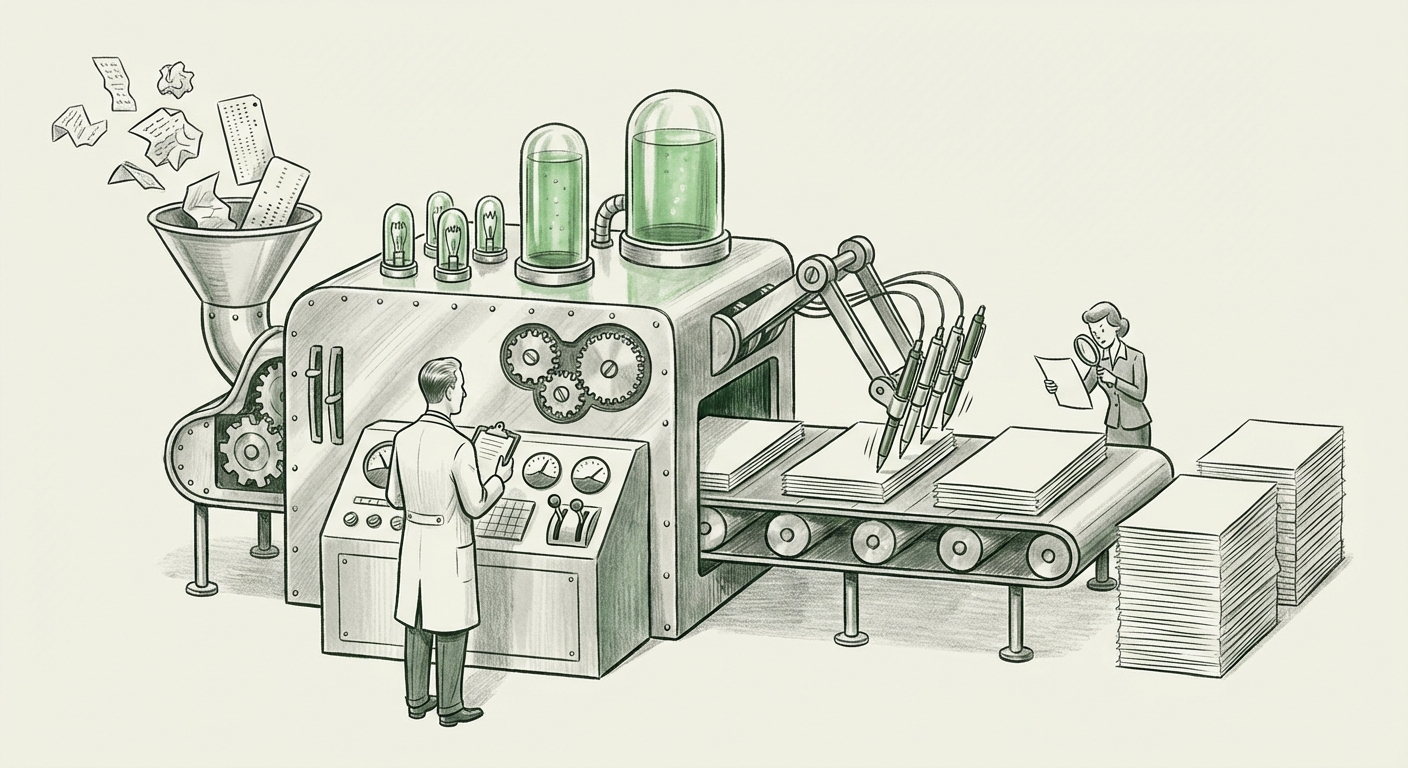
Here is the connection most people miss. The AI boom is not just software. It runs on physical things: servers, chips, cooling systems, connectors, cables, sensors, and the gadgets that feed data into models. Those things are assembled by contract manufacturers like Luxshare.
When AI companies talk about scaling, they usually talk about compute. But compute is not a cloud. Compute is a box. That box is built somewhere, by someone, under some country's laws.
So when a big contract manufacturer gets pulled into a US investigation, three questions land on the table at once:
- Can we still count on this factory? If a supplier gets disrupted, orders get delayed.
- Will the rules change? Probes often lead to new compliance requirements, tariffs, or restrictions.
- Do we need a backup? Smart buyers never rely on one supplier for anything important.
Those questions apply to AI hardware just as much as they apply to phones and laptops. Maybe more, because AI hardware buyers are in a race and cannot afford delays.
The Real Lesson: Concentration Is the Risk
The deeper trend here is not about any single investigation. It is about concentration.
Global technology manufacturing is clustered. A small number of companies build a huge share of the world's electronics. A small number of regions host those companies. That setup was brilliant for cost and speed. It made devices cheaper and got them to market faster.
But concentration is also fragility. If one big supplier stumbles, from a legal probe, a tariff, a labor issue, an export rule, a natural disaster, or a power outage, the shock travels fast.
Luxshare saying "no material impact" is the company basically telling the world: the shock is contained. For now.
For AI, this matters because the hardware pipeline is already stretched. Data centers are being built at a pace that strains everything from chips to transformers to skilled labor. There is very little slack in the system. A disruption anywhere in the chain ripples everywhere.
Compliance Is Becoming a Product Feature
Here is the trend that will define the next few years: compliance is turning into a competitive advantage.
It used to be that a manufacturer competed on price, quality, and speed. Those still matter. But now there is a fourth pillar: can you prove you follow the rules of every country you sell into?
That means clean supply chain records. It means knowing where every part came from. It means being able to answer government questions quickly and accurately. It means having lawyers and auditors as embedded as engineers.
Companies that treat compliance as a cost center will lose. Companies that treat it as an engineering problem, something you design into the system, will win contracts.
Why? Because the buyers are changing. AI hardware buyers are often huge, publicly traded, and politically exposed. They cannot afford to be attached to a supplier with unresolved legal risk. So they will pay a premium for clean supply chains. They will shift orders. And they will write compliance requirements into contracts.
That is a quiet but enormous shift in how the manufacturing world works.
What This Means for Businesses: A Practical Playbook
If you run a company that depends on hardware, or on any part of the AI stack, here is what to do with a story like this.
1. Map Your Supply Chain Beyond Tier One
Most companies know their direct vendors. Very few know their vendors' vendors. That's where the surprises hide. Start asking who actually builds the components inside your components.
2. Build a "What If" Plan for Your Top Five Dependencies
Pick the five parts of your business that would hurt most if they broke. For each one, ask: what's the backup? If you don't have one, you just found your next project.
3. Treat Legal and Regulatory News as Supply Chain News
Most teams read legal headlines as legal headlines. They shouldn't. A probe, a tariff, or an export rule is a delivery-date risk. Put someone in charge of watching these signals and translating them into operational plans.
4. Buy Insurance Before You Need It
Having a second supplier qualified and ready costs money. Not having one costs more. Qualifying a backup supplier takes months, so start before the crisis, not during it.
5. Use Compliance as a Sales Tool
If you are a supplier, your clean record is a marketing asset. Say so. Put it in your pitch deck. Big buyers are actively looking for suppliers who won't create headaches.
What This Means for Society
There is a bigger picture here, and it's worth sitting with for a moment.
AI is often described as a software revolution. But every model you use is manufactured. It has a supply chain with real people, real factories, and real politics behind it. The more powerful AI becomes, the more nations will care about who controls that pipeline.
That means the next decade of AI will not be shaped by code alone. It will be shaped by trade policy, labor standards, export controls, and investigations like this one. The companies that flourish will be the ones that can operate across borders without tripping over them.
For workers, there is a mixed message. More scrutiny on factories can mean better conditions and stronger protections. It can also mean higher costs and slower expansion. Both things are true at the same time.
For consumers, the effect is subtle but real: the gadgets and services you rely on may get slightly more expensive, and they may arrive slightly later, as the world rebuilds its supply chains with resilience in mind instead of pure efficiency.
The Road Ahead
Watch for a few things after a statement like Luxshare's.
- Whether "no material impact" holds. If the language changes, that's the story.
- Whether customers shift orders. Even a small reshuffling of contracts tells you how nervous buyers really are.
- Whether new rules follow. Investigations often leave behind regulation, and regulation reshapes entire industries.
- Whether competitors use it as a selling point. Rivals love a compliance story when a competitor has one.
None of these are dramatic on their own. Together, they are how supply chains quietly rewire themselves.
The Takeaway
Luxshare says a US probe won't hurt its business. Maybe it won't. But the statement reveals something bigger than one company's legal calendar.
The AI era is being built on a supply chain that is fast, powerful, and tightly clustered. That clustering is a strength, and a vulnerability. The companies and countries that understand this first will be the ones who keep building when the pressure comes.
For everyone else, the lesson is simpler. In the age of AI, the smartest strategy is not just better software. It's a supply chain that can survive a headline.