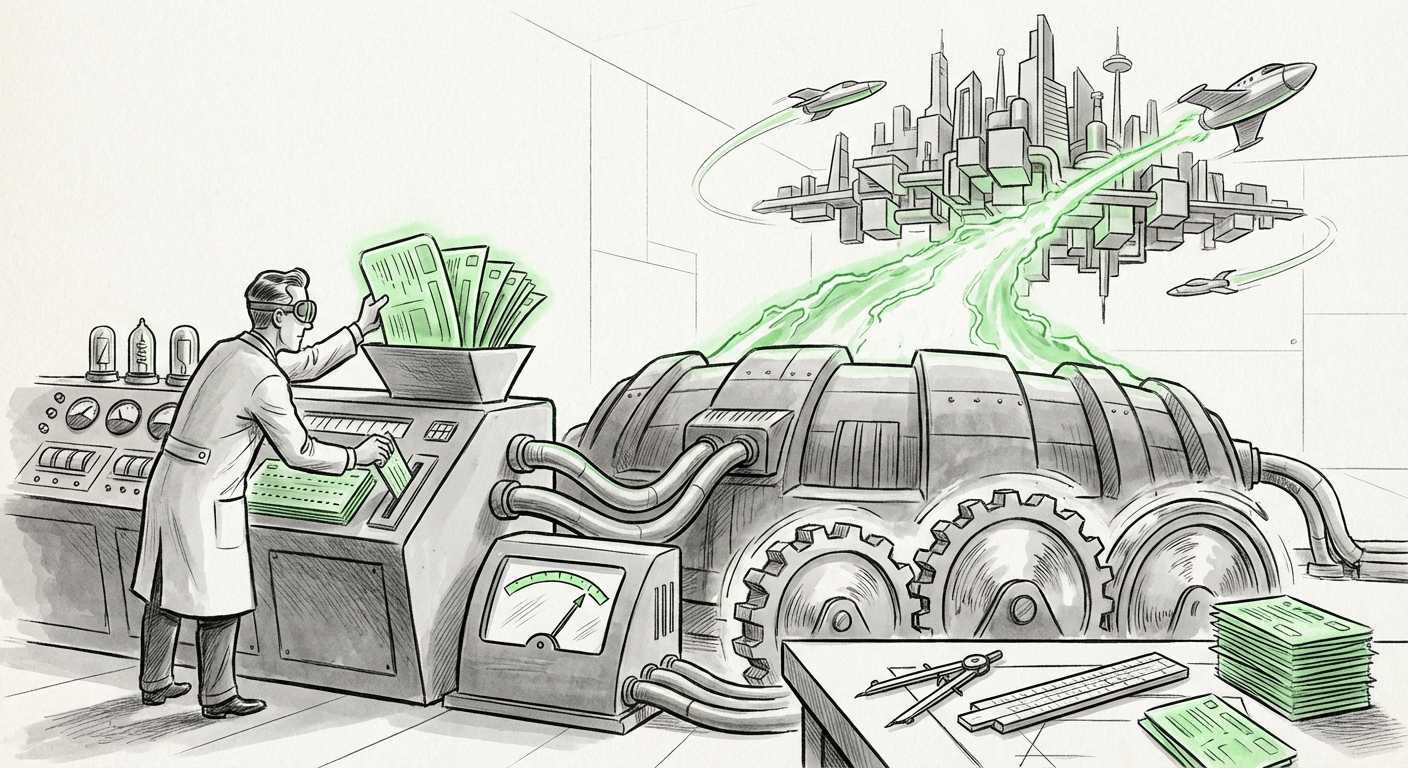
Google Stitch Just Changed Design Forever: What This Means for the Future of AI
Something quiet but enormous happened in April 2026. Google pushed out a new version of Stitch, its AI tool that turns plain-English descriptions into working interface designs, and the reaction from the product and design world was immediate and loud. The phrase going around is simple: design changed forever. That is a big claim. But when you sit with it for a minute, the bigger story is not really about a design tool at all. It is about the next phase of artificial intelligence, where AI stops being something you talk to and starts being something that builds.
For the past few years, we have watched AI get very good at language, then at images, then at code. Each step widened who could create things. Now the frontier has moved to design, the look, feel, and flow of the screens and products we use every day. That shift matters far beyond the design department. It changes how software gets built, who gets to build it, and where the value sits in the companies that make it.
Why Design Was the Last Big Frontier
Text was the easy one. AI could produce paragraphs and summaries quickly because language is flexible, a slightly odd sentence still works. Code was the next step, and AI learned to write functions and fix bugs because code has rules it can check itself against. Images followed, and AI learned to generate pictures that look right to the human eye.
Design had none of those advantages. A user interface has to be visually balanced, structurally logical, accessible to people with different needs, and consistent with a brand, all at once. There is no single correct answer, and there is no simple test that tells you if you got it right. That is exactly why design resisted automation for so long. It was the hand-crafted part of the software world.
When a tool like Stitch starts closing that gap, it is a signal that AI has crossed into a new kind of work. Not just generating artifacts, but generating systems, flows, layouts, and interactive structures that other parts of the business can build on.
What Actually Changed
The headline is straightforward. Stitch lets you describe what you want in everyday language, and it produces interface designs. The new release, landing in April 2026, pushed that idea far enough forward that people stopped treating it as a novelty and started treating it as infrastructure.
What makes this a turning point is not any single feature. It is the direction of travel it locks in. Design tools are no longer the place where you draw the product. They are becoming the place where you specify it. Describe the goal, describe the user, describe the constraint, and the tool proposes the surface. The human's job shifts from making pixels to making decisions.
This is the same pattern we saw when AI moved into writing and coding. At first, professionals dismissed the output as a rough draft. Then they started using it as a first draft. Then the first draft became the whole job, and their value moved upstream to judgment, taste, and strategy. Design is now on that same track, and it is moving fast.
The New Pipeline: From Prompt to Product
Here is the practical shift. For decades, the path from idea to shipped product ran through a long chain of handoffs: product manager writes a brief, designer makes mockups, engineer builds it, QA tests it, and somewhere along the way the original idea gets bent out of shape.
AI design tools collapse that chain. A founder can describe a dashboard and get a workable layout in minutes. A product team can test five different interaction ideas before lunch instead of over two sprints. A support agent with an idea for fixing a broken signup flow can sketch it and hand over something real, not a complaint.
That compression does three things at once:
- It speeds up learning. When ideas are cheap to visualise, you can test more of them and find out what is wrong sooner.
- It widens the funnel. People who never learned design software can now contribute meaningfully to product decisions.
- It raises the bar on taste. If everyone can generate a decent-looking screen, the differentiator stops being ability to produce and becomes ability to choose well.
What This Means for Designers
Let us be honest about the anxiety here. When a tool can produce interface designs on demand, the first instinct is that design jobs are at risk. The more accurate read is that design jobs are being re-sorted.
The tasks that disappear first are the repetitive ones, resizing layouts across screens, generating variations of a component, producing the tenth version of a settings page. Those were never the interesting part of the job anyway.
The tasks that gain value are the ones AI struggles with most:
- Knowing what to build. AI can produce a screen. It cannot tell you whether that screen solves a real problem for a real person.
- Systems thinking. A design system is a set of rules, exceptions, and compromises built up over years. That institutional knowledge is the thing that keeps output consistent as volume explodes.
- Accessibility and inclusion. AI generates what it has seen. Without deliberate human oversight, it will quietly reproduce the same blind spots that already exist in most products.
- Taste and restraint. In a world of infinite options, the most valuable skill is knowing which nine to throw away.
The designers who thrive in this era will be the ones who treat AI output as raw material rather than finished work. The ones who struggle will be those who keep competing on production speed, because that contest is already over.
What This Means for Businesses
For companies, the implications are more immediate than most leaders realise.
Small teams can now punch above their weight
A five-person startup with an AI design tool can ship something that looks like it came from a much larger company. That lowers the cost of entering a market and increases competitive pressure everywhere. If your advantage was "we have a design team and they don't," that advantage is thinning.
Speed becomes table stakes, not a differentiator
When everyone can move quickly, moving quickly stops being special. The new advantage is direction, knowing which problems are worth solving and which bets are worth making. AI accelerates execution; it does not tell you where to point it.
Governance moves to the front of the queue
If anyone in the company can generate a screen, then anyone in the company can generate an off-brand, inaccessible, or legally risky one. Companies that get this right will put guardrails in early: shared design tokens, review processes, accessibility checks, and clear rules about what AI output can ship without human sign-off. Companies that skip this step will discover the problem the hard way, at scale.
Data and brand assets become strategic
AI design tools are only as good as the context they are given. That makes a company's design system, component library, and brand guidelines far more valuable than they used to be. They stop being documentation and become the fuel that makes AI output actually usable.
The Risks Nobody Wants to Talk About
There are real downsides, and they deserve plain language.
Homogenisation. AI models are trained on what already exists. If most teams lean on the same tools, we should expect a wave of products that look and feel suspiciously similar. Distinctiveness becomes a deliberate effort rather than a default.
Accessibility debt. Generated interfaces often look clean while failing basics like contrast, keyboard navigation, and screen-reader labels. Without review, that debt piles up invisibly until it becomes a legal and ethical problem.
Verification gaps. A polished mockup can create false confidence. A beautiful design is not a working product, and teams that blur that line will ship things that break in the real world.
Skill erosion. If juniors never learn the fundamentals because AI handles them, the pipeline of senior talent thins out over the next decade. That is a slow-burning problem with no quick fix.
How AI Design Will Actually Be Used
Strip away the hype and a few patterns are already clear.
Prototyping at the speed of thought. Ideas get tested in hours, not weeks. The teams that win are the ones that treat this as a learning superpower rather than a shortcut to skip thinking.
Personalised interfaces. Once design is generated rather than hand-built, it becomes feasible to adapt layouts to different users, roles, and contexts. The same product can look different for a first-time visitor and a power user, automatically.
Design systems as living infrastructure. Instead of static documentation, design systems become machine-readable rule sets that AI tools consume directly. The system becomes the source of truth, and the AI becomes the hands.
Bridging roles. The wall between product, design, and engineering gets thinner. That is uncomfortable for organisations built on clean handoffs, but it is where the speed advantage lives.
Actionable Insights: What To Do Now
If you lead a team, a product, or a company, here is where to start.
- Pick a real project and test it. Do not run a pilot in a sandbox. Take one live workflow, run it through an AI design tool, and compare the outcome honestly against your normal process.
- Invest in your design system now. The better structured your tokens, components, and rules are, the better every AI tool you plug in will perform. This is the highest-leverage groundwork available.
- Write down your guardrails. Decide in advance what AI can ship without review and what always needs a human. Ambiguity here creates risk.
- Reward judgment, not output. If your performance reviews still count screens produced, you are measuring the wrong thing in the wrong decade.
- Protect the fundamentals. Keep teaching craft, accessibility, and systems thinking. The people who understand why a design works will be the ones directing the tools that make it.
- Watch the identity question. Ask regularly whether your product still feels like yours. If AI is generating your interfaces, brand distinctiveness needs active protection.
The Bigger Picture
The reason a design tool update lands as a turning point is that it tells us where AI is heading next. We have moved through language, images, and code. Design is the layer where all of those meet, where words become structure, structure becomes interface, and interface becomes the product a real person touches.
When AI can generate that layer, it stops being an assistant and becomes part of the production line. That is the shift worth paying attention to. Not because designers are obsolete, but because the bottleneck in software has moved. For years, the hard part was building the thing. Increasingly, the hard part is deciding what deserves to be built, and having the judgment to tell the difference between a polished output and a good one.
Google Stitch did not end design. It moved the centre of gravity. And the organisations that understand that fastest will be the ones shaping what software looks like over the next decade.