MacBook Pro Price 2021 vs 2026: What Five Years of Laptop Costs Reveal About the AI Hardware Boom
When people search for how much a MacBook Pro cost in 2021 compared to 2026, they usually want a simple number. One price, then another price, then a shrug about inflation.
But the real story is much bigger than a receipt. The gap between those two price tags, whatever the exact figures are for the configuration you're looking at, is a fingerprint of something enormous happening underneath the surface of the tech industry: artificial intelligence has quietly become the single biggest force shaping what computers cost, what they contain, and who can afford them.
Here's why that comparison matters, and what it tells us about where AI is heading next.
The Laptop as a Mirror of the AI Economy
A MacBook Pro is not just a laptop. It's a bundle of some of the most tightly controlled supply chains on Earth. Memory, storage, display panels, batteries, and the custom chip at its heart all come from markets that are globally competitive and brutally sensitive to demand.
In 2021, that demand was mostly driven by people. Students, designers, developers, remote workers. When you bought a laptop, you were competing with other humans for parts.
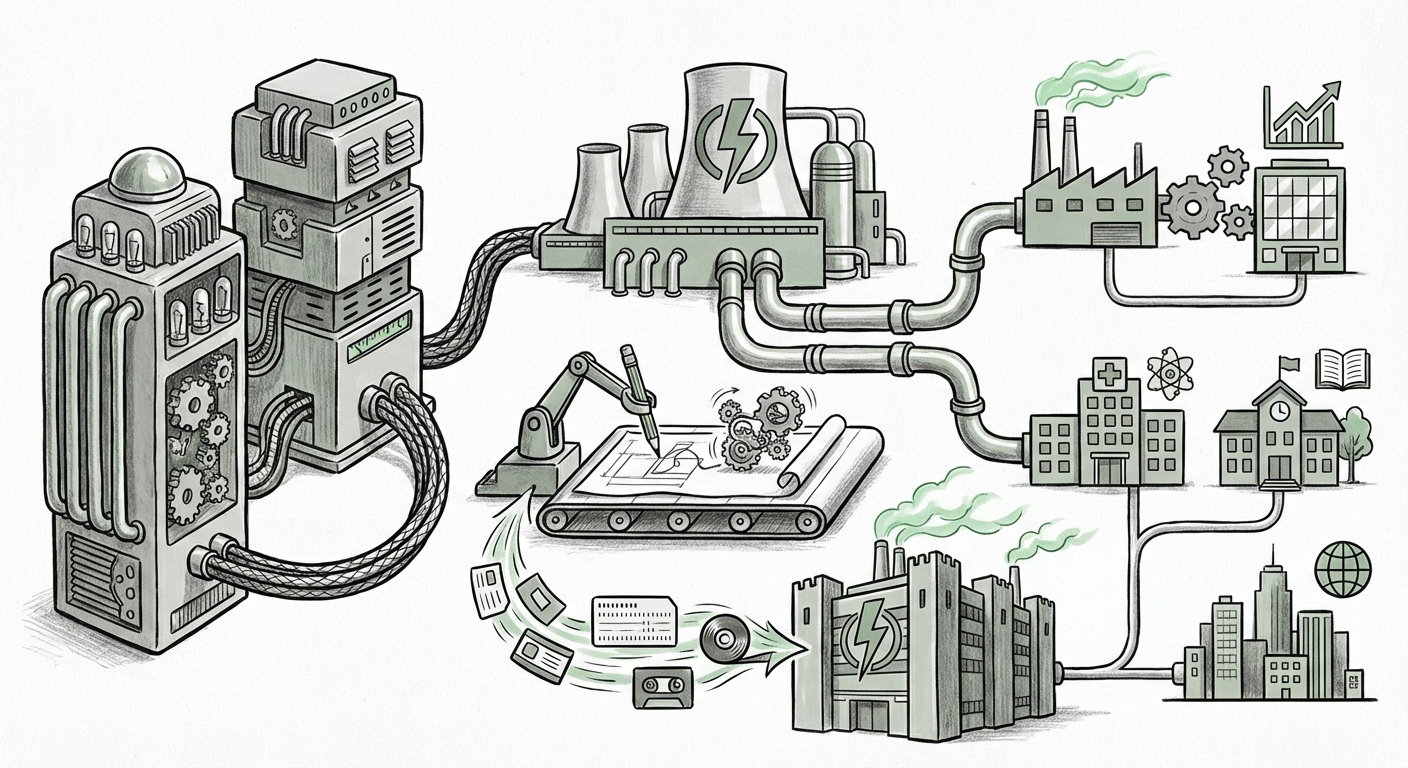
By 2026, that has changed. A huge share of the world's memory chips, advanced packaging capacity, and cutting-edge manufacturing slots are now being pulled toward data centers built for AI. Training models and serving AI responses to millions of users requires staggering amounts of hardware. Every wafer, every stick of high-bandwidth memory, and every hour of factory time that goes into an AI server is an hour that doesn't go into your next laptop.
That's the invisible squeeze. Consumer devices now share a supply chain with the most capital-hungry technology buildout in modern history.
What Actually Changed Between 2021 and 2026
If you put a 2021 MacBook Pro next to a 2026 model, the differences fall into a few clear buckets:
- The chip inside. Five years of silicon progress means the newer machine can run workloads the older one would choke on, especially AI workloads like local language models, image generation, and real-time transcription.
- Memory and storage. These components shifted from "commodity parts" to "strategic resources" as AI data centers absorbed enormous capacity.
- The software it's expected to run. In 2021, on-device AI was a novelty. By 2026, users expect their laptop to handle some AI tasks locally, without sending everything to a server.
- The price itself. The sticker moved, and understanding why requires looking at all three of the factors above pulling in different directions.
Some forces push prices down. Manufacturing matures, yields improve, and each generation of chip delivers more performance per dollar. Other forces push prices up. Memory gets scarcer because AI companies are buying it by the warehouse. Local AI features require more RAM and more storage, which means the "base model" is no longer good enough for many buyers.
That tug-of-war, efficiency versus scarcity, is the defining economic story of AI hardware right now.
Why "AI PC" Isn't Just a Marketing Sticker
Every laptop maker has spent the last few years slapping AI branding on their products. It's easy to be cynical about that. But there's a real technical shift hiding behind the buzzword.
Running AI on your own device instead of in the cloud has three genuine advantages:
1. Privacy
When a model runs on your machine, your data doesn't leave it. For lawyers, doctors, journalists, and anyone handling sensitive information, that's not a nice-to-have. It's the whole point.
2. Latency
A local model responds instantly. A cloud model has to travel across the internet, wait in a queue, and travel back. For tasks like autocomplete, live translation, or voice control, that round trip is the difference between magic and frustration.
3. Cost
Cloud AI is billed per use. Local AI is billed once, when you buy the machine. For heavy users, the math can flip fast.
The catch is that all three advantages require hardware. More memory. More compute. More storage. Which means the laptop you buy directly determines which AI features you can actually use.
The Cloud Isn't Going Anywhere, And That's the Point
Here's where a lot of predictions go wrong. People assume local AI will replace cloud AI. It won't. It will split it.
Think of it like electricity. Some homes have solar panels on the roof. Some draw entirely from the grid. Most do a bit of both, depending on the day and the demand. AI is heading the same way.
- Small, frequent, private tasks will run on your device.
- Huge, rare, complex tasks will run in a data center.
- The operating system will decide which is which, and you'll barely notice.
This split is why the price of a MacBook Pro in 2026 tells you something about the price of cloud AI too. The more work shifts to local hardware, the less pressure there is on data centers, and the more valuable a well-equipped laptop becomes.
What This Means for Businesses
If you run a company, the 2021-versus-2026 comparison is not trivia. It's a planning tool.
Hardware refresh cycles are now AI strategy decisions. A three-year-old laptop may still open spreadsheets fine, but it may also be locked out of the AI features your competitors are using to draft proposals, analyze data, and serve customers faster. "It still works" is no longer the right test.
Memory is the new bottleneck. When spec'ing machines, the amount of unified memory matters more than it used to. It's the difference between running a useful AI model locally and being told you can't.
Budget for the swing. AI-related component demand has made hardware pricing less predictable than it once was. Companies that plan five-year hardware budgets as if prices only decline gently may get surprised.
Total cost of ownership needs a rewrite. The old math compared purchase price against productivity. The new math adds a third column: the cost of cloud AI subscriptions and API calls that a better-equipped machine could offset.
The Bigger Picture: AI Is Repricing Computing Itself
Step back from laptops for a second and the pattern becomes clear.
AI is not just a new feature you bolt onto software. It's a new category of workload, and workloads reshape hardware. When the world discovers a new way to use computers, the price of computers changes. That happened with the internet. It happened with smartphones. It's happening now with AI.
Three implications stand out for the next few years:
- The gap between "AI-capable" and "not AI-capable" devices will widen. Not because of marketing, but because the hardware requirements are real and they're not small.
- Component scarcity will be a recurring theme. As long as AI data centers keep expanding, consumer devices will compete for the same parts.
- Software will get smarter about hardware. Expect operating systems to route tasks intelligently, local when possible, cloud when necessary, to squeeze the most out of whatever machine you own.
Actionable Takeaways
Whether you're buying one laptop or a thousand, here's what to do with all of this:
- Buy memory before you buy speed. For AI work, memory capacity determines what you can do. Raw clock speed determines how fast you do it. Capacity comes first.
- Ask what runs locally. Before any purchase, list the AI tasks you want done on-device. Then check whether the machine can actually handle them.
- Don't assume prices only fall. Historical trends in consumer electronics were shaped by a world without AI data centers. That world is gone.
- Treat device lifespan as an AI question. The right time to replace hardware is when it can no longer run the tools your work depends on.
- Watch the memory market. It's the clearest early signal of where AI hardware costs are heading, for laptops, phones, and data centers alike.
The Bottom Line
Comparing the cost of a MacBook Pro in 2021 to one in 2026 looks like a simple shopping question. It isn't. It's a measurement of how deeply AI has woven itself into the physical world, into factories, supply chains, chip fabs, and the price tag on your desk.
The number matters. But the forces behind the number matter far more. And those forces are telling us something important: the age of AI isn't just a software story. It's a hardware story, an economic story, and increasingly, a story about who gets to participate.
Five years from now, we'll make the same comparison again. The prices will have changed. But the question underneath, what does it cost to own the tools of intelligence?, will still be the one worth answering.