Microsoft CEO Nadella Calls for an 'Emergency Brake' on Advanced AI, What It Means for the Future of AI
The boss of one of the world's most powerful technology companies just said something that would have sounded unthinkable from a Big Tech chief a few years ago. Microsoft CEO Satya Nadella is calling for an "emergency brake" on advanced AI, a way to slow down or stop the most powerful artificial intelligence systems if they start to move faster than humans can control them.
That single phrase matters more than it might first appear. The companies building frontier AI have spent the last several years racing each other to release bigger, smarter, faster models. Now one of the loudest voices in that race is publicly asking for a pause button. This article breaks down what an emergency brake would actually mean, why the call is happening now, and what it signals for businesses, workers, and the rest of us.
What Does an "Emergency Brake" Actually Mean?
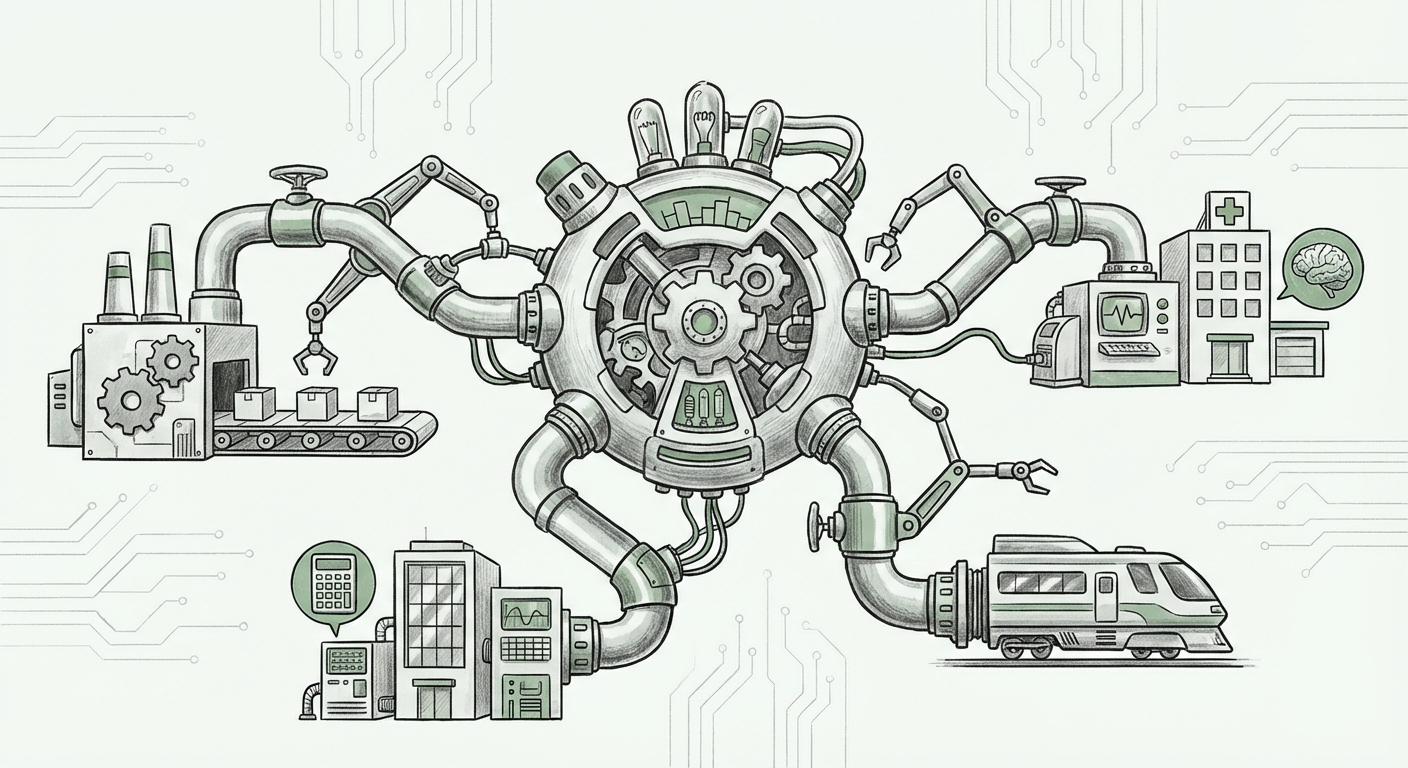
An emergency brake on advanced AI is not the same as stopping AI research. It's closer to the idea of a circuit breaker in a power grid, or a kill switch on a piece of industrial machinery. The core idea is simple: if a system starts behaving in dangerous, unpredictable, or uncontrollable ways, there needs to be a reliable mechanism to slow it down or shut it off.
In practice, a brake like this could take several forms:
- Technical controls, built-in limits inside a model that let developers reduce its capability, block certain actions, or halt deployment entirely.
- Operational controls, rules inside a company that require sign-off before a powerful model is released or allowed to act on its own.
- External oversight, independent bodies, regulators, or auditors with the authority to demand a slowdown if red lines are crossed.
- Shared standards, agreed-upon thresholds across the industry, so no single company is punished for showing caution while others keep racing ahead.
The hardest part is not building the brake. It's deciding who is allowed to pull it, and when. An emergency brake that nobody agrees on is just a button with no wire attached.
Why This Call Is Happening Now
Three forces have been building toward this moment.
1. Capability Is Outrunning Understanding
Modern AI systems can write code, hold conversations, analyze huge amounts of information, and increasingly take actions on their own through connected tools and agents. The people building them often cannot fully explain why a model produces a particular answer. That gap between what a system can do and what its creators understand about it is exactly the kind of gap that makes safety experts nervous.
2. The Stakes Have Gone From Theoretical to Real
AI is now embedded in hiring, lending, healthcare support, customer service, security, and critical business operations. A failure is no longer a quirky chatbot answer. It can mean a wrong medical suggestion, a biased decision, a security breach, or a business process collapsing at scale. The more systems connect to real-world infrastructure, the more a single bad outcome can ripple outward.
3. Competitive Pressure Is Winning Over Caution
Companies fear falling behind. That fear creates a classic race dynamic: everyone knows slowing down would be safer, but nobody wants to be the one who slows down first. A public call for an emergency brake from a major CEO is an attempt to change that math, to make caution a shared standard rather than a competitive disadvantage.
The Real Tension: Speed vs. Safety
It's worth being honest about the trade-off. Slowing down advanced AI carries costs. It can delay medical breakthroughs, slow productivity gains, and hand advantages to less cautious players, including those outside any regulatory reach.
But moving too fast carries a different kind of cost: systems deployed before they're understood, decisions made at machine speed with no human review, and public trust eroded by high-profile failures. The emergency brake argument is not really "stop AI." It's "make sure we can stop if we need to." That's a much harder position to argue against.
There's also a quieter business logic here. Trust is becoming a competitive asset. If customers, regulators, and partners believe your AI is responsibly built, you get to keep operating at scale. If they don't, you get investigations, restrictions, and lost contracts. Safety, in other words, is starting to look less like a brake and more like a license to operate.
What This Means for Businesses
For anyone running a company that uses or builds AI, the practical takeaways are already clear.
Build Your Own Brakes First
Don't wait for regulators to hand you a rulebook. Define your own red lines now. Which decisions can an AI system make on its own? Which require a human? What triggers a rollback? Having documented answers puts you ahead of both regulators and competitors.
Treat Governance as Infrastructure
Most companies treat AI policy as a document. It should be treated as infrastructure, logging, monitoring, evaluation, and rollback capability built into the system itself. If you cannot tell what your AI did last Tuesday and why, you do not have an emergency brake. You have hope.
Prepare for a Patchwork of Rules
Even without global agreement, different regions and industries will set their own expectations for high-risk AI. Companies that build to the strictest plausible standard will move between markets more easily than those that build to the loosest.
Make Reversibility a Design Goal
The most valuable AI systems of the next few years may be the ones that are easy to turn down as well as up. Reversibility, the ability to dial back capability without losing your entire investment, is becoming a genuine engineering priority.
What It Means for Workers and Society
The emergency brake debate is really a debate about who controls the pace of change. If the only real brake is a company's internal judgment, then the public has no seat at the table. If brakes are shared through regulation and independent oversight, the public gains a voice, but so does bureaucracy, and slower progress.
For workers, the message is mixed but not hopeless. A push for caution likely means a slower, more staggered rollout of automation rather than an overnight wave. That creates time, time to retrain, to shift roles, and to build the human-in-the-loop skills that regulated AI environments will demand. Companies will still need people to check, correct, and take responsibility for what machines produce. That role is growing, not shrinking.
For society, the deeper issue is legitimacy. AI systems are increasingly making or shaping decisions that affect people's lives. An emergency brake is one tool, but the broader need is transparency: knowing when AI is involved, what it considered, and how to challenge it.
The Governance Gap Nobody Has Solved
Here's the uncomfortable truth. An emergency brake only works if it's coordinated. A brake that one company honors and another ignores doesn't slow the race, it just changes who wins it. That means the real challenge is not technological. It's diplomatic, economic, and political.
Getting there likely requires a layered approach: technical safety standards that engineers can actually implement, independent testing before high-risk deployments, clear liability so companies bear the cost of failures, and international dialogue so the rules don't fracture into incompatible zones. None of that exists in finished form today. But a call for an emergency brake from a major CEO moves the conversation from the margins into the boardroom.
Actionable Takeaways
- Audit your AI stack now. Know every place AI makes or influences a decision, and label which ones are high-risk.
- Write down your stop conditions. Define exactly what would trigger a pause or rollback, before you need it.
- Invest in observability. You can't brake what you can't see. Logging and monitoring are safety features, not extras.
- Assign human accountability. Every consequential AI system should have a named owner who can pull the plug.
- Follow the standards early. Building to stricter safety expectations now is cheaper than retrofitting later.
- Watch the language. When "safety" and "responsibility" move from marketing to engineering requirements, the vendors who take it seriously will separate from the rest.
The Bigger Picture
An emergency brake is not a rejection of AI. It's a recognition that powerful tools need powerful controls, and that the companies building them can't be the only ones deciding when to stop. The most telling thing about this moment isn't that a tech CEO asked for restraint. It's that restraint is now being framed as a strategic advantage rather than a weakness.
That shift could define the next phase of AI. The winners of the first phase were the fastest. The winners of the next phase may be the ones who can prove their systems are safe, controllable, and worthy of trust, and who can show, when it matters, that they know how to hit the brakes.