AI vs. Nuclear Annihilation: Why the World's Biggest Risk Is the One Nobody Is Talking About
There is a strange thing happening in the world's attention economy as of October 2026. Nearly every boardroom, newsroom, government panel, and investor call has been pulled into the same gravity well: artificial intelligence. The technology is real, the money is real, and the changes it is already forcing on how we work and build are real. But something has been pushed out of the frame while everyone stares at the bright light. The risk of nuclear annihilation, the one risk that does not offer a recovery plan, a pivot, or a bad quarter, has quietly drifted to the edge of the conversation.
The argument is not that AI does not matter. It is that attention is a finite resource, and when one risk becomes the center of the universe, the guardrails around other risks start to rust. That matters for AI's future more than most people realize, because the same technology now sits on both sides of the nuclear equation: it can tighten the leash on catastrophe, or it can shorten the rope.
Attention Is a Zero-Sum Market, and AI Bought the Whole Floor
Look at where the world's brightest people go. Talented engineers, policy specialists, and researchers follow funding, status, and excitement. Over the past few years, that current has flowed almost entirely toward AI. The same is true of political capital. Legislators, regulators, and agency budgets can only handle so many urgent topics at once, and AI has taken up most of the oxygen.
The framing of "existential risk" itself got rebranded. For decades, the phrase pointed mainly at nuclear weapons. Today it usually points at machines. That is a remarkable shift in how the world organizes its fears, and it happened in a surprisingly short time.
Here is the uncomfortable part: the systems that keep nuclear risk in check, communication channels between rivals, verification of agreements, expert communities who know each other personally, and plain old institutional memory, do not maintain themselves. They are fragile. When nobody is watching them, they degrade. Not with a bang. With neglect.
Why the Older Risk Never Actually Left
Nuclear danger does not need a villain to be real. It needs a mistake.
What keeps the world safe from a catastrophic nuclear event is not one clever invention. It is a wobbly stack of human judgment, mutual fear, slow decision-making, and communication lines that still work. Each layer is doing heavy lifting. Remove one, and the whole thing tilts.
Several of those layers have been thinning. Arms control frameworks have weakened or expired. Fewer experts remain who lived through the last serious close calls. Warning times in modern conflict scenarios are compressed by fast weapons and fast information. And the number of people who understand how close the world has actually come is shrinking every year.
This is exactly the kind of slow, boring, unattended problem that a hype cycle crowds out. And it is exactly the kind of problem where AI could go either way.
Where AI Makes Nuclear Risk Worse
1. It compresses the clock
Deterrence rests on deliberation. Someone has to pause, check, and consider. AI systems are optimized for speed, and speed is exactly what you do not want when the consequence is permanent. If a machine produces a recommendation in seconds, the human in the room feels pressure to match its tempo.
2. Automation bias is real
Study after study of automation shows the same thing: people defer to machines even when they know the machines can be wrong. When a system presents a conclusion with a clean interface and a confidence score, disagreement feels like incompetence. That is a dangerous instinct in a crisis.
3. Confident wrongness scales
Large models can produce answers that sound authoritative and are simply incorrect. In most business settings, that costs money. In a warning system, it costs everything. The problem is not that AI is dumb. It is that it is fluent.
4. Ambiguity between rivals
If one side adopts AI for analysis, the other side has to assume the worst about how it is being used. Uncertainty itself becomes a destabilizing force. Nobody wants to be the slower party.
5. Dual-use leakage
The same model that helps detect an anomaly can help find a target. The same data pipeline that improves monitoring can improve planning. Capability does not come with a label on the box.
Where AI Makes Nuclear Risk Better
The flip side is more interesting, and more practical.
Better sensing, fewer false alarms
Historically, some of the closest calls came from misreading noisy data: confusing a natural event, a weather pattern, or a training exercise for something far worse. Machine learning is genuinely good at sorting signal from noise at huge scale. Reducing false positives is one of the highest-value uses of AI that exists, and it gets almost none of the headlines.
Verification at a scale humans cannot match
Monitoring an agreement means looking at enormous amounts of satellite imagery, seismic readings, and sensor feeds. This is a textbook match for automated analysis. Faster, cheaper, broader verification makes agreements easier to trust, and trust is what arms control runs on.
Simulation and red-teaming
AI can run crisis simulations at a speed no war game can match, stress-testing assumptions and surfacing failure modes that human teams miss. Used properly, this is a tool for finding your own blind spots before reality does.
Keeping channels open
During a crisis, communication breaks down because of language, volume, and speed. Machine translation and triage can help keep back-channels functioning when they matter most.
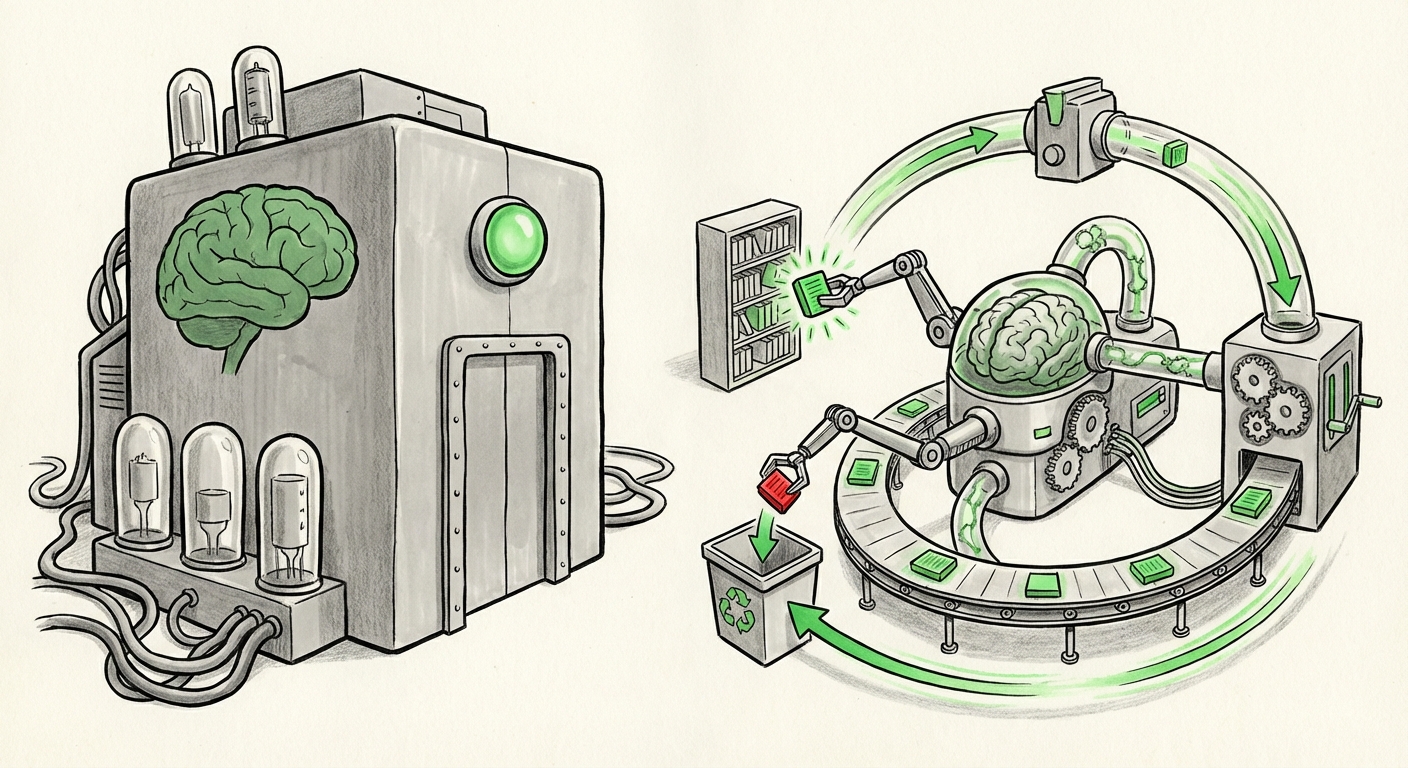
Notice something important: the difference between the helpful list and the harmful list is not the technology. It is governance, auditability, and whether a human can slow things down. Same models. Different rules.
What This Means for Business
This is not just a story about governments. It lands directly on the desks of people building and buying AI.
- Risk models will need to widen. Insurers, lenders, and supply-chain planners all build assumptions about catastrophic events. If AI is quietly reshaping how fast a crisis can escalate, those assumptions need revisiting.
- Talent is a policy choice. Every engineer who chooses a verification tool over an engagement-optimization tool is making a quiet statement about what the industry values.
- Boards should ask harder questions. AI governance frameworks usually cover bias, privacy, and accuracy. Very few ask: what happens if this system is confidently wrong at the worst possible moment?
- Dual-use will be a procurement problem. Buyers in defense-adjacent markets will increasingly face the question of whether a capability can be contained to its intended use.
- Safety is a product feature. Firms that can demonstrate auditable, slow-lane, human-override design will find that credibility is worth money.
Actionable Insights
- Find your no-undo-button decisions. Map every AI-assisted process where a wrong output cannot be reversed. Those are your highest-risk systems.
- Design a slow lane. Build deliberate friction into any pipeline that feeds a fast, consequential decision. Speed should be a choice, not a default.
- Ask the "confidently wrong" question. For every model you deploy, write down what happens when it is wrong and sounds right.
- Keep risk registers plural. Do not let one dominant risk crowd out the others. Review the neglected categories on a schedule, not when they become urgent.
- Fund the boring applications. Verification, anomaly detection, and false-alarm reduction rarely win demos. They may be the most valuable work in the field.
- Preserve institutional memory. Teach teams the history of close calls. Judgment is built from stories, and stories get lost fast.
The Bigger Point
AI is not the enemy here, and it is not the hero. It is a multiplier. Point it at a well-governed, well-funded, well-understood problem and it makes things better. Point it at an unattended problem with no human brake and it makes things faster.
That is the real lesson in the current fixation. The danger is not that we are paying attention to AI. It is that attention is a scarce resource, and we have quietly decided that one class of catastrophic risk deserves the spotlight while another waits in the dark. The world did not become safer just because the conversation moved on.
For anyone building AI, the takeaway is simple and a little uncomfortable: the most important thing your system will ever do may not be the thing your roadmap is about. It may be the thing nobody asked you to think about.