OrcaCyber Zero 1.5: OrcaRouter's 1M Context Security AI Model Explained
On October 11, 2026, OrcaRouter released OrcaCyber Zero 1.5, a cybersecurity-focused AI model built around a one-million-token context window. That single design choice is the whole story. Security work has always been a battle against scattered information, logs here, code there, alerts somewhere else, and a model that can hold a million tokens in mind at once is an attempt to end that scattering.
This matters far beyond one product launch. It signals where AI is heading: away from clever chatbots that answer small questions, and toward systems that can absorb an entire digital environment and reason about all of it together. For anyone who runs a business, builds software, or defends a network, that shift is worth understanding now.
What OrcaRouter Actually Announced
The announcement is straightforward on its face. OrcaRouter, the company behind the release, is shipping OrcaCyber Zero 1.5, a model tuned specifically for cybersecurity work rather than general conversation. Its defining feature is a context window of one million tokens.
To be clear about what a context window is: it is the amount of text a model can consider at one time. Most everyday AI assistants work with a small slice, a few pages, maybe a long document. A million tokens is a different category entirely. It is enough to hold enormous volumes of writing simultaneously without the model "forgetting" the beginning by the time it reaches the end.
Combine that capacity with a cybersecurity focus and the picture sharpens. OrcaCyber Zero 1.5 is not designed to write poems or summarize meetings. It is aimed at the messy, high-volume, high-stakes world of security: code, configurations, logs, alerts, reports, and policies.
Why Long Context Is Such a Big Deal for Security
Security problems are almost never local. A vulnerability in one file only makes sense in light of how a function is called somewhere else. A suspicious login only looks suspicious compared to a baseline built from weeks of normal activity. A misconfiguration is only dangerous when you know what it connects to downstream.
Traditional tools break these problems into pieces because they have no choice. They scan file by file, alert by alert, event by event. The human analyst then has to do the hard part: stitch the pieces back together in their head. That stitching is where mistakes happen, where fatigue sets in, and where attackers hide.
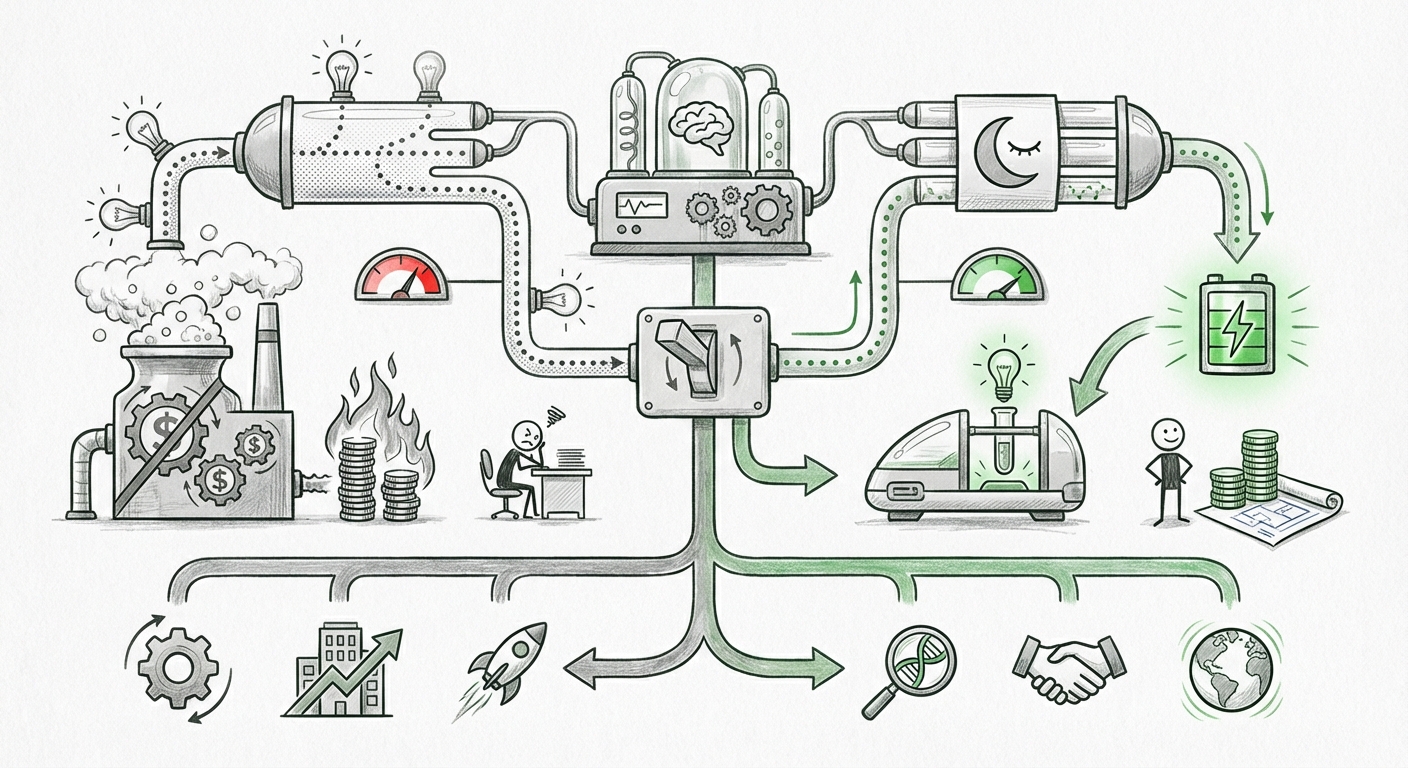
A million-token context attacks that stitching problem directly. Instead of chopping a codebase into fragments, a model can look at a very large portion of it in one pass. Instead of summarizing a week of logs into a lossy digest, it can reason across a much wider window of raw events.
Three things this unlocks
- Whole-system reasoning. Understanding how one weak spot connects to a larger attack path, rather than flagging it in isolation.
- Fewer false alarms. With more surrounding context, an odd event can be checked against the broader pattern before it is escalated.
- Faster investigation. Pulling together evidence that today takes an analyst hours of tab-switching into a single reasoning pass.
What This Means for the Future of AI
The most interesting thing about OrcaCyber Zero 1.5 is not that it is a security model. It is that it is a specialist model with a massive memory. Those two choices together describe where the AI industry is going.
From general helpers to domain experts
For the past few years, the dominant story in AI has been general-purpose models that try to do everything reasonably well. That phase is maturing. The next phase looks like depth: models trained and tuned for one field, where the details matter and generic competence is not enough. Cybersecurity is a natural first stop, because the field has enormous text to learn from, clear success and failure signals, and a workforce shortage that makes automation genuinely valuable rather than merely fashionable.
Expect the same pattern to repeat. A model with deep context and deep domain focus for legal discovery. For medical records. For financial auditing. For regulatory compliance. The template OrcaRouter is using here, a huge memory window plus a narrow subject, may become the standard shape of enterprise AI.
Context length as the new battleground
Raw model intelligence has been the headline metric for years. But for real work, memory may matter more. A model that is slightly less clever but can hold an entire system in view will often beat a sharper model that can only see a paragraph. OrcaCyber Zero 1.5 pushes that idea into a specific, practical domain where the payoff is easy to measure: did we catch the threat, and did we catch it faster?
Practical Implications for Businesses
You do not need to be a security company to feel this shift. Here is what changes for ordinary organizations.
Security teams get leverage, not replacement
The realistic outcome is not that analysts disappear. It is that the ratio changes. One skilled analyst, supported by a model that can review vastly more material in one pass, can cover what previously took a small team. That is meaningful for mid-sized companies that have always been priced out of round-the-clock security staffing.
Compliance and audit work gets cheaper
Much of compliance is reading: policies, configurations, code, evidence of controls. Long-context models are well suited to this grind. Instead of sampling a few files, an auditor, human or machine-assisted, can review far more of the actual system and check it against the requirements in the same breath.
Smaller firms can play a bigger game
Advanced security capability has historically been a large-enterprise privilege. Tools that compress expert work into accessible software tend to democratize. If a small business can point a model at its own systems and get a competent review, the gap between the well-defended and the poorly defended narrows. That is good for everyone except attackers.
The Risks Nobody Should Ignore
None of this is free of danger, and pretending otherwise would be dishonest.
- Over-trust. A confident model output is not a confirmed finding. Teams that skip human review will eventually act on a wrong conclusion.
- Data exposure. Feeding an entire codebase or log history into any AI system requires hard questions about where that data goes, who can see it, and how it is stored.
- Attacker use. The same long-context reasoning that helps defenders can help attackers find weaknesses faster. This is an arms race, not a one-sided win.
- Context is not comprehension. Holding a million tokens is not the same as understanding them. Long windows can still miss the crucial detail buried in the middle.
The organizations that benefit most will be the ones that treat these tools as powerful assistants with real failure modes, not as oracles.
Actionable Steps for Teams Today
You do not need to wait for the next version to prepare. A few moves make sense right now.
- Clean up your data first. A model is only as good as what it reads. Consolidated logs, documented systems, and readable code multiply the value of any AI tool you point at them.
- Define what "good" looks like. Before adopting anything, write down how you will measure success, time to detect, false positive rate, investigation hours saved. Otherwise you cannot tell improvement from noise.
- Set a data policy. Decide what can and cannot leave your environment, in writing, before a pilot begins.
- Keep a human in the loop. Use AI to surface and prioritize. Keep a person accountable for the final call on anything that changes your systems.
- Run a narrow pilot. Pick one painful, repetitive task, configuration review, alert triage, policy checking, and measure the result honestly.
The Road Ahead
OrcaCyber Zero 1.5 is a single release, but it points at something bigger. The AI conversation is moving from "how smart is the model?" to "how much of my world can it hold at once, and how well does it understand my specific field?"
That is a more useful question, and a harder one. It rewards organizations that invest in clean data, clear processes, and realistic expectations. It punishes those that chase headlines and skip the groundwork.
For the future of AI, the lesson is that memory and specialization may prove more transformative than raw scale. For security specifically, the promise is a world where defense happens at machine speed and human attention is spent on judgment rather than searching. That world is not here yet. But a model that can hold a million tokens of a company's own systems in its head, and reason about all of it at once, is a serious step toward it.