Rosetta's Coming Changes: What the End of Intel App Support Means for AI on Mac
Apple has announced upcoming changes to Rosetta support for Intel-based macOS apps. On the surface, this reads like a niche housekeeping note for developers, the kind of thing that gets filed away and forgotten until a build breaks. It isn't. This is one of the clearest signals yet of where personal computing is heading, and it tells us something important about the future of artificial intelligence: the age of the translation layer is ending, and the age of the native intelligence layer has begun.
To understand why that matters, you have to understand what Rosetta actually is, and why its slow retirement is a preview of a much bigger shift in how AI gets built, shipped, and used.
What Rosetta Is, and Why It Existed at All
Rosetta is a compatibility layer. It lets software written for one kind of processor run on a completely different kind of processor, without the developer rewriting a single line of code. When Apple moved its Macs from Intel chips to its own Apple silicon, Rosetta 2 became the bridge that kept millions of existing apps working on day one.
It was a remarkable piece of engineering. It was also, by design, temporary.
Translation layers always are. They exist to buy time, time for developers to rebuild their software natively, time for users to upgrade without losing access to the tools they depend on, time for an ecosystem to reorganise itself around new hardware. Once that time is used up, the layer becomes dead weight: slower, less secure, less energy-efficient, and a drag on everything built on top of it.
The announcement of upcoming changes to Rosetta support is Apple saying, in effect, that the grace period is winding down. The bridge is being drawn back up.
The Real Story: Hardware and Software Are Merging Again
For most of the last two decades, the tech industry ran on a comfortable abstraction. Software was software. Hardware was hardware. You wrote code once, and it ran more or less anywhere. Portability was the religion.
That abstraction is collapsing, and not just at Apple. Every major player in computing is now designing chips and software together, tuning them as a single system. The reason is simple: performance per watt. When you control both the silicon and the operating system, you can squeeze out speed and battery life that a generic, portable stack simply cannot match.
The catch is that tight hardware-software coupling makes legacy code expensive to carry. Translation layers like Rosetta are the tax you pay for backward compatibility. Eventually, every platform decides the tax is no longer worth it.
What's happening to Intel-based macOS apps is the same pattern that will hit AI infrastructure next.
Why This Is an AI Story, Not Just a Mac Story
Here's the connection that most coverage will miss. The single biggest problem in enterprise AI right now is not model quality. It is translation.
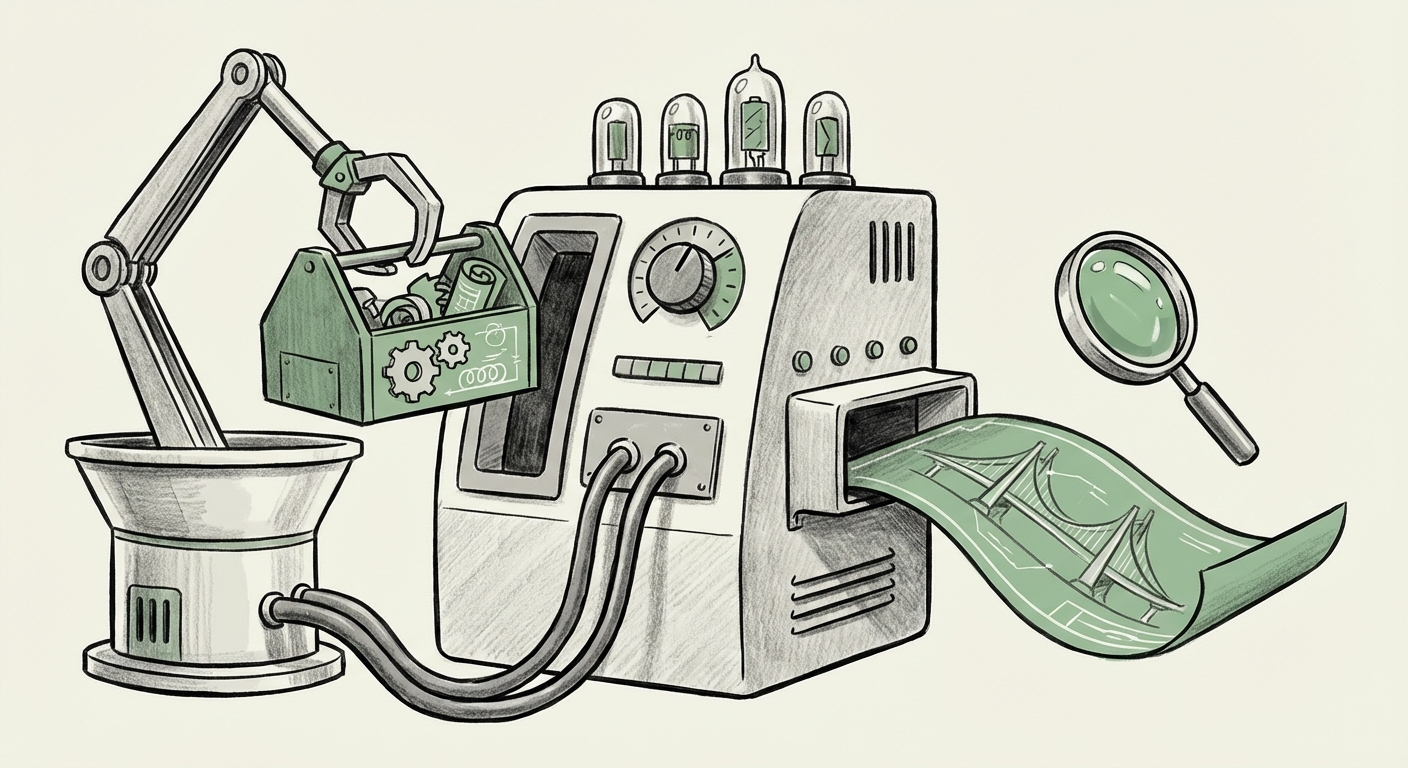
Businesses have mountains of software, data pipelines, and workflows built for a pre-AI world. Layering AI on top of them today looks a lot like Rosetta: a compatibility shim that lets old systems talk to new intelligence without anything being rebuilt from scratch. Retrieval layers bolted onto legacy databases. Prompt wrappers glued onto ancient APIs. Agents that drive software through the same buttons a human would click, because nobody wants to rewrite the software to expose a proper interface.
These shims work. They also carry the same costs Rosetta carries:
- Latency. Every translation step adds delay. In AI agents, that delay compounds.
- Fragility. Shims break when the thing underneath them changes, and AI models change constantly.
- Cost. You pay for overhead on every single request, forever.
- Security exposure. Every layer of indirection is another surface to attack, audit, and misconfigure.
The trajectory of the Mac ecosystem points to where AI is heading: the shims get retired, and the intelligence gets native. The winners over the next few years will be the organisations that rebuild their core systems so AI is a first-class citizen, not a translator bolted onto the side.
AI Is Also Eating the Migration Work Itself
There's a delicious irony in all of this. The job that Rosetta did by hand, translating one kind of code into another, is exactly the job modern AI coding tools are now very good at.
Rewriting a large application for a new processor architecture used to be a multi-year, multi-team slog. Today, AI assistants can read a legacy codebase, propose a port, generate the replacements, flag the risky edge cases, and write the tests to prove the new version behaves the same way. The work still requires human judgement, architects, reviewers, QA, but the sheer volume of mechanical translation is collapsing.
That changes the economics of every platform migration. When translation is cheap, keeping a compatibility layer alive stops making sense sooner. Rosetta's wind-down isn't just possible because developers have had years to migrate; it's possible because migration itself has gotten dramatically less painful.
Expect this pattern to repeat across the industry. Every legacy system, old code, old data formats, old workflows, is now a candidate for AI-assisted modernisation, because the cost of doing the translation has fallen off a cliff.
What This Means for Businesses Right Now
If you run a fleet of Macs, the practical advice is straightforward, and it applies almost word-for-word to your AI stack.
1. Inventory what depends on the bridge
You cannot manage what you have not mapped. Find every application, script, plug-in, and internal tool that only runs because a translation layer is holding it up. For Mac teams, that means Intel-only software. For AI teams, that means the prompt wrappers, scrapers, and glue code your agents rely on. In both cases, hidden dependencies are the real risk.
2. Score each dependency on business value, not age
Some legacy tools are irreplaceable. Others are zombies, nobody would miss them if they vanished. Sort your list by how much the tool actually earns or saves, then decide: migrate, replace, or retire.
3. Ask vendors the uncomfortable question
Reach out to every software supplier. Ask directly whether their product runs natively or depends on a compatibility layer, and ask for their timeline. Vendors who dodge the question are telling you something. Do the same with your AI vendors: ask what happens to your workflows when the model underneath changes.
4. Budget for the transition before you're forced to
Forced migrations are always the most expensive kind. They happen on someone else's schedule, with no room to negotiate, and they consume engineering capacity you had earmarked for revenue work. Planned migrations are boring. Boring is good.
5. Build native, not translated, from here on
This is the strategic lesson. Any new system you build in 2026 should assume that AI is part of the foundation, not a layer sitting on top. Design your data so models can read it directly. Expose real interfaces instead of screen-scraping your own tools. Architecture decisions made now will determine how expensive the next transition is.
The Bigger Picture: Transition Layers Are Temporary, But Intelligence Compounds
There's a pattern worth naming here. Technology transitions almost always follow the same arc: a bridge appears, it makes the transition survivable, and then it disappears, not because it failed, but because it succeeded.
Rosetta succeeded. That is precisely why it is going away. The change to Rosetta support for Intel-based macOS apps is not a crisis; it is the closing act of a transition that worked.
For AI, the stakes are higher. The translation layers we're using today to connect large models to legacy business systems are the Rosetta of this era. They are getting us across the gap. They are not the destination.
The companies that understand this will spend the next few years rewiring their core systems so that intelligence is native, embedded in the data layer, the interface layer, and the decision layer. The companies that don't will keep paying the translation tax, watching their competitors respond faster, cheaper, and with less risk.
One more implication deserves attention: trust. Translation layers are where trust quietly erodes. When a user can't tell whether they're interacting with a native system or an emulated one, small inconsistencies pile up into doubt. As AI moves into customer service, healthcare, finance, and legal work, native integration becomes a trust requirement, not just a performance one. Systems that are genuinely built for AI can explain themselves. Systems that are shimmed together usually can't.
Actionable Takeaways
- Audit your dependencies, both Mac apps relying on compatibility layers and AI workflows relying on adapter code.
- Treat translation layers as technical debt with an expiry date, because that is exactly what they are.
- Use AI to do the migration. Code translation and modernisation are among the strongest real-world uses of AI tooling today.
- Design for native intelligence in every new system, so the next transition is a config change instead of a rebuild.
- Ask vendors for timelines in writing, then plan backwards from them.
- Watch the energy and cost angle. Translated software burns more power and more compute. At AI scale, those numbers are enormous.
Conclusion
The quiet announcement about Rosetta is easy to skim past. But it captures a shift that will define the next decade of computing: platforms are integrating tightly, compatibility layers are being retired, and the intelligence we've been bolting on from the outside is moving inside the system.
Rosetta bridged two eras of the Mac. The AI adapters we rely on today are doing the same job for business software. The lesson from Rosetta's wind-down is not that bridges are bad, it's that bridges are meant to be crossed and then left behind. The teams that cross early and build native will define what comes next. Everyone else will be paying the translation tax long after the bridge is gone.