Why the Agent Harness Matters as Much as the Model in AI Security
For the last few years, almost every conversation about AI has been a conversation about the model. Which one is smartest? Which one writes the best code, passes the hardest test, or wins the latest leaderboard? That focus made sense when AI mostly answered questions. You typed something in, you got text back, and the worst thing that could happen was a wrong answer.
That era is ending. AI systems are now being given hands. They can browse the web, read your files, run code, send emails, move money, and call into other software on your behalf. The moment a model stops just talking and starts doing, a new question appears, and it is not about how smart the model is. It is about what the model is allowed to touch. That is the job of something called the agent harness, and security experts are increasingly arguing it deserves as much attention as the model itself.
What Exactly Is an Agent Harness?
An agent harness is everything wrapped around a model that turns it from a text generator into a working agent. You will also hear it called scaffolding, an orchestration layer, an agent runtime, or an agent framework. The name changes; the job does not.
The harness is the loop that:
- Decides which tools the agent can call and when
- Feeds the model context, memory, files, past steps, instructions
- Parses the model's output and turns it into a real action
- Checks whether that action is permitted before it happens
- Handles errors, retries, and timeouts
- Records what happened so a human can review it later
A simple way to picture it: the model is the engine, and the harness is the steering wheel, the brakes, the seatbelts, and the dashboard. A powerful engine with no brakes is not a fast car. It is a hazard.
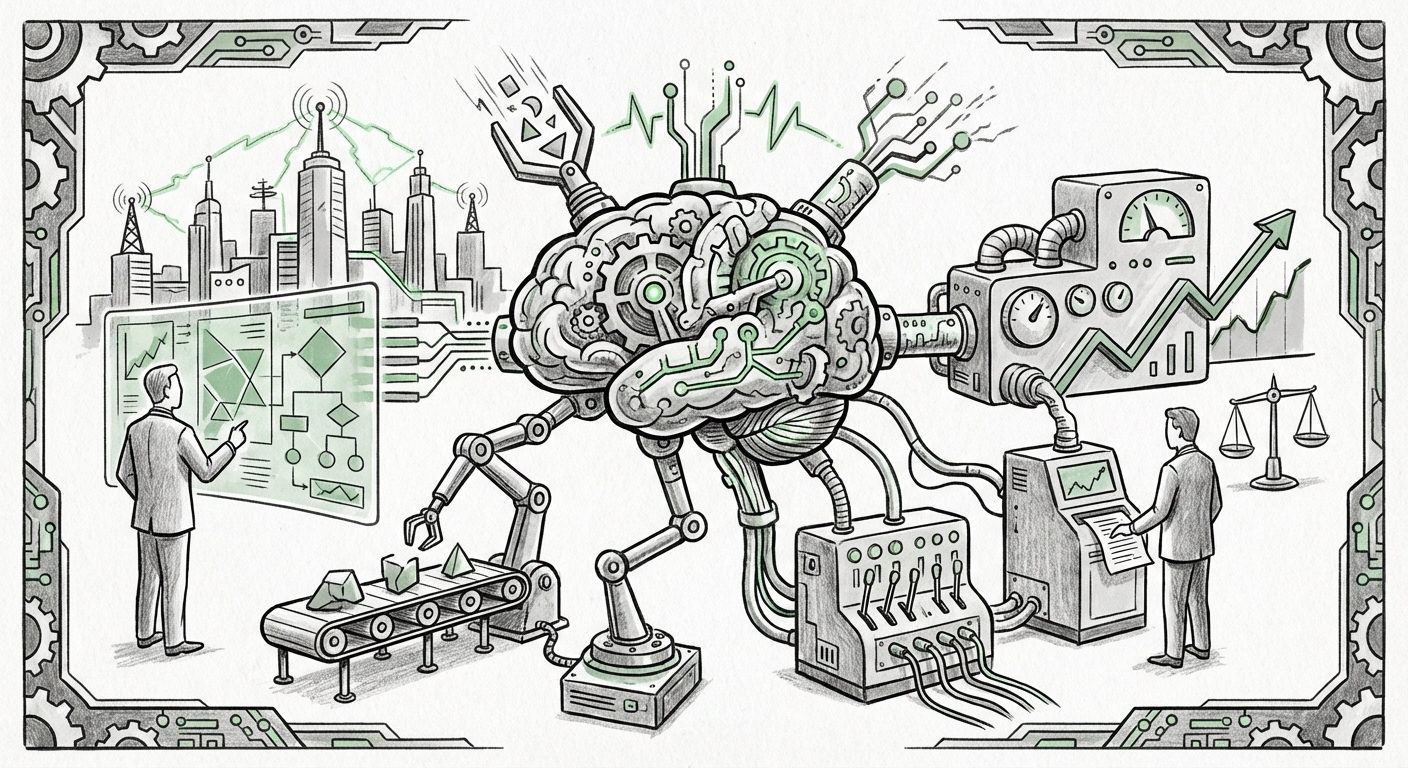
The Model Is the Brain. The Harness Is the Hands.
Here is the core insight that is reshaping how teams think about AI risk. Model risk is mostly about what a system says. Harness risk is about what a system does.
Take the same model and drop it into two different harnesses. In the first, the agent gets a database credential with write access, can run commands on the machine without review, and can send email to any address it likes. In the second, the agent gets short-lived, narrowly scoped access, works inside a sandbox, and every high-impact action needs a human to click approve.
Nothing about the model changed. The risk profile is completely different. This is why teams that only benchmark and evaluate models are measuring half the problem.
Why Security Really Lives in the Harness
Prompt injection is a containment problem
Prompt injection is the idea that an attacker hides instructions inside content the agent reads, a web page, a document, an email, a code comment. The agent, trying to be helpful, follows them. Researchers have been chasing model-side fixes for years with limited success, and there is a practical reason: a model that can read untrusted text and follow instructions is also a model that can be tricked by untrusted text.
The harness is where you contain the damage. If the agent can read a poisoned web page, but the harness will not let it send data to an arbitrary outside address, the attack stalls. You did not make the model smarter. You made the blast radius small. That is a security win.
Least privilege for non-human workers
Agents need credentials, API keys, tokens, database logins, and this is where a lot of real-world danger hides. The lazy version is handing the agent a long-lived master key because it is easy. The careful version is issuing short-lived, tightly scoped tokens that only unlock what the current task needs, and that expire quickly.
A harness that manages credentials well can turn "the agent leaked a key" from a catastrophe into a minor incident. A harness that does not can turn a small bug into a breach.
Blast radius and sandboxing
Good harnesses assume the agent will sometimes be wrong. They limit how wrong it can be. That means file system boundaries so the agent cannot wander into unrelated folders. Network rules that say which destinations the agent may reach. Spending and rate limits so a runaway loop does not drain an account. Time limits so a stuck agent does not run forever.
None of these are glamorous. All of them are the difference between an agent that helps and an agent that hurts.
Auditability, the flight recorder
If the harness records every tool call with its inputs and outputs, you have a flight recorder. When something goes wrong, and eventually it will, you can reconstruct exactly what the agent saw, what it decided, and what it did.
Without that log, you have an incident and no story. You cannot fix what you cannot see, and you cannot explain to a customer, a regulator, or your own leadership what happened.
Deterministic guardrails
Some safety should not depend on the model's judgment at all. Allow-lists and deny-lists. Schema validation so malformed output is rejected rather than executed. Rules that block whole categories of action regardless of how convincing the model's reasoning sounds. A harness mixes soft, model-driven control with hard, code-driven control. The hard controls are what you rely on when the model has a bad day.
The Big Shift: From Model Benchmarks to System Benchmarks
The industry spent years comparing models on test scores. That is slowly changing. The more useful comparison is the whole agent system end to end, model plus harness. A model that scores slightly higher on a benchmark can be far less safe in practice than a slightly weaker model wrapped in a careful harness with tight permissions and good logging.
Once you accept that, the marketing question changes too. "Which model is best?" becomes "which complete system can I actually trust with access to my data and my tools?" Those are very different questions, and they lead to very different purchases.
What This Means for the Future of AI
The harness becomes the product. Raw model quality is converging fast across providers. As it does, the differentiation moves up the stack, into the harness, the integrations, the permission model, and the review workflow. Companies that treat the harness as an afterthought will find themselves selling the same commodity as everyone else.
Security budgets shift. Money that once went into picking the best model will move into agent platform engineering: identity, permissions, sandboxing, logging, and evaluation of full systems.
Autonomy advances as fast as containment does. Businesses want agents that do more without supervision. That only happens when the harness gets better at saying no, at scoping access, and at recording what happened. Trust is earned by the wrapper, not the weights.
Regulation will land on the deployer, not just the model. When a regulator asks how an automated system was permitted to take an action, the answer will come from the harness. Rules about who is accountable for automated decisions naturally point at the system that granted the access, not the vendor that trained the model.
A new layer of standards emerges. Expect pressure toward common ways to describe what an agent is allowed to do, a shared language for permissions, so security teams can review agents the way they review software.
Practical Implications for Businesses
Questions to ask before you deploy any agent
- What can it touch? Get a full list of tools, credentials, and data scopes.
- Can I see every action after the fact? If not, you are flying blind.
- What happens when it is wrong? Does the failure mode stop the action, or let it through? You want fail-safe, not fail-open.
- Who approves high-risk actions? Some steps should always require a human.
- How do I revoke access? If the answer is slow or unclear, treat that as a red flag.
Build versus buy
The harness is where your security posture lives. That does not automatically mean you must build your own, but it does mean you should not outsource it without understanding it. Whatever you buy, make sure you can configure permissions, inspect logs, and set your own limits. A vendor's defaults are not your security policy.
Govern agents like new employees
The mental model that works best is treating agents as new staff members with badge access. They get onboarding, a defined scope of duties, the minimum access needed, and periodic review. When they change roles, their access changes. When they leave, it is revoked. Most organizations already know how to do this for people. Applying it to agents is the fastest way to close the biggest gaps.
Actionable Insights: A Quick Checklist
- Inventory every agent you run and list what each one can reach.
- Replace long-lived credentials with short-lived, scoped tokens wherever possible.
- Put high-impact actions behind human approval until you have earned confidence.
- Turn on full logging of tool calls, inputs, and outputs, and actually review it.
- Set spending, rate, and time limits so a runaway agent cannot do endless damage.
- Test your agent with deliberately hostile content to see what the harness blocks.
- Evaluate complete systems, not just models, before you commit.
The Bottom Line
The most important safety feature of the coming wave of AI may not be inside the model at all. It may be the unglamorous engineering wrapped around it, the permissions, the sandboxes, the approvals, the logs. Models will keep getting better. But an agent is only as safe as the harness that decides what it may do. Teams that understand this early will deploy more, move faster, and sleep better.