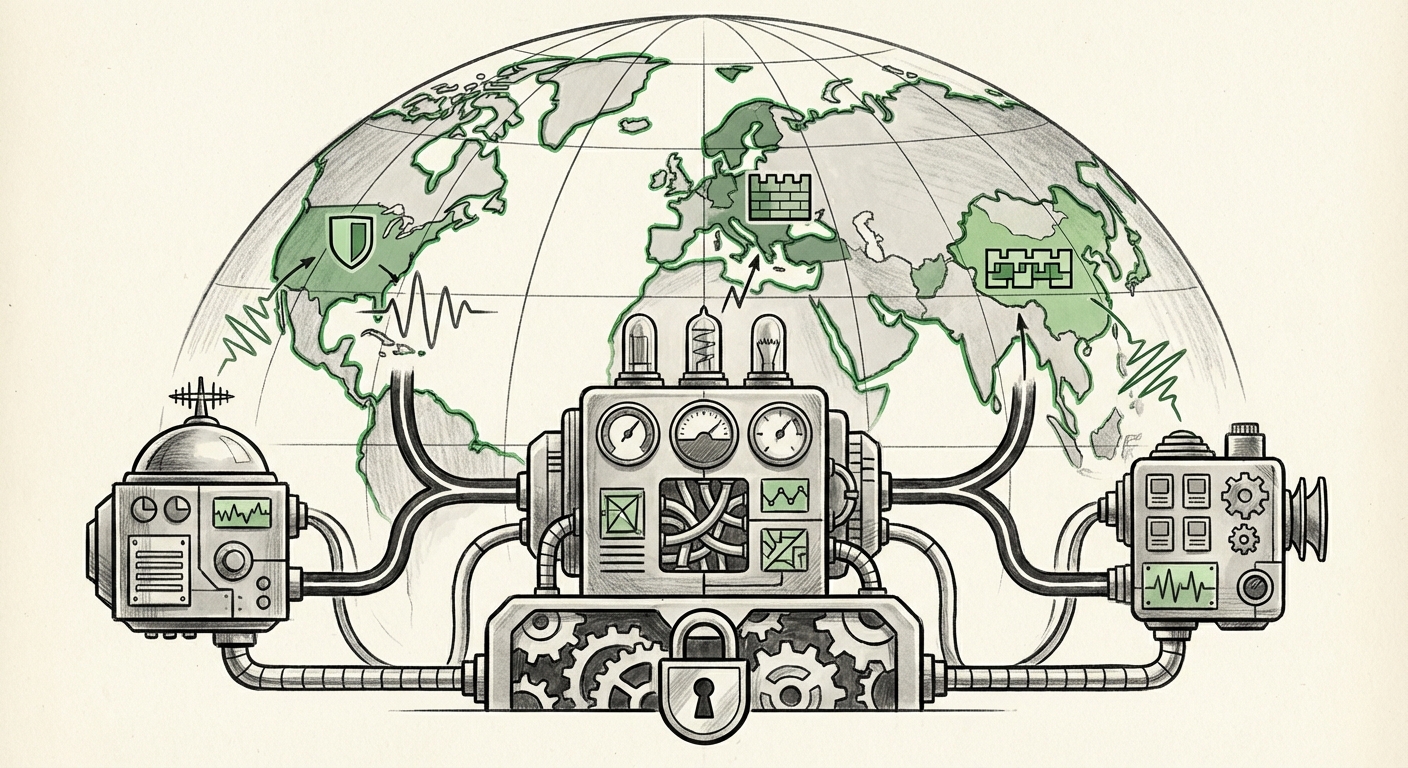
Anthropic's Most Powerful Model Is Back Online: What It Means for the Future of AI
Anthropic's most powerful model is back online. That single sentence sounds simple, almost boring. A service went down, and then it came back up. We deal with that every day with email, streaming apps, and banking portals. But when the thing that goes offline is the most capable artificial intelligence model a leading lab has ever built, the stakes are different. This is not a story about a server reboot. It is a story about how much the world now depends on a handful of AI systems, and what happens when one of them blinks.
For anyone building a business on top of AI, this moment deserves more than a shrug. It is a signal about reliability, trust, and the new rules of the road. Below, we break down what the return of Anthropic's flagship model really tells us about where AI is heading, and what practical steps you should take today.
The Headline: A Top-Tier Model Went Quiet, and Then Returned
The core fact is straightforward: Anthropic's most powerful model, which had gone offline, is now available again. For the people who noticed, the reaction was immediate. Developers who had built products around its abilities suddenly found themselves working without it. Businesses that had folded it into their daily workflows had to improvise. And everyone else got a quiet reminder that even the most advanced AI on the planet is, a piece of software running on somebody else's computers.
That last point is the one worth sitting with. We tend to talk about frontier AI in almost mythical terms, as if it were a permanent, always-on intelligence we can summon at will. The reality is far more ordinary. These models live in data centers, they run on hardware, they are served through APIs, and they can be taken offline. When an outage involves the most powerful model a company offers, it stops being an IT problem and becomes a strategic one.
Uptime Is Now a Feature, Not a Footnote
For years, the AI conversation has been dominated by one question: how smart is the model? Benchmarks, reasoning scores, context windows, and raw capability grabbed all the headlines. Availability was treated as a boring detail buried in the terms of service.
That era is ending. As AI moves from experimentation into the core of real products, reliability becomes just as important as intelligence. A model that can write flawless code but disappears for an afternoon is worse for many businesses than a slightly less capable model that never goes down. Think about it like electricity: nobody brags about their power company being "innovative." They just want the lights to stay on.
This is the shift the AI industry now has to make. The winners of the next few years won't just be the labs with the smartest models. They will be the ones that can promise their users something almost unglamorous: it will be there when you need it.
The Risk of Putting All Your Eggs in One Model
Here is where the news gets practical for anyone running a company. When your product depends on a single AI provider, an outage at that provider becomes an outage for you. Your customers don't care that the problem was upstream. They just see your app broken.
This is a familiar pattern from the history of technology. Companies learned the hard way that relying on one cloud provider, one payment processor, or one shipping partner creates what engineers call a single point of failure. AI is now in that same category. The most powerful models are also the most concentrated, built by a small number of labs, served from a small number of systems, and used by millions of people who have no backup plan.
The lesson from this outage is not "avoid Anthropic." It is don't build a business with only one brain. Smart teams are already designing systems that can switch between models, fall back to a simpler option, or route different tasks to different providers. It costs a bit more in engineering effort. It saves you when the lights go out.
The Safety Question Hiding Behind the Outage
There is another dimension to this story that rarely makes headlines but matters enormously: why a powerful model might go offline in the first place. When a lab pulls its most capable system, the reasons can range from routine maintenance to a technical bug to a deliberate safety decision. The public rarely gets the full picture, and that ambiguity is itself part of the story.
The most powerful AI models are increasingly treated less like consumer gadgets and more like critical infrastructure. That means they may be subject to controls, internal reviews, guardrails, staged rollouts, that ordinary software never faces. A model being taken offline and then restored could be a sign of a maturing industry that is learning to hit pause when it needs to.
This raises a genuine tension that the whole field will have to wrestle with. Users want powerful AI, always on, always available. Regulators and safety teams want the ability to slow things down when risk appears. Both instincts are reasonable. The coming years will be about finding a balance between them, and incidents like this one are the testing ground.
What This Means for the Future of AI
Stepping back, the return of Anthropic's most powerful model points to three bigger trends that will shape AI over the next few years.
1. Reliability engineering becomes the new frontier
The race to build the smartest model is no longer the only race. The next competitive edge will be operational: uptime guarantees, transparent status reporting, graceful degradation, and clear communication when something goes wrong. Expect vendors to start advertising reliability the way they once advertised raw capability.
2. The multi-model world becomes the default
Just as businesses learned to use multiple cloud providers, they will learn to use multiple AI models. Some tasks will go to the most powerful system available. Others will go to cheaper, faster, or more stable options. "Model routing", automatically choosing the right model for the job, is becoming a genuine skill and a genuine product category.
3. Trust becomes the real currency
Every outage, every unexplained disappearance, every sudden return chips away at or rebuilds trust. In a market where the underlying technology is improving fast, the differentiator is increasingly not what the model can do, but whether people believe it will be there tomorrow. Trust is slow to build and fast to lose.
Actionable Takeaways for Businesses
If you use AI in any serious way, here is what this moment should push you to do:
- Map your dependencies. Know exactly which products and workflows rely on a single AI provider. If the answer is "all of them," that's a risk to fix.
- Build a fallback. Have at least one alternative model or provider you can switch to, ideally tested before you need it, not during an outage.
- Design for graceful failure. Your app should degrade smoothly when an AI service is unavailable, not crash, and not leave your customers confused.
- Communicate clearly. If your AI features go down, tell your users what's happening. Silence damages trust more than downtime does.
- Read the fine print. Understand the uptime commitments, notice periods, and change policies in your AI contracts. They matter as much as the price.
- Keep humans in the loop. For critical decisions, make sure a person can step in when the model can't.
The Bottom Line
The news that Anthropic's most powerful model is back online is easy to skim past. But it marks a turning point in how we think about AI. The technology has grown powerful enough, and embedded enough, that its availability is now a business concern, a safety concern, and a trust concern all at once.
The future of AI won't just be defined by how smart these systems get. It will be defined by whether we can depend on them, and by how well we prepare for the moments when we can't. The most powerful model in the world is only as useful as its ability to be there when the world needs it. That is the lesson, and it is one the entire industry, and everyone building on it, should take seriously.