FAA Warning Over Saudi Arabia Airspace: Why AI Is Becoming Aviation's Early-Warning System
On October 12, 2026, the Federal Aviation Administration warned U.S. airlines about safety risks over Saudi Arabia following attacks. That single warning carries a lot more weight than it first appears. It is a signal that the way we judge whether the sky is safe is changing, and artificial intelligence sits right at the center of that change.
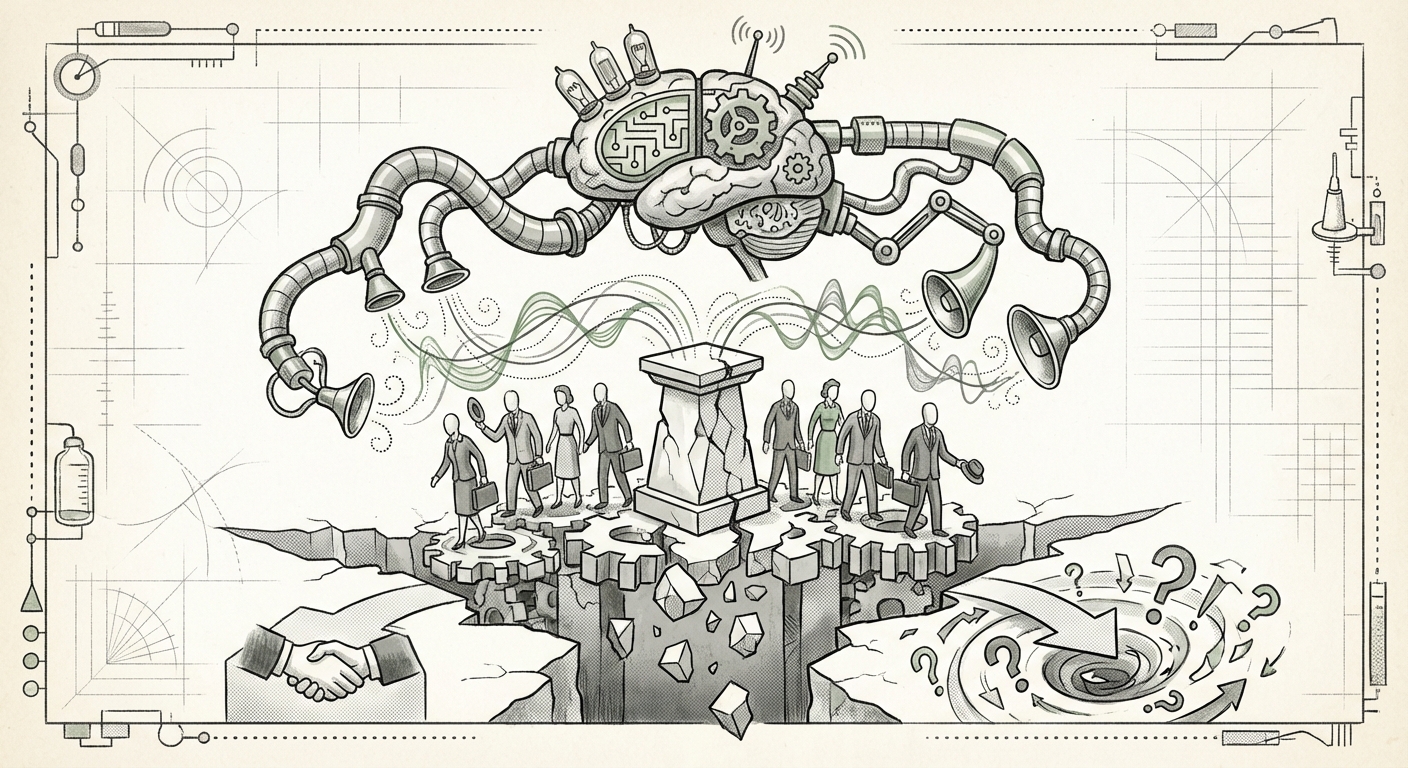
For most of aviation history, airspace risk was handled by humans reading notices, talking to each other, and making judgment calls. Today, the volume of information is too large and moves too fast for that alone. Attacks, closures, missile paths, GPS interference, and fast-shifting conflict zones can change the picture in hours. This is exactly the kind of messy, high-speed, high-stakes problem that AI was built for, and also exactly the kind of problem where AI can get things badly wrong.
Here is what the warning tells us about where AI in aviation is heading, what it can realistically do, and what businesses and travelers should expect next.
A Warning That Points to a Bigger Shift
An FAA warning to U.S. airlines is not a ban. It is a risk alert. It tells carriers that a region of airspace deserves a fresh look before they fly through it. In practice, that means airlines have to re-check routes, re-run fuel and timing plans, brief crews, and decide whether to fly, reroute, or pause.
Each of those steps used to be slow and manual. Now, much of it is assisted by software. Modern flight-planning platforms pull in weather, notices to airmen, conflict data, and satellite feeds, then suggest the safest and cheapest path. The more complex the world gets, the more airlines lean on these systems, because a human alone cannot track thousands of data points at once.
That is the real story behind the warning. It is not just about one region. It is about a world where airspace safety is now a data problem as much as a diplomatic one.
Why Airspace Risk Became a Machine-Learning Problem
Think about what goes into deciding whether a flight path is safe. There is official guidance. There is weather. There is the history of what has happened in that region. There are reports from other airlines. There are satellite images. There are signals from the aircraft itself, like position and navigation quality.
No single person can hold all of that in their head. But a machine-learning model can be trained to look for patterns across all of it, and to flag when something looks different from normal.
This is where AI has become genuinely useful. Models can:
- Scan huge volumes of aviation notices in seconds and pull out the ones that actually matter for a specific route.
- Watch satellite and radar imagery for signs of new activity near airports or along corridors.
- Spot anomalies in navigation signals that suggest an aircraft's positioning data may be unreliable.
- Model "what if" scenarios, if this corridor closes, what is the next best path, and what does it cost in fuel and time?
- Learn from past disruptions so the next response is faster.
The value is not that AI makes the final call. The value is that it shrinks the time between "something changed" and "we noticed."
The Tools Already Watching the Skies
Several categories of AI systems are now standard or fast-growing in commercial aviation.
1. Intelligent Notice Processing
Aviation notices are written in a compressed, jargon-heavy format that is easy to misread. Language models are increasingly used to translate these notices into plain-language summaries and to rank them by relevance to a specific flight. That reduces the chance a critical warning gets buried in a stack of routine ones.
2. Predictive Route Optimization
Instead of reacting to a closure after it happens, models try to anticipate it. They combine historical disruption patterns, geopolitical signals, and weather to score routes by risk. Airlines can then choose to fly around a problem before it fully develops.
3. Satellite and Imagery Analysis
Computer vision can compare today's satellite image of a region with last month's and highlight meaningful change. In a conflict-affected area, that kind of change detection can be an early hint that airspace is becoming riskier.
4. Signal Integrity Monitoring
Navigation signals can be degraded, blocked, or spoofed. AI systems that compare an aircraft's reported position against independent sources can flag when something does not add up, a quiet but important safety layer.
5. Crew and Operations Support
AI assistants are being used to help dispatchers and crews get answers faster: what is the current guidance, what changed in the last six hours, what do other operators say.
Where AI Still Fails, and Why That Matters
It would be a mistake to treat these systems as infallible. In a situation like a warning over Saudi Arabia, several weaknesses show up fast.
- Stale or missing data. Models are only as good as their inputs. If the freshest information has not arrived, the model's confidence can be dangerously high while its picture is out of date.
- Adversarial deception. In conflict settings, information can be manipulated. A model trained on normal patterns may not recognize a deliberately misleading signal.
- Automation bias. When a system says a route is fine, humans tend to accept it. That is efficient, until it is wrong.
- Explainability gaps. If a model flags a route as risky, operators need to know why. A score without a reason is hard to act on and hard to defend.
- Rare-event blindness. The most dangerous events are often the ones with the fewest historical examples. Models struggle with situations they have rarely seen.
The lesson is not to abandon AI. It is to design it as a co-pilot for human judgment, not a replacement for it.
What This Means for Businesses
The ripple effects reach well beyond airlines.
Airlines and Operators
Carriers that can detect and respond to airspace risk faster will have a real advantage. They will burn less fuel on unnecessary reroutes, avoid last-minute cancellations, and protect their reputation when passengers are nervous.
Insurers and Underwriters
Risk pricing depends on understanding exposure. AI-driven models that track airspace conditions in near real time could reshape how premiums are set for routes, cargo, and crews.
Logistics and Freight
Air cargo is tightly scheduled. A single corridor disruption can cascade through supply chains. Predictive tools that flag problems early let freight forwarders rebook before the bottleneck forms.
Travel Platforms and Corporate Travel Teams
Expect more tools that score a flight not just on price and duration but on route risk. Companies with duty-of-care obligations will want that data when approving employee travel.
Technology Vendors
The market for aviation risk intelligence is growing. The winners will be the ones who combine multiple data sources, explain their reasoning clearly, and update fast enough to matter.
What This Means for Society
There is a broader question here about trust. When a government warns airlines and an AI system helps decide the response, who is accountable? Passengers deserve to know that safety decisions are not being quietly outsourced to a black box.
Three things will shape public confidence:
- Transparency. Clear communication about what is known, what is uncertain, and what is being done.
- Human oversight. A named, responsible decision-maker behind every route call.
- Fairness. Risk models must not unfairly penalize regions or carriers based on weak or biased data.
AI can make aviation safer, but only if it is built to be questioned.
Actionable Insights
If you run an organization that depends on global movement of people or goods, here is what to do now.
- Treat airspace risk as a live data feed, not a periodic report. Situations change in hours, not quarters.
- Demand explainable alerts. Any AI system you rely on should tell you why it flagged something.
- Keep a human in the loop for high-stakes calls. Automate the monitoring, not the final decision.
- Diversify your data sources. One feed can fail or be manipulated. Three independent ones are far harder to fool.
- Rehearse disruption scenarios. Run tabletop exercises where a corridor closes with two hours' notice.
- Write clear escalation rules. Decide in advance who can ground a flight, reroute a shipment, or pause travel.
- Track your model's blind spots. Log every time reality diverged from a prediction, and use it to retrain.
The Road Ahead
The warning over Saudi Arabia is a snapshot of a permanent shift. The world is getting more unpredictable at the same time that the tools for tracking it are getting more powerful. That combination will define the next decade of aviation.
The airlines that thrive will not be the ones with the most AI. They will be the ones that use AI to see problems earlier, act faster, and still keep a human hand on the controls. Technology can widen the warning window. It cannot replace judgment, and the industry should not pretend otherwise.
For everyone else, businesses, travelers, insurers, and policymakers, the message is simple. The skies are now monitored by machines as much as people. Understanding that shift is no longer optional.