Ultrahuman's Biological Age Rollout Across the UAE: What AI Wearables Mean for the Future of Health
Smart ring maker Ultrahuman is set to roll out a biological-age model across the UAE, a move that pushes wearable technology past simple step counting and into territory that used to belong to doctors and labs. It is a small headline with a very large idea behind it: artificial intelligence is starting to turn everyday body signals into a single, understandable number that tells you how fast you are aging.
That shift matters far beyond one company or one country. It shows where AI is heading next, out of the chatbot window and into the devices we wear on our fingers, where it can watch our bodies every hour of every day. And it raises hard questions about accuracy, privacy, and who gets to decide what "healthy" means.
What Is Actually Being Announced
Ultrahuman, a maker of smart rings, plans to bring a biological-age model to users across the UAE. A biological-age model takes data collected from a wearable, patterns of sleep, movement, and heart activity, and uses AI to estimate how old your body seems to be, as opposed to how many birthdays you have had.
That is the core of the news. The company is not just shipping hardware. It is shipping interpretation. And interpretation is where the real value in wearables now lives.
For years, the wearable market competed on sensors: who could measure more, more accurately, more often. That race is largely over. Rings, watches, and bands now capture enormous amounts of data. The bottleneck has moved. The question is no longer "can we measure it?" but "can we explain what it means?" That is a machine-learning problem, and it is where companies are now investing.
From Raw Data to a Single Number
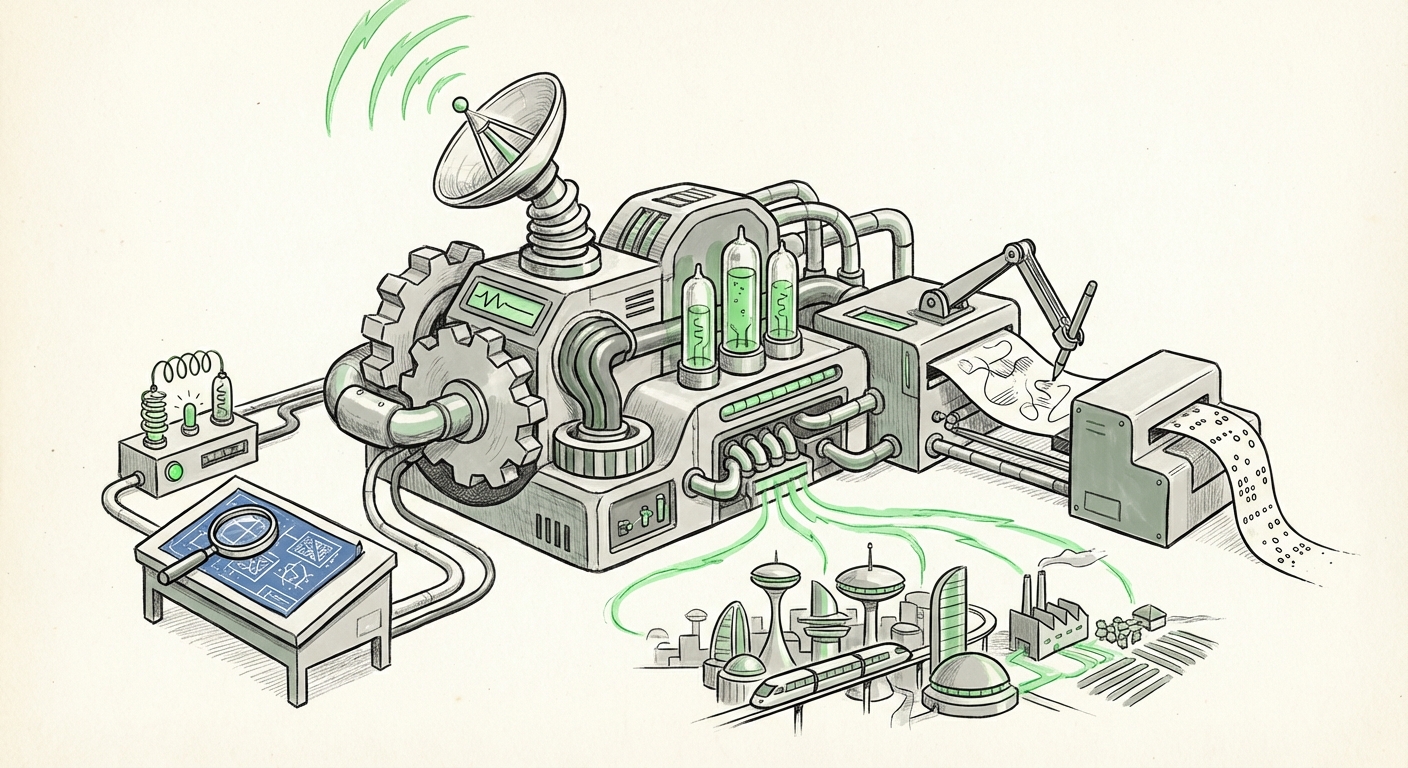
A biological-age model is a good example of how modern AI turns noise into meaning.
A wearable produces a steady stream of signals. On its own, none of them is especially useful. A slightly higher resting heart rate on a Tuesday tells you almost nothing. But when an AI model looks at thousands of these signals across weeks and months, patterns start to appear, patterns that can be compared against large groups of people to produce an estimate.
Three things make this possible:
- Continuous data. Wearables collect information while you sleep, work, and rest. That is a far richer picture than a single clinic visit.
- Pattern recognition. AI models are excellent at spotting subtle, slow-moving trends that humans would never notice.
- Personal baselines. Instead of comparing you to an average person, models can learn what is normal for you and flag when that changes.
The output is deliberately simple: one number, one score, one trend line. That simplicity is the product. People do not want a spreadsheet of biometrics. They want to know if they are doing well or falling behind.
Why This Is a Turning Point for AI
Most public conversation about AI still focuses on text and images. But the more consequential shift may be in ambient, always-on AI, models that live inside small devices and quietly interpret the physical world.
This is a different engineering challenge. Cloud-based chatbots can take seconds to respond. A wearable must be power-efficient, work offline at times, and protect extremely sensitive data. It also has to be right in a way that a bad movie recommendation never does. Getting a health estimate wrong has real consequences.
The Ultrahuman rollout fits a broader pattern: AI companies are moving from general intelligence toward personal intelligence. A model that knows your body, your habits, and your history can give advice that a generic assistant never could. That personalization is the next competitive frontier, and it depends on trust.
Why the UAE Is an Interesting Place to Start
Rolling a biological-age model out across the UAE is a notable choice. The country has invested heavily in digital health, smart-city infrastructure, and preventive medicine. It also has a population that adopts consumer technology quickly.
For an AI health product, that combination is close to ideal. You get a market that is willing to try new devices, a government that is interested in prevention rather than only treatment, and a data environment where rollout and regulation can be coordinated rather than fought over.
If the model works there, it becomes a template. Regional rollouts are often how health-AI companies test whether their product holds up across different populations before attempting a global launch.
What This Means for Businesses
The business implications stretch well past consumer gadgets.
1. Health data becomes a product layer
Hardware is increasingly a commodity. The durable advantage is the model that sits on top of it. Expect more companies to sell subscriptions, insights, and coaching rather than devices alone. The ring is the sensor; the AI is the business.
2. Employers and insurers will pay attention
Biological-age scores are attractive to anyone who benefits from keeping people healthy. Wellness programs, insurance pricing, and preventive care all become more data-driven when there is a single, trackable number to follow. That is an opportunity, and a serious governance question.
3. Clinical workflows will feel pressure
When patients arrive with months of continuous data, doctors will need ways to interpret it. The winners will be the tools that summarize those streams into something a clinician can use in a short appointment.
4. New compliance work appears
Health estimates carry regulatory weight. Companies that treat biological-age models as casual consumer features rather than health claims are likely to run into trouble, especially as they cross borders.
What It Means for Society
There is a real upside here. Preventive health is underfunded almost everywhere. Most systems pay for sickness, not for staying well. A device that nudges people toward better sleep, more movement, and earlier detection could reduce suffering and cost.
But three risks deserve honesty.
First, false precision. A single number feels authoritative, even when it is an estimate built on statistical patterns. Users may over-trust it, or worse, panic over it. Good design has to communicate uncertainty clearly.
Second, privacy. Continuous body data is among the most sensitive information a person can generate. Who holds it, how long it is kept, and whether it can be sold are questions that will define public trust in this entire category.
Third, inequality. If better health insight becomes a paid subscription, it could widen the gap between people who can afford to monitor and act on their health and those who cannot.
Actionable Insights
- For product teams: stop competing on sensor counts. Compete on how clearly you explain what the data means and what the user should do next.
- For business leaders: treat wearable health data as regulated data from day one, not as an afterthought bolted on at launch.
- For healthcare organizations: start planning how to ingest and summarize continuous patient data before patients bring it to you.
- For consumers: use biological-age style metrics as motivation, not diagnosis. They are hints, not verdicts.
- For investors: look past hardware margins and toward the models, the data pipelines, and the trust infrastructure behind them.
The Road Ahead
The most important thing about a biological-age rollout is not the number it produces. It is the precedent it sets: AI that watches, learns, and personalizes in real time, on a device you never take off.
If that model earns trust in the UAE, expect it to spread, into insurance, into employer programs, into clinical research, and into everyday decision-making about sleep, food, and exercise. If it does not earn trust, the whole category stalls.
The technology is ready. The harder work is everything around it: validation, transparency, privacy, and plain-language explanation. The companies that treat those as core features rather than obstacles will define what AI-powered health looks like for the next decade.
TLDR: Ultrahuman is rolling out a biological-age model across the UAE, using AI to turn wearable sensor data into a single estimate of how fast a person is aging. It signals a bigger shift, AI moving from chatbots into always-on personal health devices. The upside is real preventive health and personalized guidance; the risks are false precision, data privacy, and unequal access. Businesses should treat health AI as a regulated, trust-first product layer, not a gadget feature.