The AI Arms Race Has Changed: Why Full-Stack Infrastructure Now Decides Who Wins
For the past few years, the AI race looked like a contest of brains. Every few months, a new model arrived that could write better, reason further, or answer harder questions. The winner was whoever had the smartest model.
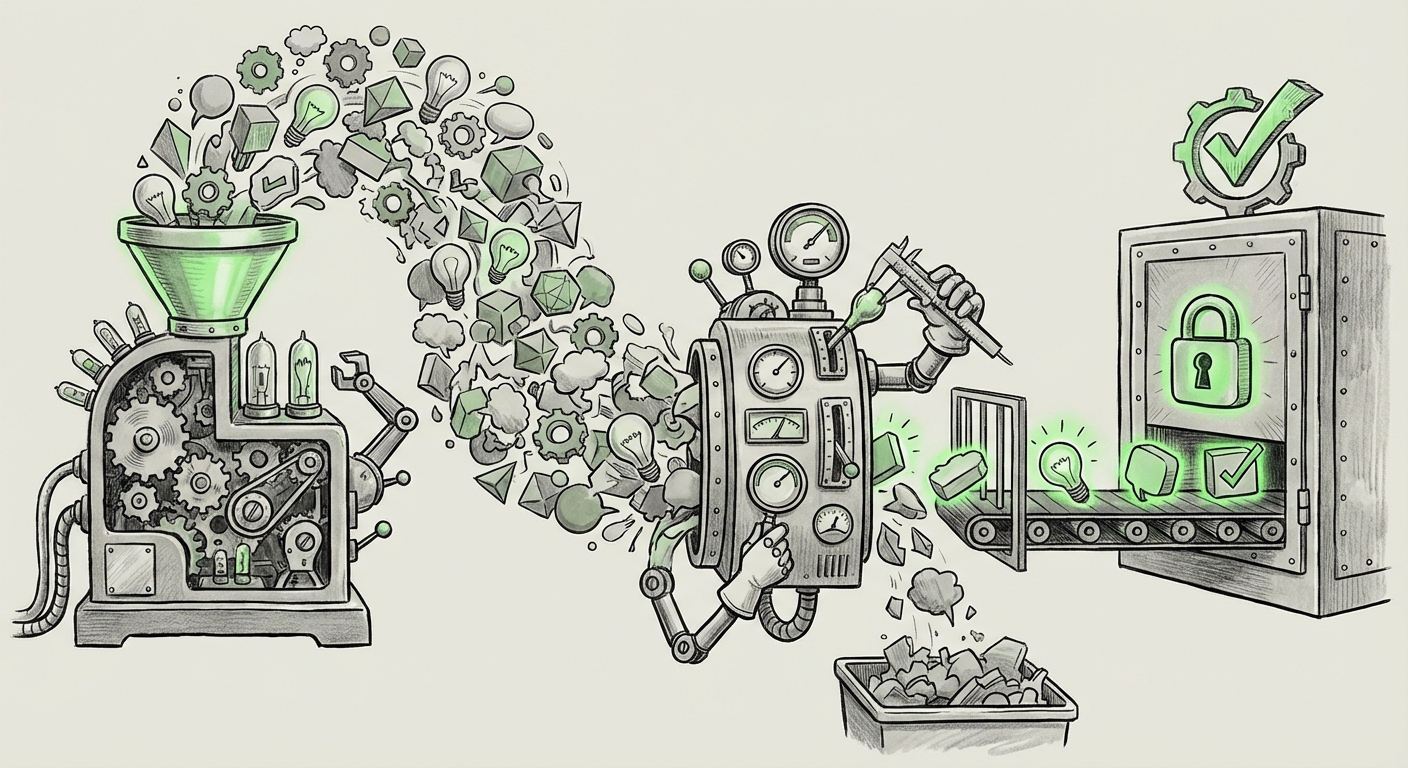
That era is ending. The next phase of the AI arms race is not about who has the single smartest model. It is about who controls the entire stack, the chips, the data centers, the power supply, the software layer, the tools, and the way all of it reaches real users. The battlefield has moved from smart models to full-stack infrastructure.
This is a bigger shift than it sounds. It changes who can compete, what it costs to stay in the game, and what businesses should expect when they buy AI in the years ahead.
From Clever Models to Complete Systems
Think of a great AI model like a brilliant chef. The chef can create an amazing meal, but only if the kitchen is stocked, the stoves work, and the delivery trucks show up on time. For a while, everyone focused on the chef. Now they are focusing on the whole restaurant chain.
Why? Because model quality is getting harder to tell apart at the top. When several leading systems can all handle the same tasks at a similar level, raw intelligence stops being the deciding factor. What matters instead is everything around the model:
- Can you run it fast and cheaply at a huge scale?
- Can you power the data centers that train and serve it?
- Can you get the chips you need when you need them?
- Can you plug it into the tools people actually use every day?
- Can you keep it reliable, safe, and affordable for millions of users?
Those are infrastructure questions, not model questions. And infrastructure is much harder to copy than a clever training recipe.
What "Full Stack" Really Means in AI
The phrase "full stack" comes from software. It means owning every layer from the foundation to the finished product. In AI, those layers now look something like this:
The Physical Layer: Chips, Power, and Buildings
At the bottom sit the semiconductors used to train and run models, and the massive data centers that house them. This layer is brutally physical. It needs land, water, electricity, cooling, and specialized hardware. Building it takes years and enormous capital. A company that only writes great algorithms but cannot secure computing power will struggle, no matter how good its research is.
The Compute Layer: Turning Hardware Into Usable Power
Owning chips is not the same as having usable compute. The next layer is the software and networking that turns thousands of processors into one smooth system. Efficiency here decides cost. Small gains in how well hardware is used can translate into large savings, and savings let a company serve more users or train bigger systems.
The Model Layer: The Brains Themselves
This is the layer everyone talked about for years. It still matters enormously, but it is now one part of a larger machine rather than the whole story. Models are increasingly tuned for specific jobs, sizes, and price points rather than being one giant system that does everything.
The Product Layer: Where People Actually Meet AI
Finally, there is the surface users touch: chat tools, coding assistants, search, office software, customer service bots, and industry-specific apps. This is where AI becomes money. A company that owns the interface controls the relationship with the customer, and the data that flows back to improve the system.
The key insight is that strength in one layer is no longer enough. The advantage compounds when one organization controls several layers at once and can tune them to work together.
Why the Shift Happened Now
Three forces pushed the race toward infrastructure.
First, training and serving AI got expensive. The cost of computing power, electricity, and hardware is now a first-order business concern, not a technical footnote. When costs dominate, the companies that control their own supply chain win.
Second, supply became a bottleneck. Advanced chips, data center capacity, and even electricity are limited resources. Whoever locks in supply early gains a lasting edge. This turns AI competition into something closer to an industrial race than a research contest.
Third, users demand reliability. A demo that impresses is not the same as a service that works for millions of people every day. Reliability, speed, and low latency come from infrastructure, not from model cleverness alone.
What This Means for the Future of AI
If the arms race is now a full-stack race, several things follow.
Fewer players will compete at the very top. Building the whole stack takes deep pockets, long timelines, and a lot of physical assets. That narrows the field of true frontier players. The rest of the market will build on top of their foundations.
Partnerships and vertical integration will define strategy. Expect more deals that tie chip makers, cloud providers, energy suppliers, and AI labs together. Each wants a reliable partner in the layers they do not own.
Efficiency will be the headline metric. When everyone can build a strong model, the winner is the one who delivers it cheapest, fastest, and most reliably. Cost-per-task and energy-per-result will matter as much as benchmark scores.
Smaller, specialized models will flourish. Not every job needs a giant system. Full-stack players can offer a menu, big models for hard problems, small models for routine ones, and route work to the cheapest option that gets the job done.
Energy becomes an AI story. Data centers need serious power. How that power is generated, where it comes from, and how communities feel about it will shape where AI gets built. The AI race is quietly becoming an energy race too.
Practical Implications for Businesses
For most companies, the takeaway is freeing: you do not need to build the whole stack. You need to be smart about which parts you rent, which parts you own, and which parts give you an edge.
Stop Shopping for the Smartest Model
Chasing the top-performing model on every new release is a losing game. Instead, match the model to the job. A task like summarizing support tickets does not need the most powerful system available. Using a smaller, cheaper model for routine work can cut costs dramatically without hurting results.
Think About Portability From Day One
If one provider owns every layer you depend on, you lose leverage. Design your systems so you can switch models or providers when price or performance changes. Keep your data and workflows in a form you control.
Watch the Cost Curve, Not Just the Capability Curve
The most important question is not "what can AI do?" but "what can AI do at a price that makes sense for my business?" Falling costs open up uses that were previously too expensive. Rising costs kill them. Track both.
Treat Infrastructure as Strategy
Decisions that once looked technical, where your data lives, which cloud you use, how you handle latency, are now business decisions. They affect margin, speed, and how quickly you can adopt new capabilities.
Actionable Insights
- Audit your AI stack. Map every layer you depend on, from hardware to the user interface, and note where you are locked in.
- Build a model-agnostic layer. Keep a thin abstraction between your apps and any single provider so you can swap systems quickly.
- Tier your workloads. Send easy tasks to small, cheap models and reserve the heavy systems for genuinely hard problems.
- Negotiate for capacity, not just features. Reliable access to computing power may matter more than a shiny new feature list.
- Track energy and cost per task. These numbers will drive pricing and availability in the years ahead.
- Invest in data quality. In a world of similar models, your own well-organized data is the advantage nobody can copy.
Risks and Open Questions
A full-stack race is not automatically a healthy one. Concentration is a real risk. If a handful of organizations control chips, compute, models, and the apps people use, they gain enormous influence over prices, access, and rules.
There is also a physical limit question. Data centers need land, water, and electricity. Communities near big builds will have opinions. If energy and land become the true bottlenecks, the AI race could slow not because ideas ran out, but because the plug ran short.
Finally, there is the question of whether owning everything actually produces better AI, or just better business leverage. Those are not the same thing, and the answer will shape what the technology becomes.
What to Watch Next
Keep an eye on a few signals. Watch where new data center capacity is announced and how it is powered. Watch the deals that link chip makers, cloud providers, and model builders. Watch pricing for AI services, falling prices mean efficiency is winning; rising prices mean supply is tight. And watch whether smaller, specialized models start taking over everyday tasks that giant models used to handle.
Together, these signals will tell you whether the full-stack race is making AI cheaper and more useful for everyone, or just concentrating power at the top.
The Bottom Line
The AI arms race has matured. The question is no longer who has the smartest model, but who can build, power, and deliver the whole system, reliably and affordably, to the people who need it. For businesses, that means focusing less on the latest headline model and more on the layers beneath it: cost, portability, efficiency, and the data you own.
The winners of the next phase will not just be the smartest. They will be the ones who own the pipes, the power, and the path to the user.