Apple's AI Era Starts Now: What the September 9, 2026 Event Means for the Future of AI
On September 9, 2026, Apple did something it rarely does. It framed a launch as a question. A playful cat emoji sat next to a headline that read, in effect: Apple's AI era starts now? The question mark is the whole story. A company that built its reputation on careful, deliberate messaging chose to ask rather than declare.
That single punctuation mark tells us more about where artificial intelligence is heading than any spec sheet could. It signals that even the most valuable hardware maker on the planet sees AI as an open chapter, one it is still figuring out how to write. And that should matter to everyone, from a developer in a garage to a procurement officer at a Fortune 500 firm.
Here is what this moment means for the future of AI, and how the technology is likely to be used next.
The Big Shift: AI Is Leaving the Chat Box
For the past few years, most people met AI in a chat window. You typed something, it typed back, and then you closed the tab. Useful, yes. Transformative, not quite. It was a destination you visited rather than a layer you lived inside.
The next phase looks completely different. Instead of being an app you open, AI becomes part of the device itself, woven into the keyboard, the camera, the calendar, the messages, the notes. You stop going to AI. AI shows up where you already are.
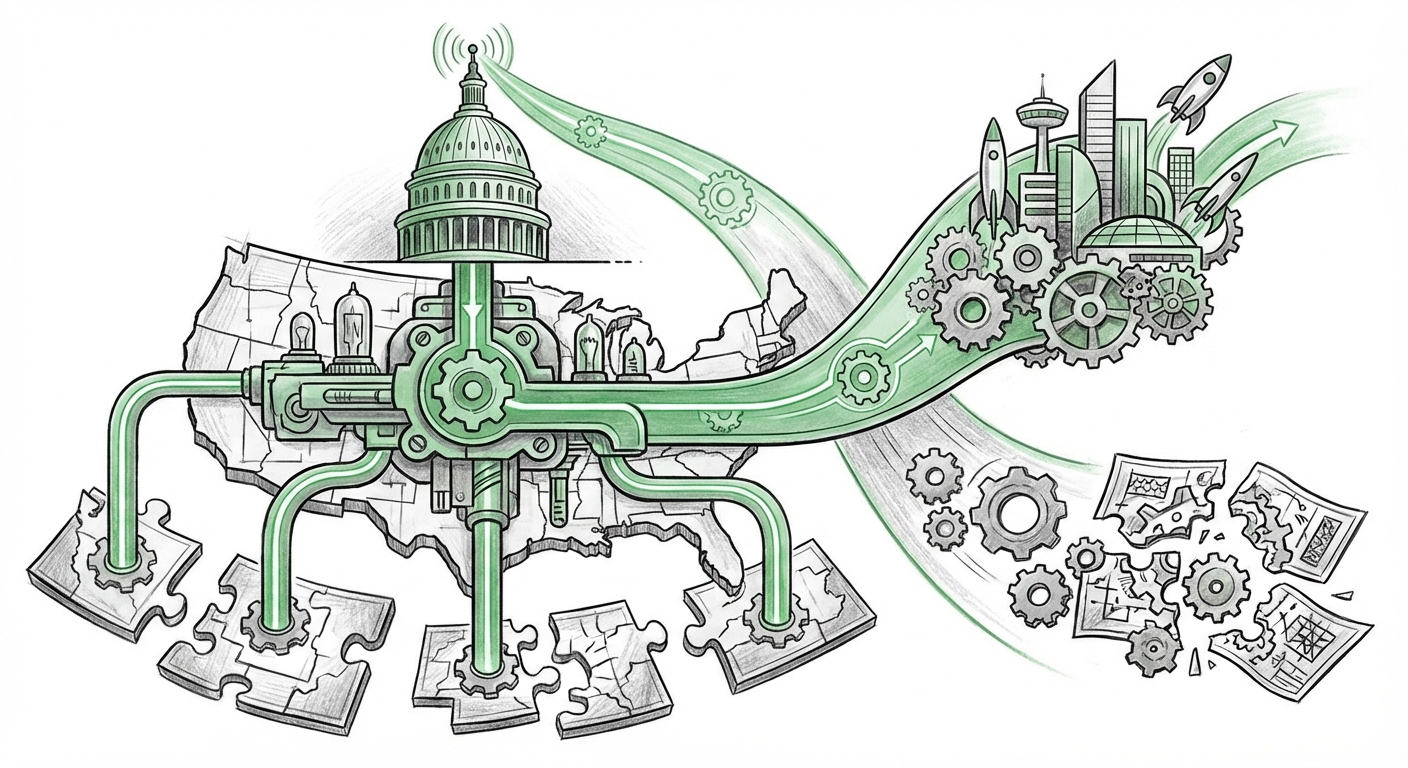
That is the shift a live event branded as the start of "Apple's AI era" points toward. When a platform owner makes AI part of the operating system rather than a downloadable add-on, the technology stops being a novelty and becomes infrastructure. And infrastructure changes everything downstream.
Why the operating system is the real battleground
Whoever controls the operating system controls the default. Defaults are powerful. Most people never change them. If an AI assistant is simply there, baked into the phone, the tablet, the laptop, the watch, it reaches billions of people without a single download. That is a distribution advantage no standalone app can match.
This is why every major platform holder is racing in the same direction. The fight is no longer about who has the smartest model. It is about who has the best place to put it.
Privacy Is Becoming a Product, Not a Promise
One theme runs through almost every credible AI roadmap right now: processing as much as possible on the device itself rather than shipping everything to a distant data center.
That matters for three practical reasons.
- Speed. On-device work does not wait for a network round trip. Responses feel instant, which changes how willing people are to use a tool at all.
- Cost. Running AI on hardware you already own shifts the expense from an ongoing cloud bill to a one-time purchase. For companies scaling AI to thousands of employees, that math is not small.
- Trust. Personal context, messages, photos, location, health data, is the fuel that makes an assistant genuinely useful. People will only hand that fuel over to a system they believe keeps it close.
Privacy used to be a marketing line. It is quickly becoming an engineering architecture. The companies that can deliver capable AI without vacuuming up your data will have a durable edge, because users are far more likely to grant deep access to a system they do not resent.
What This Means for Businesses
For anyone running a company, the implications arrive faster than the headlines suggest.
1. The device refresh cycle gets an AI deadline
AI features that run locally require newer, more capable chips. When assistants become a core part of the operating system, older hardware gets left behind, not by a small margin, but by a feature gap that employees will notice immediately. Expect AI capability to become a genuine reason to replace hardware, the way battery life and camera quality once were.
2. Software budgets get re-sorted
If the platform provides a capable assistant for free as part of the operating system, a slice of the paid productivity software market comes under pressure. Companies will ask harder questions: Why are we paying for this tool when the built-in option does eighty percent of the job?
3. Data governance moves to the front of the line
When an assistant can read your documents, your mail, and your calendar to be useful, someone has to answer a simple question: where does that information go? Enterprises need clear rules before rollout, not after. Policy first, pilot second.
4. Integration becomes the differentiator
The winners in the next wave will not be the companies with the flashiest model. They will be the ones whose data is organised well enough that an assistant can actually do something with it. Clean, well-structured, well-permissioned data is now a competitive asset in a very literal sense.
What This Means for Society
The social effects are subtler but just as real.
Convenience raises expectations. Once people get used to a device that drafts a reply, summarises a thread, or finds a photo by describing it, that behaviour becomes the baseline. Tools that cannot do it start to feel broken. This ratchet effect is how technology quietly becomes non-negotiable.
Digital literacy changes shape. The core skill shifts from knowing how to operate software to knowing how to ask for the right thing and how to check whether the answer is any good. Verification becomes the new literacy, and it is far less commonly taught than typing once was.
Access widens and narrows at the same time. AI built into hardware can help people with disabilities, language barriers, or limited technical confidence in ways that were science fiction a decade ago. But it also creates a new divide between those with AI-capable devices and those without. That gap deserves attention now, while it is still small.
The Competitive Picture
The playful, tentative tone of a "starts now?" launch is revealing. It suggests a company that knows it is not first to the party but believes it can still own the room.
That is a very different posture from the last two decades of platform competition. Historically, the race was about features you could photograph and compare. Now it is about something harder to demo: whether an assistant understands context, remembers what matters, and stays out of the way when it should.
Three things will decide who wins.
- Depth of integration, how many everyday tasks the assistant quietly touches.
- Trust, whether users believe their data stays theirs.
- Developer pull, whether outside builders can extend the system or are locked out of it.
Whoever gets all three right does not just sell more hardware. They set the terms for how a few billion people interact with AI every day.
Actionable Insights: What To Do This Quarter
You do not need to wait for the full picture to act. Here is a practical starting list.
- Audit your data hygiene now. An assistant is only as useful as the information it can reach. Messy folders and unclear permissions will make any AI rollout disappointing. Fix the plumbing before you buy the fixture.
- Write an AI data policy. Decide what assistants may access, what they may never touch, and who approves exceptions. Do it in writing, before the first pilot.
- Run a small, boring pilot. Pick one workflow, meeting notes, support ticket triage, document summarisation, and measure it honestly. Small wins build the internal case far better than a company-wide mandate.
- Plan hardware refresh around AI capability. If on-device processing is the direction, factor AI-capable devices into next year's budget cycle rather than treating them as a nice-to-have.
- Train for verification, not just prompting. The most valuable skill in an AI-heavy workplace is catching a confident, fluent, wrong answer. Teach it explicitly.
- Watch the developer tooling. The real signal of whether a platform's AI era has truly begun is not the keynote. It is how many outside developers build something on top of it.
The Question Behind the Question
Apple asking whether its AI era starts now is really asking a bigger question that every company, and every person, will face over the next few years: when AI becomes invisible, who benefits?
When a technology is genuinely successful, it stops being a topic. Nobody talks about the "electricity era" of their kitchen. Nobody describes their phone as a "cellular device." If on-device AI works the way the industry clearly hopes it will, the same fate awaits it. The assistant will simply be part of the device, the way autocorrect is now, noticed only when it fails.
That is the transition now underway. AI is moving from a thing you go to, to a thing that is simply there. The companies that pull it off will not win because their models score highest on a leaderboard. They will win because they made the technology forgettable, in the best possible sense.
Whether the era starts on September 9, 2026 is a question only users can answer, and they will answer it with the most honest metric available. Not reviews, not benchmarks, not launch-day theatrics. Just whether they keep using it after the novelty wears off.