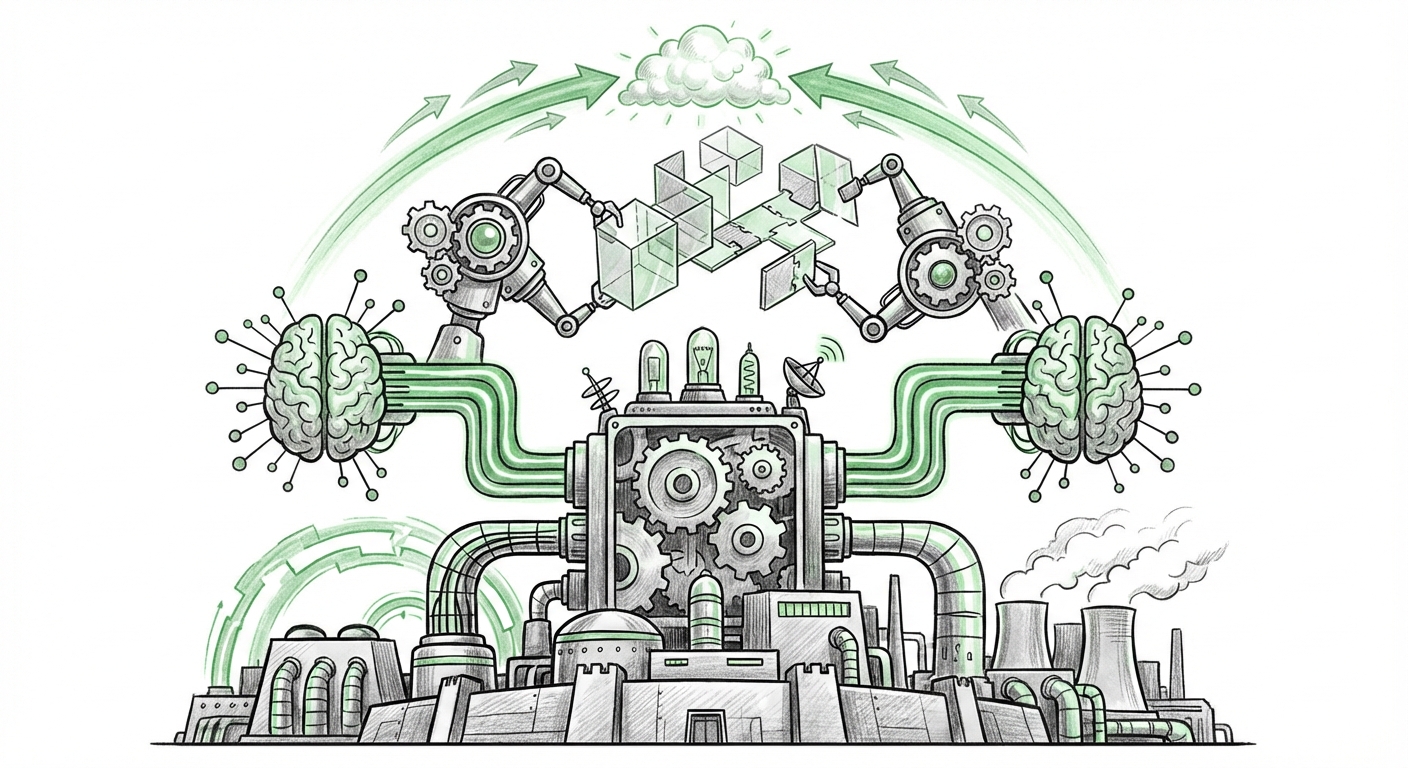
ChatGPT Just Took the Image Crown: What It Means for AI, Business, and the Future of Visual Creation
For the last few years, the story of artificial intelligence has mostly been a story about words. Chatbots learned to write emails, summarize reports, debug code, and hold a conversation. Pictures were treated as a separate sport, a specialist game played by dedicated image tools that lived in their own apps, with their own logins, their own quirks, and their own learning curve.
That separation just collapsed. ChatGPT has taken the image crown, becoming the leading place people go when they want AI to make a picture. It is a small sentence with an enormous set of consequences.
Because when the most-used AI assistant on the planet becomes the best-known image generator too, image creation stops being a niche hobby for designers and becomes a default behavior for hundreds of millions of people. That is the moment products stop being tools and start being habits. And habits reshape industries.
Why the Image Crown Matters More Than It Sounds
Titles like "best image generator" can sound like scoreboard trivia. They are not. In AI, being the leader in a category changes three things at once: where talent goes, where investment flows, and, most importantly, where ordinary users build their skills.
Think about how people learn. Nobody reads a manual for a new app. They poke at it, get a result, and form an opinion within ninety seconds. If the biggest AI assistant also produces the best images, then millions of people will have their very first serious experience with AI image making inside a chat window they already trust. There is no install, no separate subscription to evaluate, no new mental model. You type. You get a picture. You try again.
That lowers the barrier to entry to roughly zero, and low barriers are what turn a technology into a cultural norm.
The three-way convergence
What makes this shift possible is the merging of three capabilities that used to live apart:
- Conversation. You can describe what you want in plain language, refine it in plain language, and complain in plain language until it looks right.
- Image generation. The system can produce the picture itself rather than pointing you to a different tool.
- Editing and iteration. The real work of creating visuals is not the first draft, it is the fifteenth. Being able to say "make the sky warmer, cut the background clutter, and give me a taller version for a poster" in one continuous thread is what separates a toy from a workflow.
When those three live in the same place, the assistant stops being a picture machine and starts being a creative partner. That is a meaningfully different product.
The Strategic Picture: Why Everyone Is Fighting Over Pixels
Text was the easy part. Language models could be trained on an internet's worth of writing, and quality was measurable in ways everyone roughly agreed on. Images are messier. Quality is subjective. "Good" depends on style, intent, and taste. And the compute cost of generating a high-resolution image is far higher than spitting out a paragraph.
So why fight so hard for the crown? Because images are where AI touches money.
Visual content is the expensive part of marketing. Photography, illustration, retouching, and stock licensing all carry real budgets. A business that can generate a campaign concept, a product mockup, and a dozen social variants in an afternoon is not saving a few dollars, it is compressing a timeline. Compressing timelines is how companies win.
There is also a defensive logic. If your assistant cannot make images and a rival's can, users quietly drift to the one that does more. "It can do that too" is a powerful retention feature. The image crown is not really about pictures. It is about being the default place where work starts.
What This Means for Businesses Right Now
1. Marketing and content teams get a new first draft
The practical change is not that humans disappear from the creative process. It is that the blank page disappears. Instead of briefing a designer and waiting days, a marketer can generate ten directions before lunch, pick three worth developing, and hand those to a human for polish. The human's job shifts from producing the first version to judging and refining it, and judgment is the harder, more valuable skill anyway.
2. Small businesses close a visual gap
A one-person shop has never been able to afford a photographer for every product, a designer for every promotion, and an illustrator for every seasonal campaign. Now the constraint is imagination and taste, not budget. That is genuinely transformative for the long tail of small business, and it is exactly why the crown matters. The winner of the image race becomes the visual department for millions of companies that never had one.
3. Brand consistency becomes the new bottleneck
When anyone can generate anything, the scarce resource flips. It is no longer "can we make an image?" It is "can we make the right image, in our voice, every single time?" Expect the next competitive battleground to be control: keeping a consistent look, following brand rules, respecting usage rights, and knowing which assets are safe to publish. The companies that get this right will look professional. The ones that do not will flood their channels with generic, slightly-off visuals and slowly erode trust.
4. Job roles get rewritten, not erased
Historically, new creative tools have expanded demand rather than shrinking it. Desktop publishing did not kill print; it created a thousand new print shops. The same pattern is likely here. What changes is the composition of roles. Less time on execution. More time on strategy, art direction, editing, and quality control. The people who thrive will be the ones who learn to direct the machine rather than compete with it on speed.
What This Means for Society, and the Trust Problem
Here is the uncomfortable part. The same technology that lets a small business look polished also lets a bad actor look convincing. When the leading AI assistant is also the leading image maker, realistic synthetic imagery becomes available at a scale and speed society has never had to handle.
That raises hard questions that no single product launch can answer:
- Provenance. How do we know where an image came from? Expect growing pressure for labeling, watermarking, and content credentials baked into the file itself rather than added as an afterthought.
- Consent and credit. Whose work trained the system, and who gets paid? This debate is unresolved and will not stay unresolved forever.
- Detection arms races. As generation improves, detection gets harder. The realistic goal is not perfect detection but a trustworthy chain of evidence for the images that matter, news, legal, medical, financial.
- Everyday skepticism. A society where any picture might be synthetic has to build new instincts. That is a cultural shift, not a technical one, and it takes years.
The crown, in other words, comes with responsibility attached. The company that wins the image race also inherits a large share of the obligation to keep the visual internet honest.
Where This Goes Next: Five Predictions
One: images stop being a feature and become a baseline. Very soon, an AI assistant that cannot generate and edit images will feel as incomplete as one that cannot do math.
Two: the fight moves from quality to control. Once everyone can make a beautiful image, the differentiators become consistency, brand rules, precise editing, and reliable text inside images.
Three: video is the next crown. Every major step in image generation has been a stepping stone toward moving pictures. Whoever leads in still images is best positioned for what comes next.
Four: workflows get agentic. Instead of asking for one image at a time, people will describe a goal, "build me a week of social posts for this product", and the system will plan, generate, and assemble the whole set.
Five: creative work splits into taste and throughput. Machines will supply throughput. Humans will supply taste, context, and accountability. The gap between those two things is where careers will be made.
Actionable Insights: What to Do This Quarter
- Test before you commit. Pick one real project, a campaign, a product page, a deck, and run it end to end with AI-generated visuals. Measure the time saved, not the novelty.
- Build a visual style guide for machines. Write down your colors, tone, subject matter, and hard "never do this" rules. Feed that to your team and to your prompts. Consistency is your moat.
- Set a disclosure policy now. Decide in advance when you will label AI-generated imagery and when you will not. Having a rule before a crisis is worth ten times more than inventing one during it.
- Keep humans at the approval gate. Let AI produce volume, but have a person sign off on anything customer-facing. Speed without review is how brands embarrass themselves.
- Upskill toward direction. Train your team on prompting, editing, and critique, not on tools that will change every few months.
- Track your source of truth. Keep records of what was generated, when, and with which tool. You will want that paper trail later.
The Bigger Picture
Winning the image crown is not the finish line. It is a signpost. It tells us that AI has crossed from a text-based novelty into a full creative medium, and that the leaders of this wave intend to own the whole workflow, thinking, writing, and now seeing.
The winners in the next phase will not simply be the companies with the best models. They will be the businesses and creators who adapt fastest: who treat image generation as an ordinary part of how work gets done, who build guardrails before they need them, and who understand that the moment everyone can make an image, the value shifts to knowing which image is worth making.
That is the real prize behind the crown. Not pictures. Direction.