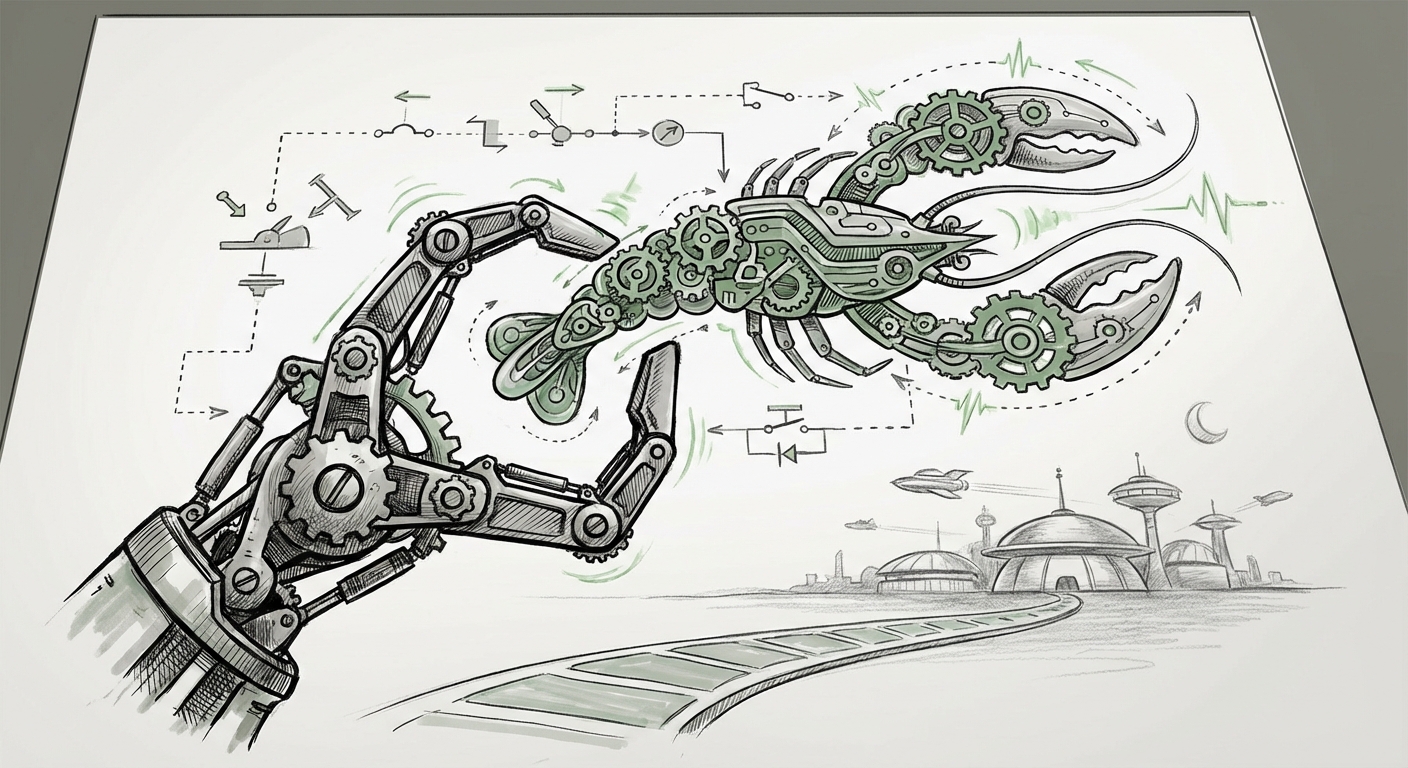
NASA's Perseverance Rover Just Made the First AI-Planned Drive on Mars, What It Means for the Future of AI
On January 31, 2026, NASA's Perseverance rover did something no machine has ever done before: it completed a drive on Mars where the plan came from artificial intelligence. Not a human drawing a line on a map. Not a team of engineers picking every turn. An AI system looked at the situation and worked out how to move the rover across alien ground.
It sounds like a small step. It is not. This is the moment AI stopped being something that answers questions and started being something that makes decisions in the real world, on another planet, with no rescue crew and no second chances.
What Actually Happened on Mars
The headline is simple: Perseverance completed the first drive whose route and actions were planned by AI rather than by people on Earth. Humans still set the goal, where the rover needed to go and what it needed to do. But the thinking in between, the part that decides how to get there, was handed to software.
That distinction matters more than it first appears. Telling a robot "go over there" is easy. Figuring out which path avoids a sand trap, which rock is too steep to climb, and which detour wastes too much battery, that is hard. NASA has spent decades building tools to help people do that thinking. This time, the AI did it.
And here is the part that makes Mars such a brutal test: you cannot fix a mistake. If a rover flips or gets stuck, there is no roadside assistance. Radio signals take minutes to travel each way, so real-time joystick driving is impossible. Every decision the AI made had to stand on its own, on a planet where the ground is unmarked and the weather does not care about your schedule.
Why Planning Is Harder Than Recognizing
Most of the AI excitement of the past few years has been about recognition, spotting a cat in a photo, summarizing an email, writing a paragraph. That is impressive, but it is mostly pattern matching. You feed in data, you get out an answer.
Planning is a different skill. It means looking ahead. It means holding many rules in your head at once: don't tip over, don't run out of power, don't damage the wheels, don't take a route that blocks tomorrow's science. It means weighing options when every option has a cost. And it means committing to a choice, because a rover cannot hover while it thinks.
That is the leap this drive represents. AI moved from describing the world to acting inside it. In the world of AI research, that is the difference between a tool and an agent.
From Chatbots to Agents: The Real Shift
The story of AI over the last few years has followed a clear arc. First, models that could talk. Then, models that could use tools. Now, systems that can plan and act on their own.
Perseverance is an agent. It has a body, a goal, a limited power supply, and consequences. Every checkbox on the "autonomous agent" list is present, except the safety net.
This is why the Mars milestone is a preview, not a sideshow. The same abilities being tested on another planet are the exact abilities businesses have been waiting for. A system that can plan a route under constraints is not far from a system that can plan a delivery route under constraints, or a maintenance schedule, or a warehouse shift.
Mars is not a distraction from real-world AI adoption. It is the stress test that comes before it.
Why Space Is the Perfect Proving Ground
Space has always been a laboratory for technology that later shows up in everyday life. The reason is simple: conditions up there are unforgiving, so anything that works has to be genuinely robust.
AI planning faces the same filter on Mars. The system has to work with limited computing power, limited energy, incomplete maps, and long delays in communication. There is no cloud to call. There is no engineer to ask. If an AI can plan reliably under those limits, the same approach becomes far easier to trust in a factory, a farm, a mine, or a power grid, where conditions are messy but at least you can walk over and help.
In other words, the constraints of Mars are exactly what make it a great training ground for Earth.
What This Means for Business
For most companies, "AI that plans" is not an abstract idea. It is a direct route to cost savings and speed. Consider where planning already eats up human hours:
- Logistics: routing trucks, planning loads, adjusting for weather and traffic.
- Manufacturing: scheduling maintenance before machines break, not after.
- Energy: balancing supply and demand across a grid that changes by the minute.
- Field work: inspecting pipelines, power lines, and farms with robots that need to decide where to go next.
- Supply chains: reacting to disruptions faster than a human team can meet.
In each case, the value is not in replacing people. It is in removing the routine planning work so people can focus on the exceptions, the weird, high-stakes, judgment-heavy calls that AI still handles badly.
The businesses that win here will not be the ones with the flashiest model. They will be the ones with the cleanest data about their own world. AI planners need a good map, good sensors, and clear rules. A company that has never bothered to digitize its operations has nothing for an AI to plan against.
The Trust Problem Nobody Can Skip
Here is the uncomfortable question that follows every autonomous decision: when the AI plans and something goes wrong, who is responsible?
On Mars, the answer is a mission team and a lot of careful testing. In business, the answer is usually messier. That is why companies adopting planning AI need three things before they let it act:
- Explainable plans. The system should be able to show why it chose a route, not just that it did.
- Audit trails. Every decision should be logged, so you can review it later and learn from it.
- A human veto. For high-stakes moves, the AI proposes and a person approves. This is the same structure NASA has used for years, the AI plans, the team signs off.
That last point is the most useful lesson from Mars. Even in the first AI-planned drive, humans were not removed from the loop. They were moved up the chain. They set the goal and kept the authority. The AI handled the detail.
Actionable Steps for Teams Starting Now
If you want to prepare for planning AI, you do not need a Mars rover. You need to start small and build trust in steps:
- Pick one narrow planning task where mistakes are cheap. Let the AI suggest, and compare its plan to what your team would have done.
- Write down your constraints. Speed, cost, safety, and rules are the raw materials of any plan. If they only live in people's heads, AI cannot use them.
- Measure the gap, not the dream. Track how often the AI plan matches or beats the human plan. That number is your real adoption signal.
- Build the review habit early. Before you automate approvals, get good at reviewing AI decisions quickly.
- Protect the data. A planner is only as good as the picture of the world it is given.
What Comes Next
The first AI-planned drive is a door opening. The next steps are predictable. Rovers that plan multi-day campaigns instead of single drives. Robots on Earth that decide on their own when to stop, reroute, or call for help. Fleets that coordinate without a human assigning every task.
And with that comes a wave of new questions. How do we certify an AI planner? Who signs off on a machine's judgment? What rules apply when an autonomous system crosses a border, a property line, or a safety threshold?
None of these questions are new. We have just never had to answer them this fast.
The Bottom Line
A rover drove across Mars on a plan written by software. That single fact tells us where AI is heading: out of the chat box and into the physical world, where actions have weight and mistakes cost more than a bad answer.
The winners in this next phase will not be the companies with the smartest AI. They will be the ones who understand their own constraints well enough to hand over the planning, and who keep a human in the loop for the decisions that really matter. Mars just showed us that this is possible. The rest is up to us.