Tether Is Bridging the AI Intelligence Gap With Free AI, And It Could Change Who Gets to Use Smart Machines
For the past few years, the story of artificial intelligence has been a story about a wall. On one side of the wall are big companies, well-funded labs, and people who can afford monthly subscriptions. On the other side are everyone else, small business owners, students, independent developers, clinics in rural towns, and entire regions of the world where a monthly AI bill costs more than a week of groceries.
Now Tether is stepping up to knock a hole in that wall. The company is bridging the intelligence gap by making AI free.
That sounds simple. It is not. When the price of something powerful drops to zero, it does not just save people money, it changes who can build, who can compete, and who gets to shape the future. This is the story of what happens when intelligence stops being a luxury product and starts acting like a public utility.
The Intelligence Gap Is the Real Digital Divide
We used to talk about the digital divide as a question of internet access. That gap still exists, but a new one has opened up on top of it: the intelligence gap.
Access to top-tier AI has been gated by three things, price, geography, and trust. Price is the obvious one. Most powerful AI tools sit behind subscriptions, credit cards, and per-use fees that add up fast. Geography matters because payment systems, language support, and local rules often leave whole countries out. Trust matters because many people simply do not believe these tools were built with them in mind.
The result is a strange imbalance. The same technology that could help a small farmer plan a season, a student learn calculus, or a shop owner write better product listings is being concentrated in the hands of people who already had the most resources.
Free AI attacks all three barriers at once.
Why "Free" Is the Most Disruptive Word in Tech Right Now
There is a pattern in technology that repeats over and over. A tool is expensive and rare. Then someone makes it cheap. Then someone makes it free. And the moment it becomes free, everything built on top of it changes shape.
Search went through this. Maps went through this. Cloud storage went through this. In each case, the free version did not just create more users, it created a whole new layer of businesses that could never have existed if they had to pay for the foundation.
AI is now at that moment. When intelligence is free at the point of use, a few things happen quickly:
- Experimentation explodes. People try things they would never pay to try. Most fail. A few become real businesses.
- Small players get a fair shot. A two-person startup can use the same brainpower as a company with a big budget.
- The technology spreads into boring, useful places. Not just chatbots, inventory tracking, translation, tutoring, farming advice, legal document help.
- Expectations reset. Once people get something for free, paying a premium for it becomes much harder to justify.
That last point is the one that keeps AI company executives up at night.
The Economics of Giving Intelligence Away
A fair question: why would anyone spend money on expensive computers and energy just to hand out the results for nothing?
The answer is that free is a strategy, not a charity. In tech, the company that controls the front door often makes its money somewhere else, through payments, hardware, ads, data, or services layered on top.
Tether already understands this idea deeply. Its core business is built on digital currency rails, where the value comes from being the network that everyone uses, not from charging a toll on every single move. Applying that same logic to AI is a natural next step. If you can be the place where people go for intelligence, you do not need to charge for the intelligence itself. You need to own the path that the intelligence travels on.
This is where the story gets bigger than one product.
From Money Rails to Intelligence Rails
Here is the trend worth watching closely: AI agents are starting to act on their own. They book things, buy things, negotiate, and coordinate with other software. The moment machines start transacting, they need a way to pay each other, instantly, cheaply, and across borders.
Traditional banking rails are slow and expensive for that. Digital currency rails are fast and cheap. So when a major player in digital currency starts giving away AI, it is not a random act of generosity. It is a bet on a future where intelligence and money move together, and where the company that provides both becomes very hard to replace.
Free AI, in other words, may be the on-ramp to an economy run by machines that pay each other in software.
What This Means for Businesses
If You Sell AI Access, Your Moat Just Got Thinner
Anyone whose business model is "we charge for access to a smart model" should be paying attention. When a serious player makes the same capability free, your pricing power shrinks. The defense is to move up the stack, sell the workflow, the trust, the compliance, the human expertise. Sell the outcome, not the access.
If You Use AI, Your Cost Curve Just Changed
For most companies, this is good news. Tools that used to be a line item may become effectively free. That frees up budget for the parts that actually matter: training staff, cleaning up data, redesigning processes, and measuring whether any of it works.
Build On Top, Not Underneath
The winners in a free-intelligence world are the ones who build applications and services on top of free foundations. The losers are the ones who build their own foundation and then discover nobody wants to pay for it.
What This Means for Society
The social impact could be just as large as the business impact.
Think about a student in a place with no good tutors. Think about a small clinic where the nearest specialist is hours away. Think about a local government that needs to translate documents but cannot afford software. Free AI does not solve these problems by itself, but it removes the entry fee.
There is also a subtler benefit: language and culture. When access is gated by price, the tools get tuned for the people who can pay. When access is open, there is pressure to support more languages, more accents, and more local contexts. That is how technology stops feeling imported and starts feeling useful.
The Risks Nobody Should Ignore
Free is powerful, but it is not automatically safe. A few honest cautions:
- Free can mean you are the product. If you are not paying, check what data you are giving up and how it is used.
- Lock-in is real. A free tool that everyone depends on becomes very expensive to leave later.
- Subsidies end. Prices that are zero today may not be zero forever. Plan for that.
- Concentration risk. If one company bridges the gap, that company could one day become the gap. The bridge and the wall can be built by the same hands.
- Quality and accuracy vary. Free access does not guarantee correct answers. Verification skills matter more than ever.
How to Prepare: Actionable Steps
Whether you run a business, a classroom, or a household, here is what to do right now.
- Test before you commit. Try free AI tools on real tasks for 30 days. Measure the time saved, not the hype.
- Keep a backup plan. Never build a critical process on a single free provider. Have a second option ready.
- Invest in your people. The skill that matters is not knowing which button to press. It is knowing what to ask and how to check the answer.
- Protect your data. Read the terms. Do not feed sensitive information into tools you do not understand.
- Look for the paid layer. Free access is the entry point. The real opportunity is usually in the service wrapped around it.
- Move fast, but stay legal. Rules around AI, data, and money are still forming. Being early is good. Being careless is not.
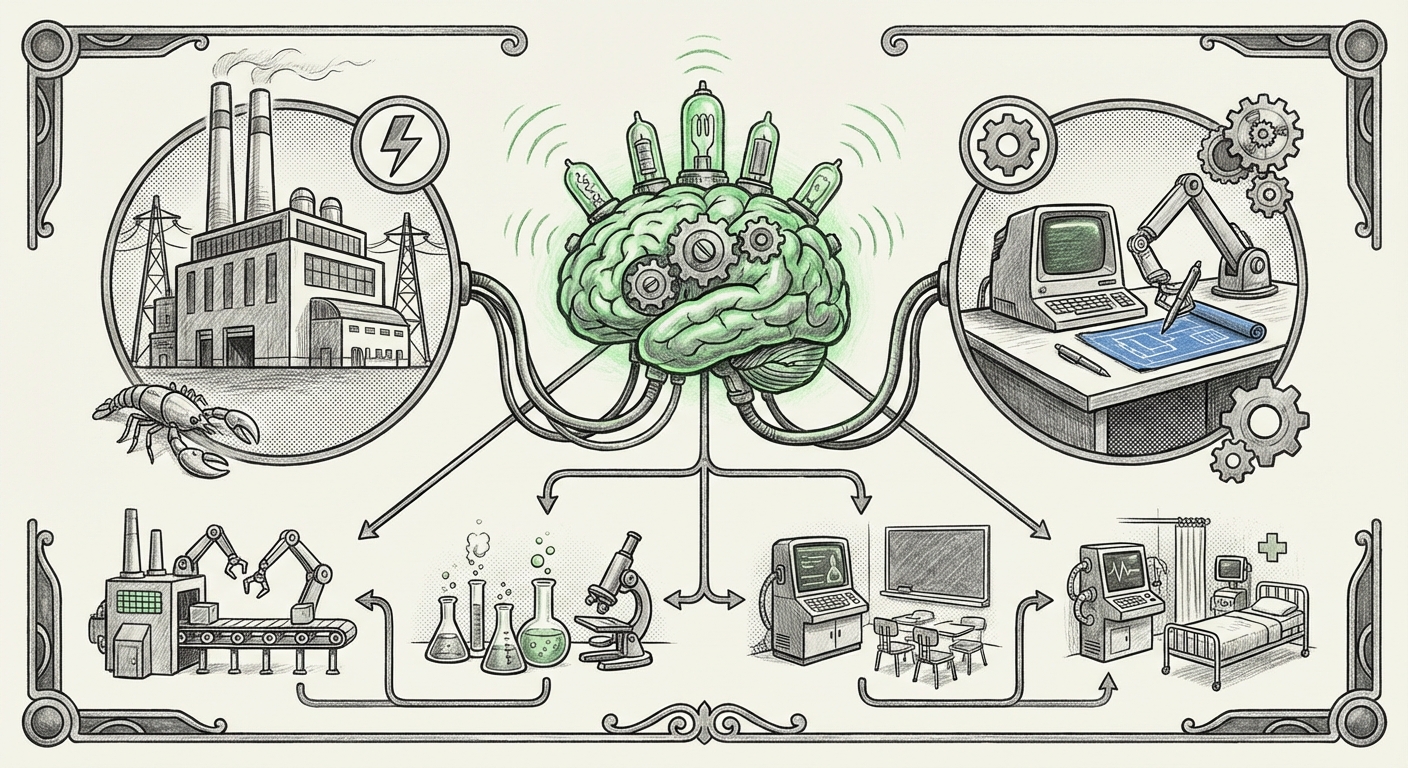
The Bigger Picture: Intelligence as a Utility
Every major technology eventually becomes boring. Electricity did. The internet did. Search did. Boring is good, it means the technology has become a foundation that everyone builds on without thinking about it.
AI is heading toward that same fate. The question is not whether it will be free. The question is who controls it while it is becoming free, and what rules apply when it gets there.
Tether's push to bridge the intelligence gap with free AI is a signal that the race has shifted. It is no longer only about who has the smartest model. It is about who has the most reach, the deepest distribution, and the smoothest path between intelligence and the money that flows around it.
For businesses, that means the moat is moving. For workers, it means the skill set is changing. For society, it means a rare window where the benefits of AI could spread further than the profits.
Free AI will not fix everything. But it changes the starting line, and in a technology race, the starting line is often what decides who gets to run.