AI Is Entering the Physical World, And Yes, Even Your Bathroom
For the last few years, artificial intelligence has lived mostly behind a screen. You typed into a chat box. You scrolled a feed. You asked a question and got an answer. The intelligence was real, but it was trapped inside glass rectangles.
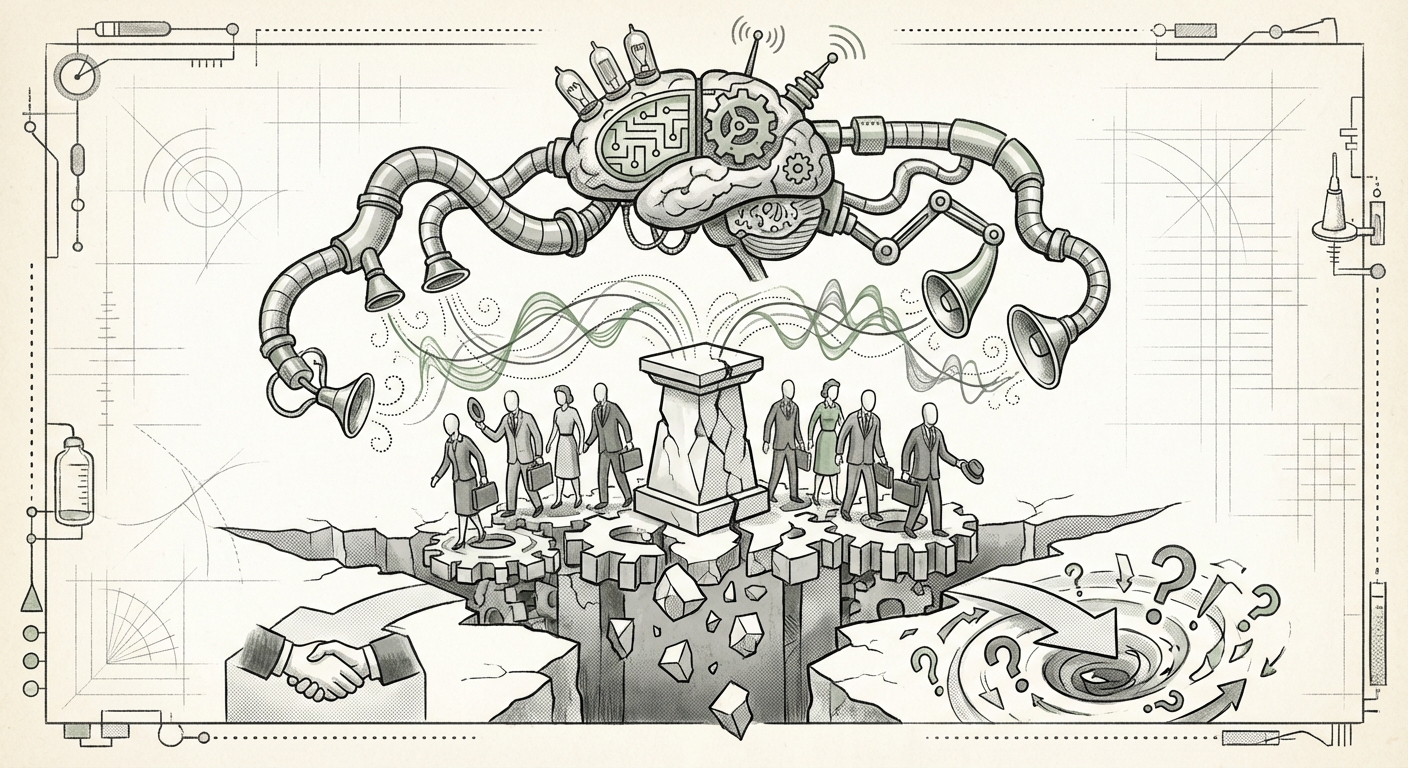
That era is ending. The next phase of AI is not about better chatbots. It is about AI that can see, hear, sense, move, and act in the physical spaces where human life actually happens, your kitchen, your car, your bedroom, and, more surprisingly, your bathroom. The bathroom is the tell. If AI has made it into the most private room in the house, it has officially crossed from software into daily physical life.
This shift matters enormously for the future of AI, and for the businesses and people who will live with it. Here is what is happening, what it means, and what to do about it.
From Screens to Spaces: The Big Move
The defining change is simple to state and hard to overstate: AI is gaining a body. Not necessarily a humanoid robot, although those are coming too. The more common version is AI embedded in ordinary objects that already surround us, speakers, mirrors, cameras, appliances, wearables, thermostats, doorbells, and yes, toilet seats and shower heads.
Three things made this possible at the same time:
- Cheap sensors. Cameras, microphones, radar, temperature, pressure, moisture, and chemical sensors have become small and inexpensive enough to put almost anywhere without raising the price of a product much.
- Chips that run AI locally. Instead of shipping every byte to a distant data center, small processors can now run useful models right on the device. That means faster responses, lower costs, and less raw data leaving the room.
- Models that understand the messy real world. Modern AI can take in noisy, imperfect signals, a blurry image, a half-heard phrase, a changing pattern of pressure or sound, and turn them into something meaningful.
Put those together and you get devices that do not just wait for commands. They notice things. They infer. They act.
Why the Bathroom Is the Real Signal
Companies always start with easy rooms. Living rooms have speakers. Kitchens have screens. Bedrooms have sleep trackers. The bathroom was the holdout, because it is the room where privacy matters most and where people are least dressed, both physically and emotionally.
But the bathroom is also, from a health-data point of view, the most valuable room in the house. It is where humans produce measurable signals about their bodies every single day, without thinking about it. Patterns in how someone moves, how much water they drink, how they sleep, how their body changes over months, all of that shows up first in the bathroom.
So the entrance of AI into this space tells us two things at once:
- Ambient intelligence is now the default design goal. The technology is meant to disappear into the environment and work without being asked.
- Health monitoring is moving from the clinic to the home. Continuous, passive, everyday observation is becoming the model, rather than occasional checkups.
This is a genuine turning point. When AI is baked into fixtures rather than apps, it stops being something you "use" and becomes something you live inside.
The Privacy Question Is Now the Whole Question
You cannot talk honestly about AI in the bathroom without talking about data. A camera in a living room is a convenience. A camera in a bathroom is something else entirely.
The industry's answer has been to lean hard on two ideas:
1. On-device processing
If the AI runs locally, raw images and audio never need to leave the home. The device extracts a pattern, "person woke up three times last night", and discards the video. On paper, this is a strong privacy story. In practice, it depends entirely on how the product is built and whether that promise is verifiable.
2. Derived data instead of raw data
Instead of storing footage, the system stores conclusions. That is better for privacy, but it creates a new question: who owns those conclusions, and what happens when they are wrong?
These are not abstract concerns. They will decide whether consumers accept physical AI or reject it outright. History suggests people will trade a lot of privacy for convenience, but only up to a line they did not know existed until they feel it get crossed.
What This Means for Businesses
For companies, the arrival of physical AI changes the competitive landscape in several concrete ways.
Software alone is no longer enough
A great model is now table stakes. The differentiator is the hardware, the sensors, the industrial design, and the trust the brand can earn in someone's most personal space. Companies that only write software will increasingly find themselves supplying ingredients to companies that own the room.
Data advantages will be rebuilt around place, not clicks
The most valuable data in the next wave of AI will not be what people type. It will be what their bodies and homes reveal over time. Whoever owns the sensor owns the dataset, and whoever owns the dataset owns the model improvement loop.
Regulation will arrive room by room
Rules for cameras in private spaces, health data, and always-on microphones are already uneven across regions. Businesses planning physical AI products should assume that privacy rules will get stricter, not looser, and design for the strictest market first. That is cheaper than retrofitting later.
Trust becomes a product feature
Expect to see privacy features marketed as loudly as performance features: local processing indicators, physical shutters, clear data controls, and plain-language explanations of what the device records and keeps. Companies that treat trust as an engineering requirement rather than a legal cost will win the rooms that matter.
What This Means for Society
The broader implications are just as significant, and less comfortable.
Healthcare could shift dramatically toward prevention. If homes continuously sense early warning signs, the medical system could move from treating illness to catching it earlier. That is a huge potential win, and it depends on whether the data is accurate, accessible to doctors, and not used to deny people insurance or employment.
The digital divide gets a physical dimension. Right now, the gap is about who has fast internet and good devices. Soon it will also be about whose home is instrumented and whose body is monitored. Health benefits from ambient AI could easily flow mostly to people who can afford the hardware.
Normalization happens fast. Things that feel invasive in year one feel ordinary by year three. That is not necessarily bad, but it means the decisions made now, about defaults, consent, and what gets stored, will be very hard to reverse later.
New categories of error appear. An AI that misreads a health signal is not like a search engine serving a bad result. It can cause real anxiety, real expense, or real harm. Systems that act in the physical world need a much higher bar for accuracy and much clearer paths to human review.
Actionable Insights
Whether you are building, buying, or regulating, here is what actually helps right now.
- Design for the strictest privacy standard you can imagine. If your product works with local processing and minimal data retention, you can sell it anywhere. If it depends on shipping raw data, you are one regulation away from a rebuild.
- Separate raw data from insight as early as possible. Extract the pattern at the edge and let the raw signal go. This lowers storage costs, lowers legal risk, and makes a better marketing story.
- Give users an obvious off switch, and make it physical. A hardware shutter or a real disconnect beats a settings menu every time. It is the single cheapest trust feature you can ship.
- Be honest about accuracy. Tell people what your system can and cannot detect. Overpromising in health-adjacent products is the fastest way to lose a market.
- For buyers, ask three questions before adopting a device: Does it work offline? What does it store, and for how long? Who can access the data, and can I delete it permanently?
- For policymakers, focus on disclosure and data rights rather than trying to ban categories of technology. The technology will keep moving; the rules about who controls the data are what actually protect people.
The Road Ahead
The movement of AI into the physical world is not a small upgrade to existing products. It is a change in what AI is. Software AI answers questions. Physical AI observes, predicts, and acts in the spaces where people are most vulnerable and most themselves.
The bathroom is a useful symbol because it is where the line between helpful and creepy is thinnest. If the industry can build ambient intelligence there in a way people actually accept, clear consent, local processing, obvious controls, honest claims, then it can go anywhere. If it fails there, the backlash will slow the whole category down.
What is clear is that the screen era of AI was the warm-up. The next decade belongs to AI that lives in the room with you. The companies and societies that get the trust part right will get to build the future. The ones that treat privacy as an afterthought will spend their time explaining what went wrong.