AI Lab Financials Are Now the Market's Biggest Story: What Anthropic's Revenue Disclosure Means for the Future of AI
Something strange has happened to the artificial intelligence industry. For years, the biggest AI labs were judged the way people judge research projects, by how clever their models were, how many benchmarks they topped, and how impressive their demos looked. Money was a side conversation. Investors poured in, compute was bought, and everyone assumed the business model would sort itself out later.
That era is ending. Anthropic is preparing to disclose new revenue numbers, and the fact that this disclosure is being treated as a market-moving event, one that sits at the center of how the entire technology trade is being valued, tells you almost everything about where AI is heading next.
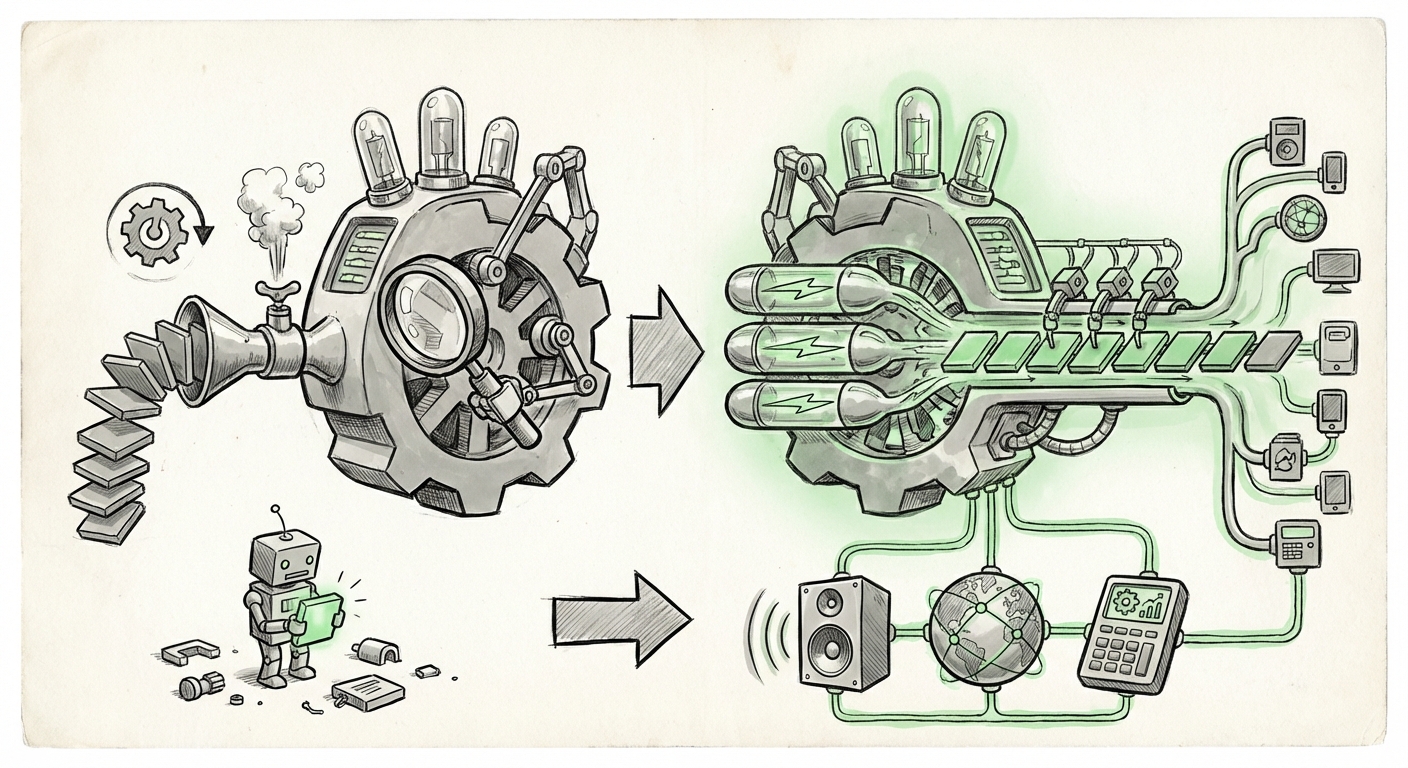
The shift is simple to state and enormous in its consequences: frontier AI has moved from being a science story to being a financial story. And once that happens, the questions change completely. It is no longer "how smart is the model?" It is "does this thing make money, how much, and how fast?"
Why a Revenue Number Became a Market Event
Revenue disclosures from huge public companies typically move a few percentage points in the stock price and then get filed away. A revenue disclosure from a major AI lab is different, because it functions as a reference price for the entire sector.
Here is why. Every serious player in the AI economy is currently valued against an implicit assumption about future returns. Data centers, chip supply chains, cloud contracts, energy deals, and the startups built on top of foundation models all get financed based on a shared belief that demand for AI will justify the enormous sums being spent today. Nobody has had a clean, consistent way to test that belief against reality.
Anthropic's numbers provide one of the first genuinely useful data points. They do not answer every question, but they do something almost nothing else can: they let investors, customers, and competitors calibrate. If business demand for frontier AI models is real, deep, and durable, that shows up in revenue. If it is mostly pilot programs and experimentation that never converts into production spending, that also shows up, eventually, and often painfully.
The fact that this disclosure is framed as central to the tech trade signals something broader. The market is no longer pricing AI as a promise. It is pricing it as a business.
From Research Story to Business Story
It is worth pausing on how unusual this transition is. Most transformative technologies go through a long, quiet period where nobody expects them to earn anything. The internet spent decades as an academic network before anyone built a business on it. Early cloud computing was treated as a niche.
AI has compressed that timeline dramatically. Labs that were publishing papers and releasing research are now negotiating multi-year enterprise contracts, competing for the same corporate budgets as established software vendors, and being asked by their investors to show a path to profitability rather than a path to better benchmarks.
This creates a new kind of pressure inside AI companies. Research teams want to push capability forward, which is expensive and uncertain. Business teams want reliable, repeatable products that customers will renew, which often means standardizing on what already works rather than chasing what might work next. When financials become the headline story, the second group gains power.
That does not mean capability progress stops. It means capability progress has to justify itself in commercial terms. Expect fewer announcements framed purely around what a model can do, and more framed around what it saves, earns, or replaces.
What "Central to the Tech Trade" Actually Means
The phrase matters. When AI lab financials become central to the tech trade, several things happen at once.
1. AI valuations start moving in sync
If Anthropic's revenue trajectory looks strong, it lifts confidence across the sector, including for hardware makers, cloud providers, and application-layer startups. If it looks weak or narrower than expected, the reverse happens fast. One company's numbers become a proxy for an entire industry's health, which is a fragile arrangement but an unavoidable one until more labs report.
2. Compute spending gets scrutinized
Training and running frontier models is extraordinarily capital intensive. The gap between what a lab spends and what it earns is the single most important number in the sector. Revenue disclosure forces that gap into the open, and once it is visible, pressure builds to close it, through higher prices, more efficient models, or both.
3. Enterprise buyers gain leverage
When vendors are competing to show growth, customers gain negotiating power. Procurement teams can ask harder questions about pricing, usage commitments, and measurable outcomes. The era where companies signed blank-check AI contracts out of fear of being left behind is fading.
4. The talent market recalibrates
Labs have attracted researchers with the promise of working on problems that matter, backed by seemingly unlimited resources. Financial discipline changes that math. When efficiency becomes as valued as ambition, the kinds of roles that get funded shift.
The Compute Bill Nobody Can Ignore
There is a physical reality underneath all of this finance talk: AI runs on chips, electricity, and buildings. Every dollar of AI revenue has a corresponding cost in hardware and energy, and those costs are not falling as quickly as demand is rising.
This is why revenue numbers alone are not enough. A company can grow revenue quickly and still be in trouble if serving each additional customer costs more than that customer pays. The real story in any AI lab's financials is not the top line. It is the relationship between the top line and the compute bill.
For the wider economy, this has knock-on effects. Energy grids, water usage for cooling, land for data centers, and the supply chain for advanced chips all become part of the AI conversation. Investors who once thought of AI as a software business are learning that it behaves, in some ways, more like an industrial one.
What This Means for Businesses Using AI
If you run a company that buys or builds with AI, the shift from research story to financial story is good news, even if it feels uncomfortable.
It means vendors will compete harder on value. It means pricing models will become clearer, because opaque pricing is hard to defend once everyone is comparing notes. It means the tools you adopt are more likely to be supported for the long term, because vendors now need renewals, not just headlines.
But it also means you will be held to a higher standard. The days of "we're experimenting with AI" as a strategy are ending. Boards and finance teams will want to know what the spending produces.
Actionable steps for business leaders
- Define your success metric before you buy. Decide whether the goal is cost reduction, revenue growth, speed, or quality, and measure it from day one.
- Ask vendors for unit economics, not just capabilities. How does pricing change as usage scales? What happens if your volume triples?
- Build exit ramps. Avoid architectures that lock you to a single model provider. The competitive landscape is moving too fast for a decade-long commitment.
- Track the cost per task, not the cost per token. The meaningful number is what a completed piece of work costs, compared with the human alternative.
- Watch lab financials as a risk indicator. A vendor's funding position is now a legitimate part of your procurement diligence.
What It Means for Society
Financial disclosure also changes the public conversation. When AI was framed as pure research, the ethical questions were about capability, what could these systems do? Now that it is framed as a business, the questions are about power and access.
A small number of labs control the most capable models. Those labs are accountable to investors who want returns. That combination raises fair questions: Will the most powerful AI remain affordable to small businesses, researchers, and public institutions? Will the benefits concentrate? Will pricing decisions made in a boardroom shape who gets to use the technology?
Revenue figures will not answer these questions, but they will make the trade-offs visible. A profitable AI industry can afford to fund safety work, broad access programs, and public-interest applications. A struggling one may not. That is an uncomfortable thing to acknowledge, but it is the reality of how technology gets sustained.
What to Watch Next
The specific revenue figures matter less than the pattern they establish. Watch for these signals:
- Whether other labs follow with disclosures. One data point becomes a trend when a second and third company reports.
- Whether growth comes from a few giant customers or a broad base. Concentration is a risk signal; breadth is a durability signal.
- Whether revenue growth outpaces compute spending. This is the single clearest indicator that the economics are working.
- How enterprise contracts are structured. Multi-year commitments signal confidence. Month-to-month usage signals caution.
- Whether pricing stabilizes or keeps falling. Falling prices help adoption but squeeze vendors; stable prices suggest real differentiation.
The Bigger Picture
We are watching an industry grow up in public. The hardest transition for any young technology is the one from "this could be huge" to "this is what it actually earns." Many technologies never make that jump, and the ones that do usually lose some of their mystique in the process.
Anthropic disclosing revenue is a milestone in that maturation. It signals that frontier AI companies are willing to be judged as businesses, not just as research labs. For anyone building with AI, investing in it, or worried about its effects, that is the moment the conversation gets real.
The models will keep getting better. But from here on, the more important question is whether they can pay for themselves, and the answer will shape which companies survive, which tools businesses can rely on, and how broadly the benefits of AI actually spread.