Google Antigravity SDK Adds Local Model Support: What It Means for Token Costs, Code Privacy, and the Future of AI
Something quietly important happened in AI development tools on October 14, 2026. Google's Antigravity SDK added support for running models locally. On the surface, that sounds like a small technical checkbox. In reality, it's one of the clearest signals yet about where AI-assisted software development is heading, and why the biggest fights in AI are no longer about raw model power, but about cost, control, and confidentiality.
For anyone who builds software, manages a development team, or cares about where their code goes, this is a story worth understanding. It touches three things that have been quietly slowing down AI adoption inside serious companies: token bills that scale faster than value, code leaving the building, and a nagging worry that the best AI tools are locked behind a meter that never stops running.
What Actually Changed
The Antigravity SDK is Google's toolkit for building AI-powered development workflows, the kind of thing that lets an agent read your project, suggest changes, write tests, or refactor code. Until now, the standard approach was simple: your code goes up to a cloud model, the model does its thing, and you get an answer back. You pay per token, in and out.
Local model support changes that path. Instead of always sending work to a remote model, the SDK can now hand tasks to a model running on your own machine or your own infrastructure. Same toolkit. Same workflows. Different destination for the work.
That single change creates two immediate effects, and both matter enormously:
- Token efficiency. Work that never leaves your machine doesn't generate a cloud token bill.
- Code privacy. Source code that never leaves your network can't be stored, logged, or reviewed on someone else's servers.
Neither of those is a marketing bullet point. They're the two objections that have stalled more enterprise AI rollouts than any technical limitation.
Why Token Efficiency Is Suddenly the Whole Ballgame
Here's the awkward truth about AI coding agents: they are hungry. An agent that reads a codebase, thinks about a problem, makes an edit, runs a check, and tries again can burn through enormous amounts of context. Every file it opens, every error it reads, every retry it makes, that's tokens.
In a demo, this feels magical. In production, across a team of fifty developers working every day, it becomes a line item that finance notices.
The deeper problem is that token spend scales with activity, not with results. A developer exploring a tricky bug might generate ten times the tokens of one making a simple change. You can't easily predict it, and you can't easily cap it without crippling the tool.
Local model support breaks that link for a meaningful slice of the work. Routine tasks, formatting, simple refactors, boilerplate generation, quick lookups, test scaffolding, don't need a frontier cloud model. They need something competent, fast, and free at the margin. Running those locally means the expensive cloud calls get reserved for the problems that genuinely need frontier-level reasoning.
That is a fundamentally different economic model. Instead of paying for every thought, you pay for the hard thoughts and handle the easy ones yourself.
Code Privacy: The Barrier That Just Got Lower
Ask any CTO at a bank, hospital, defense contractor, or law firm why their AI adoption is slower than their engineers want. The answer is rarely "the models aren't good enough." It's "we can't send this code anywhere."
Source code is not just files. It's the accumulated logic of a business. It reveals architecture, security assumptions, business rules, customer data handling, and sometimes secrets that were never meant to be human-readable in the first place. For regulated industries, sending that to an external service is a compliance conversation, a legal review, and often a hard no.
Local model support doesn't eliminate that problem entirely, you still might use cloud models for some tasks, but it creates a tiered trust model. Sensitive code stays home. Generic problems can travel. That kind of graduated approach is exactly what cautious organizations have been asking for, and it's far more practical than the all-or-nothing framing that dominated the last few years.
There's a second-order benefit too. When code never leaves your infrastructure, you stop needing to think about vendor data retention policies, model training opt-outs, or what happens to your prompts six months from now. The answer becomes simple: nothing happened to them, because they never left.
What This Means for the Future of AI
This announcement fits into a pattern that's been building for a while, and it points toward where things are going.
1. The split between "frontier" and "good enough" gets formalized
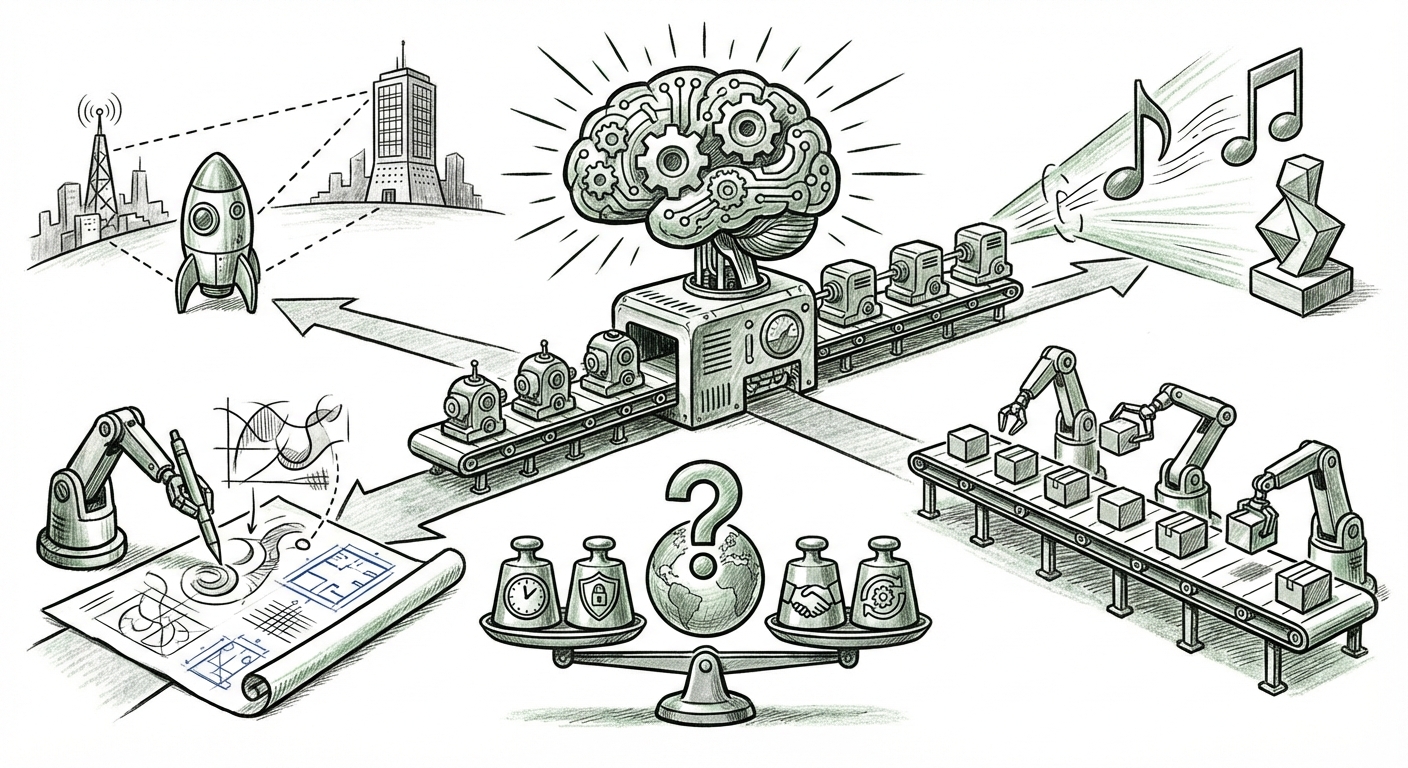
For years, the assumption was that bigger models always win. That's true for hard reasoning. It's not true for most of the work. The industry is moving toward a world where you route tasks by difficulty, local models for the routine, cloud models for the exceptional. Tools that make that routing seamless will win. Tools that force a single path will lose.
2. Privacy becomes a feature, not a concession
Local execution used to feel like a downgrade, slower, weaker, a compromise. As smaller models improve, "runs on your machine" flips from a limitation to a selling point. Expect that shift to accelerate, and expect buyers to start asking about it in the first meeting rather than the fifth.
3. Cost predictability becomes a competitive advantage
Usage-based pricing is elegant until it isn't. Businesses plan in budgets, and a tool whose monthly cost depends on how curious your engineers are is a tool that's hard to approve. Hybrid architectures give finance something to hold onto: a fixed cost for the local layer, a variable cost for the cloud layer, and a clear story about why each exists.
4. The moat moves from the model to the workflow
If capable models can run locally, then the model itself stops being the differentiator. What matters becomes the surrounding system: how well it understands your codebase, how cleanly it integrates, how reliably it produces usable output, and how safely it handles the boundary between local and remote work. The SDK, not the model, is where the value concentrates.
Practical Implications for Businesses
If you're running a development organization, here's what this trend means in plain terms.
- Your AI budget model should change. Start separating work into "must be frontier" and "fine locally." Most teams find the local-eligible bucket is bigger than expected.
- Your security review gets easier. Being able to say "this code never leaves our network" removes a whole category of objections and speeds up approvals.
- Your hardware matters again. Local inference needs real machines. That's a capital expense replacing an operating expense, which some finance teams love and others hate, but it's a real tradeoff to plan for.
- Your developer experience changes. Local models respond instantly and work offline. That changes how people work, not just what it costs.
- Your vendor questions change. Instead of "which model is best," start asking "what can run locally, what can't, and where's the line?"
Actionable Insights
Start with an audit. Before adopting anything, look at how your team actually uses AI coding tools today. Which tasks dominate? How sensitive is the code involved? That tells you where local execution helps most.
Build a routing policy early. Decide, in writing, what kinds of code can go to a cloud model and what can't. A simple rule beats a heated debate every time.
Pilot on the boring stuff. Don't start by pointing local models at your hardest problems. Start with formatting, docs, and test scaffolding. Prove reliability, then expand.
Measure cost per outcome, not cost per token. A cheaper token that produces unusable output isn't cheaper. Track what you spend versus what actually ships.
Watch the boundary, not the headline. The interesting question isn't whether local support exists. It's how gracefully the tool moves work between local and cloud, and whether you can control that decision yourself.
The Risks and Open Questions
None of this is frictionless. Local models are generally less capable than cloud frontier models, and pretending otherwise leads to bad decisions. Hardware costs are real, and they don't shrink the way cloud bills do. Support and updates for local deployments create new operational work. And there's a temptation to over-route work locally in the name of savings, producing worse output at a lower price, which is not a win.
There's also a strategic question worth sitting with. If the tools that make local execution easy are controlled by a handful of large vendors, does "local" really mean independent? It's a reasonable thing to keep an eye on.
The Bigger Picture
The headline is a feature update. The substance is a shift in posture. Local model support in the Antigravity SDK acknowledges something the industry has been circling for a while: the future of AI isn't one giant model in the sky. It's a mix, small models on your desk, big models on demand, and intelligent routing between them.
That's a healthier architecture. It's cheaper, it's more private, it's more resilient, and it gives businesses something they've badly needed: a way to adopt AI without handing over the keys to everything they've built.
The companies that figure out this hybrid approach first, not the ones that chase the biggest model or the lowest price, will be the ones shipping faster in a year. And the tools that make that split invisible to the developer are the ones worth watching.