Google Just Gave You a Full-Time AI Agent, Here's What That Means for the Future of AI
For the past few years, AI has been something you talk to. You open a chat box, you type a question, you get an answer, and then you close the tab. The AI waits. It does nothing until you come back. That model is now being replaced.
On June 5, 2026, Google moved the world one big step closer to an AI that doesn't wait for you at all. The company signaled a major shift: instead of handing you another chatbot, it is handing you a full-time AI agent, a system designed to work on your behalf continuously, not just when you poke it.
That single change, from "assistant you prompt" to "agent that works", is the most important story in technology right now. It changes how software gets built, how work gets done, and how much of your day gets handed over to a machine. Here's what it actually means, and what you should do about it.
From Chatbot to Coworker: The Big Shift
The difference between a chatbot and an agent sounds small. It isn't.
A chatbot is reactive. It responds. It has no memory of your goals unless you remind it, no ability to take action in the world, and no reason to keep going once you stop typing.
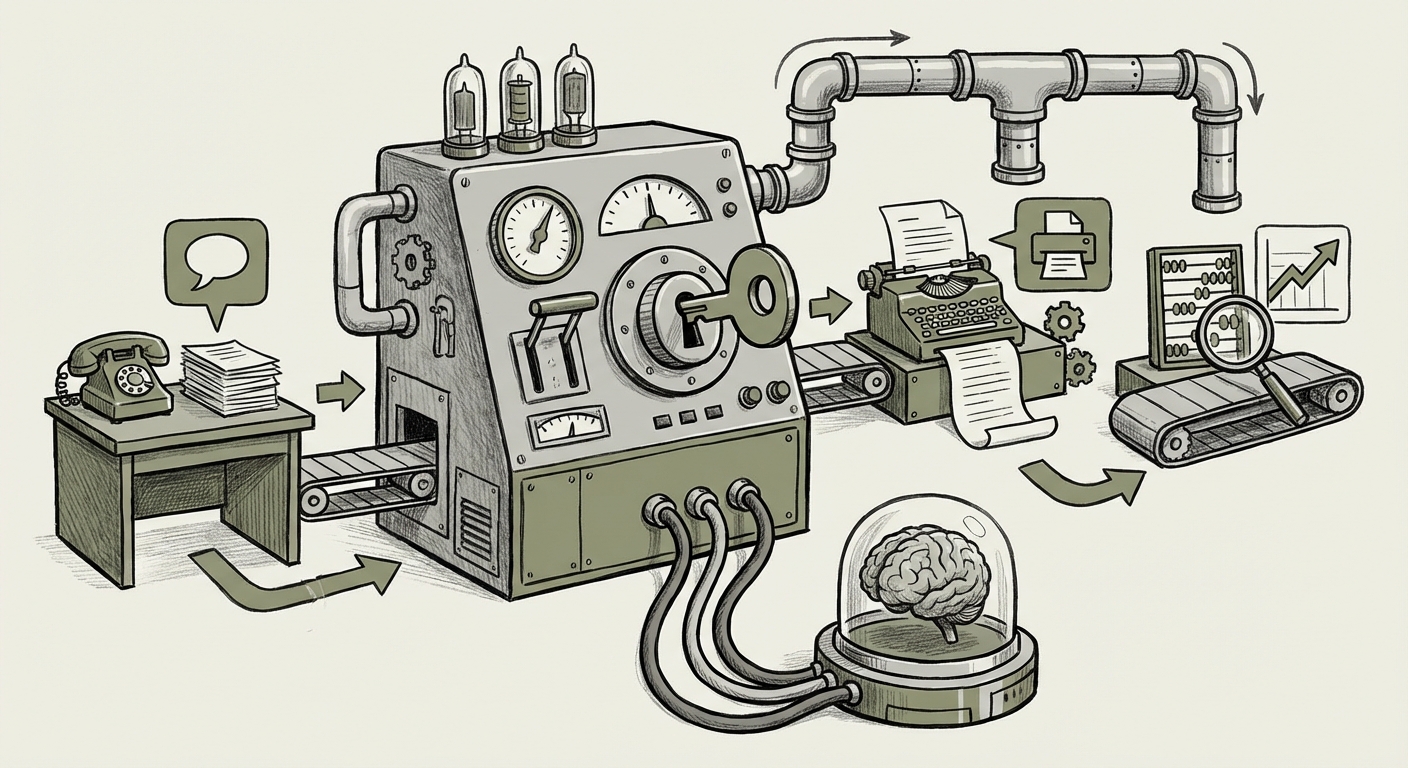
An agent is proactive. It has a goal. It has tools. It can plan, take steps, check its own work, and keep going, often while you're doing something else entirely.
When Google frames its offering as a full-time agent, it's making a claim about continuity. This isn't a tool you pick up and put down. It's something that runs in the background, holds context over time, and treats your objectives as standing orders rather than one-off requests.
Think of the difference between hiring a consultant for an hour and hiring an employee. One gives you advice. The other owns an outcome.
What "Full-Time" Really Changes
Three things become possible the moment an AI stops being a session and starts being a presence.
1. Work happens without a prompt
Right now, every AI task begins with you. You have to notice the problem, describe it, and ask. A full-time agent flips that. It can watch for the conditions you care about and act when they appear, not when you remember to check.
2. Context stops resetting
The biggest frustration with today's AI tools is repetition. You explain your business, your preferences, your style, and then you explain it all again tomorrow. A continuous agent keeps that context. Over months, it should know more, not less.
3. The unit of work changes
Today we measure AI in prompts and answers. Tomorrow we'll measure it in completed tasks. Did the report get written? Did the follow-ups get sent? Did the schedule get fixed? That's a completely different scoreboard, and a much more valuable one.
Why Google Is the One to Watch Here
Plenty of companies are building agents. What makes Google's move significant is distribution.
Agents are only useful if they can reach into the places where work happens, your documents, your calendar, your inbox, your search, your spreadsheets, your files. Google already sits inside all of those for billions of people and millions of businesses. It doesn't have to convince you to install something new. It has to convince you to switch something on.
That's a fundamentally easier problem. And it means the arrival of full-time agents won't feel like a new app. It will feel like an upgrade to tools people already open every single day.
This is the pattern to watch across the whole industry: the companies that already own your workflow will ship agents fastest, because they don't need permission to be present.
What This Means for Businesses
If you run a company, this shift lands in three places fast.
Small teams get bigger leverage
A five-person company with a capable agent can now handle workloads that used to require fifteen people. Not because the agent is brilliant at everything, but because it's tireless at the repetitive middle, the scheduling, the summarizing, the drafting, the chasing, the organizing. That's where most hours actually disappear.
Job roles get redefined, not just deleted
The honest read is that the tasks most at risk are the ones that are well-defined, repeatable, and digital. The tasks that get more valuable are the ones that require judgment: deciding what matters, building trust with people, handling messy situations, and knowing when the agent has it wrong. The people who thrive will be the ones who learn to direct and audit agents rather than compete with them.
Processes need to be written down
Here's the practical catch. An agent can only own a process you can describe. If your workflow lives in someone's head, no AI can take it over. Companies that write down their processes clearly will get dramatically more value from this shift than companies that don't. That's boring advice with a huge payoff.
The Everyday Impact
For individuals, the change will feel gradual and then sudden.
- Your inbox gets triaged before you wake up.
- Your calendar defends your time instead of just recording it.
- Research that took an afternoon gets summarized before you finish your coffee.
- Errands, bookings, and comparisons get handled in the background.
The mental load is the real prize. Most people aren't short on intelligence. They're short on attention. An agent that absorbs the small stuff gives that attention back. That's a genuine quality-of-life change, not just a productivity metric.
The Risks Nobody Should Ignore
Handing an AI standing permission to act is powerful, and power always cuts both ways. Four risks deserve real attention.
- Permission creep. An agent that can do small things will be asked to do bigger things. Every expansion of access is a new way for something to go wrong.
- Silent errors at scale. A chatbot that's wrong wastes a minute. An agent that's wrong and autonomous wastes a week, or sends the wrong thing to the wrong person.
- Accountability gaps. When an agent books something you didn't want or files something badly, who owns the mistake? Companies need clear answers before this becomes a real conflict.
- Attention as the bottleneck. If agents can generate work faster than humans can review it, the review step, not the doing step, becomes the limit. Good design means fewer, better actions, not more noise.
The winning posture isn't fear and it isn't blind trust. It's staged autonomy: give the agent a narrow job, watch how it performs, and only widen the scope once it's earned it.
Actionable Steps: What to Do Right Now
Whether you're an individual or running a team, the same playbook works.
- Find your one repetitive headache. Pick a task that happens weekly, follows the same steps, and eats real time. That's your first agent candidate, not your hardest problem.
- Write the steps down. If you can't explain it to a new hire in a page, you can't hand it to an agent yet.
- Start read-only. Let the agent observe, draft, and recommend before it's allowed to send, buy, or delete.
- Set a review checkpoint. Decide up front what a human must approve. This is the single most important safeguard.
- Measure hours returned, not features used. The only metric that matters early on is how much time and attention you got back.
- Rotate in your team. Someone needs to own the agent, checking its work, tuning its goals, and knowing when to switch it off.
The Road Ahead
What makes this moment a turning point isn't the technology. The building blocks, planning, tool use, memory, long-running tasks, have been assembling for a while. What's new is that a major platform is putting a full-time agent in front of ordinary people as a normal part of everyday software.
That's how real adoption happens. Not with a dramatic launch day, but with a quiet default. One day you'll notice you haven't written a routine email in months, and you won't be able to say exactly when you stopped.
The companies and people who come out ahead won't be the ones who waited for the technology to be perfect. They'll be the ones who started small, learned the limits, wrote down their processes, and built the habit of directing an agent rather than doing everything themselves.
The full-time AI agent is here. The question isn't whether it will change how you work. It's whether you'll be the one deciding what it does.