Kimberly Guilfoyle Resigns as Ambassador to Greece: The Hidden AI Story Behind Political Turnover
Kimberly Guilfoyle has resigned as the United States ambassador to Greece at the request of the White House. That is the headline. It is a political story about personnel, loyalty, and power, the kind of story that dominates news cycles for a few days and then fades.
But underneath the political drama sits a question that matters far more for the next decade: what happens to a government's technology when its leaders change? In 2026, the answer is no longer "nothing much." Embassies, foreign ministries, intelligence shops, and policy offices increasingly run on artificial intelligence, for translation, analysis, drafting, monitoring, and security. When an ambassador leaves, the AI stays behind. And that changes everything about how institutions remember, decide, and act.
The Story in Brief
The resignation of the U.S. ambassador to Greece came at the direct request of the White House. The post is not a minor one. Greece sits at the crossroads of Europe, the Balkans, the Eastern Mediterranean, and the Middle East. It is a NATO ally, a gateway for energy routes, and a front line for migration and maritime security. An ambassadorial vacancy there is not just a staffing issue, it is a signal that ripples through alliances and markets.
For our purposes, the key detail is the word request. This was not a slow, planned handover. It was a top-down decision that creates an immediate leadership gap in a strategically important post. And leadership gaps are exactly where AI systems get tested.
Why AI Doesn't Wait for Politics
Here is the core shift that most people miss. For most of modern history, when a senior official left, institutional knowledge walked out the door with them. Contacts, instincts, relationships, context, gone. The replacement spent months catching up.
That model is breaking down. Today, an embassy's daily operations increasingly rely on software that:
- Translates and summarizes thousands of local news articles, speeches, and social posts every day.
- Flags unusual activity in shipping lanes, border crossings, or financial flows.
- Drafts first-pass briefing memos, talking points, and meeting readouts.
- Maintains searchable records of past negotiations, agreements, and conversations.
- Monitors disinformation campaigns in real time across languages.
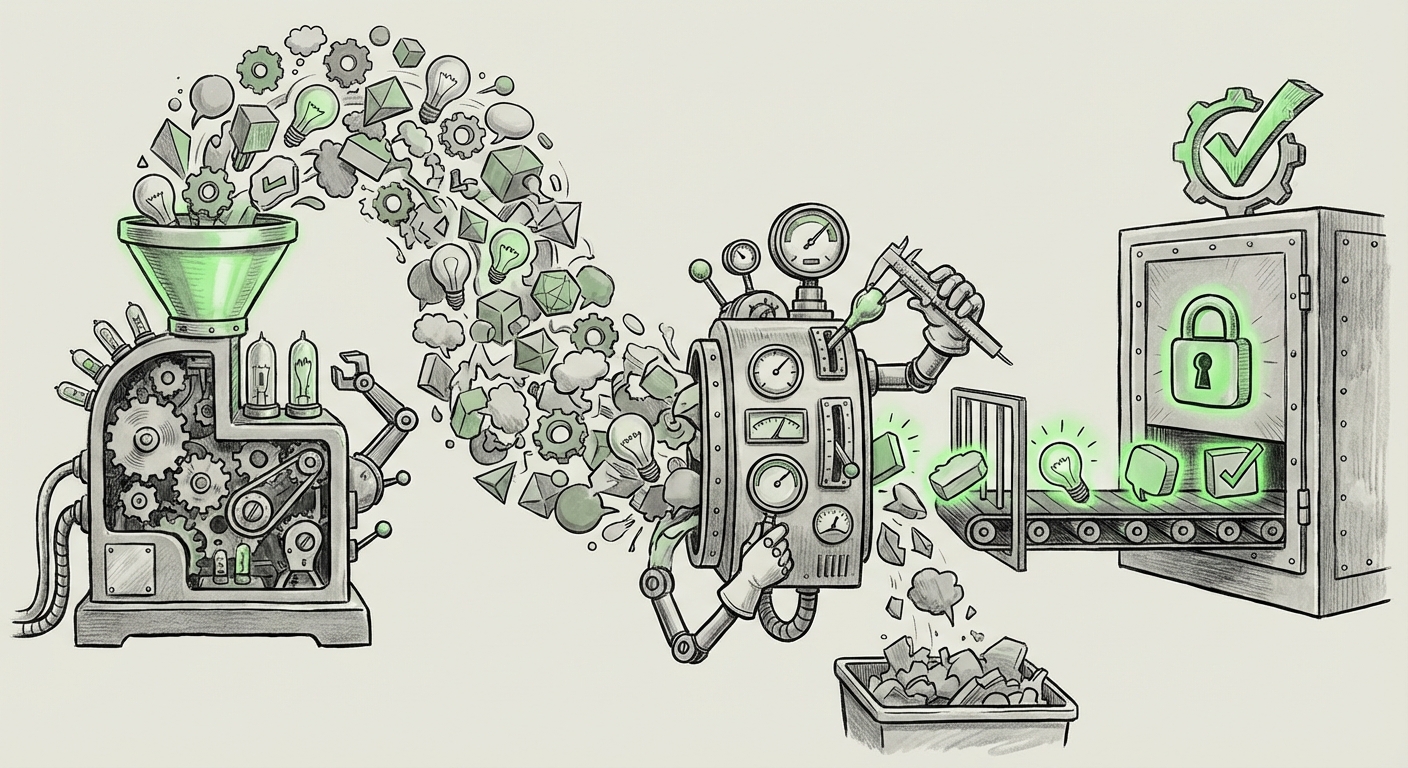
None of these systems care who the ambassador is. They keep running. On one hand, that is a feature, continuity without chaos. On the other hand, it raises a hard question: if the institution keeps working without a leader, who is actually steering it?
When a post is vacant or in transition, the humans who remain lean harder on automated tools. Alerts substitute for judgment. Summaries substitute for deep reading. Default settings quietly become policy. This is the invisible governance problem of the AI era, and it plays out in every sudden leadership change, not just this one.
AI in Diplomacy: Promise and Fragility
Governments around the world have spent the last several years racing to bolt AI onto diplomatic and administrative work. The appeal is obvious. Diplomacy is drowning in text, cables, reports, treaties, press coverage, social media. AI is very good at reading fast and finding patterns.
The risk is equally obvious. AI systems reflect the priorities they were trained and tuned on. If those priorities were set by the person now walking out the door, the system may keep pursuing a strategy the new leadership never approved.
Consider what this means in practice:
- Mission drift. A tool optimized to highlight one set of issues keeps highlighting them long after policy shifts.
- Accountability gaps. If an AI-drafted memo leads to a bad call, who takes responsibility, the departed official, the career staff, or the vendor?
- Vendor lock-in. Fast deployments during a crisis often mean long contracts with little room to change course.
- Training data blind spots. Systems tuned on one region's media may misread tone, humor, or protest signals in another.
At a post like Greece, the stakes are concrete. Misreading a maritime incident, a protest, or a border development can escalate quickly. Speed is valuable. Unquestioned speed is dangerous.
The Eastern Mediterranean as a Stress Test
Greece is not a quiet diplomatic assignment. It sits where energy, migration, defense, and trade routes overlap. Add in the broader region's tensions, and you get an environment where information arrives fast and arrives wrong just as often.
That makes it a natural stress test for AI-assisted foreign policy. Three areas stand out:
1. Maritime Awareness
Satellite data and ship-tracking signals generate enormous volumes of information. AI helps sort real anomalies from noise. But false positives in contested waters can create incidents rather than prevent them. Human review remains essential, and human review is exactly what thins out during a leadership transition.
2. Disinformation Defense
State-linked and criminal disinformation operations target alliance relationships precisely when they look unstable. AI detection tools help, but so do AI generation tools used by the other side. The contest is increasingly machine versus machine, with humans setting the rules, or failing to.
3. Economic and Energy Diplomacy
Negotiations over pipelines, ports, and shipping involve mountains of technical and financial data. AI can model scenarios and surface trade-offs in minutes. But the trust that makes agreements stick is still built face to face, by people with names and reputations. No model replaces that.
What This Means for Businesses
If you run a company, you may be thinking this has nothing to do with you. It does. The same pattern, sudden leadership change plus deeply embedded automation, is now standard in the private sector.
Ask yourself:
- If your CEO left tomorrow, would your AI systems keep making decisions aligned with current strategy?
- Do you know which automated alerts, scores, and recommendations shape daily choices?
- Can you explain, to a regulator or a customer, why your model flagged or approved something?
- When your last data scientist or operations lead left, what tacit knowledge left with them?
Most organizations cannot answer all four. That is the gap. Political churn at the top of government is a loud version of a quiet problem every large organization has: institutional memory is migrating from people into software, and few leaders are managing that migration on purpose.
Actionable Insights
Whether you work in government, business, or both, here is what to do next:
- Document intent, not just configuration. Record why a system was built and what it is meant to prioritize. Future leaders inherit code; they rarely inherit reasoning.
- Build transition checklists for AI. When leadership changes, review every automated system's objectives, thresholds, and escalation rules.
- Keep a human in the loop on anything irreversible. Sanctions, strikes, firings, and contract terminations should never be fully automated.
- Audit alerts quarterly. Systems drift. What was useful six months ago may now be noise, or a blind spot.
- Invest in explainability early. Rebuilding trust in a black box after a crisis costs far more than designing for clarity upfront.
- Train the bench, not just the top. Resilience comes from many people understanding the tools, not one person owning them.
The Bigger Picture
The resignation of an ambassador is a moment of political disruption. But the deeper story is structural. Governments and companies alike are handing routine cognition, reading, summarizing, ranking, recommending, to machines. That is not reversible, and mostly it is good. It frees people for judgment.
The risk is that judgment quietly gets outsourced too. Not by a dramatic decision, but by default: by staffing shortages, by trust in dashboards, by the sheer volume of information no human can read alone.
Vacancies expose this. They reveal whether an institution actually governs its AI, or merely hosts it. A post in transition, running on autopilot tools, is a live experiment in what happens when authority pauses but automation does not.
The lesson for the next decade is simple to state and hard to execute: build AI systems that serve the mission, not the moment. Leaders come and go, sometimes at the request of the White House, sometimes because of a board vote, sometimes overnight. The systems they leave behind should be able to explain themselves to whoever arrives next.
That is the real test of AI maturity. Not how impressive the demo is. Not how fast the deployment. But whether the institution can change leaders without losing its direction.