Mittal Says OneWeb Leads Musk in India's Satellite Internet Race, What This Means for the Future of AI
India's satellite internet race just got a headline moment. Billionaire Mittal has said plainly that OneWeb leads Musk in the contest to connect India from space. It's a confident claim from one of the country's most powerful telecom figures, and it lands in a market where the stakes are enormous.
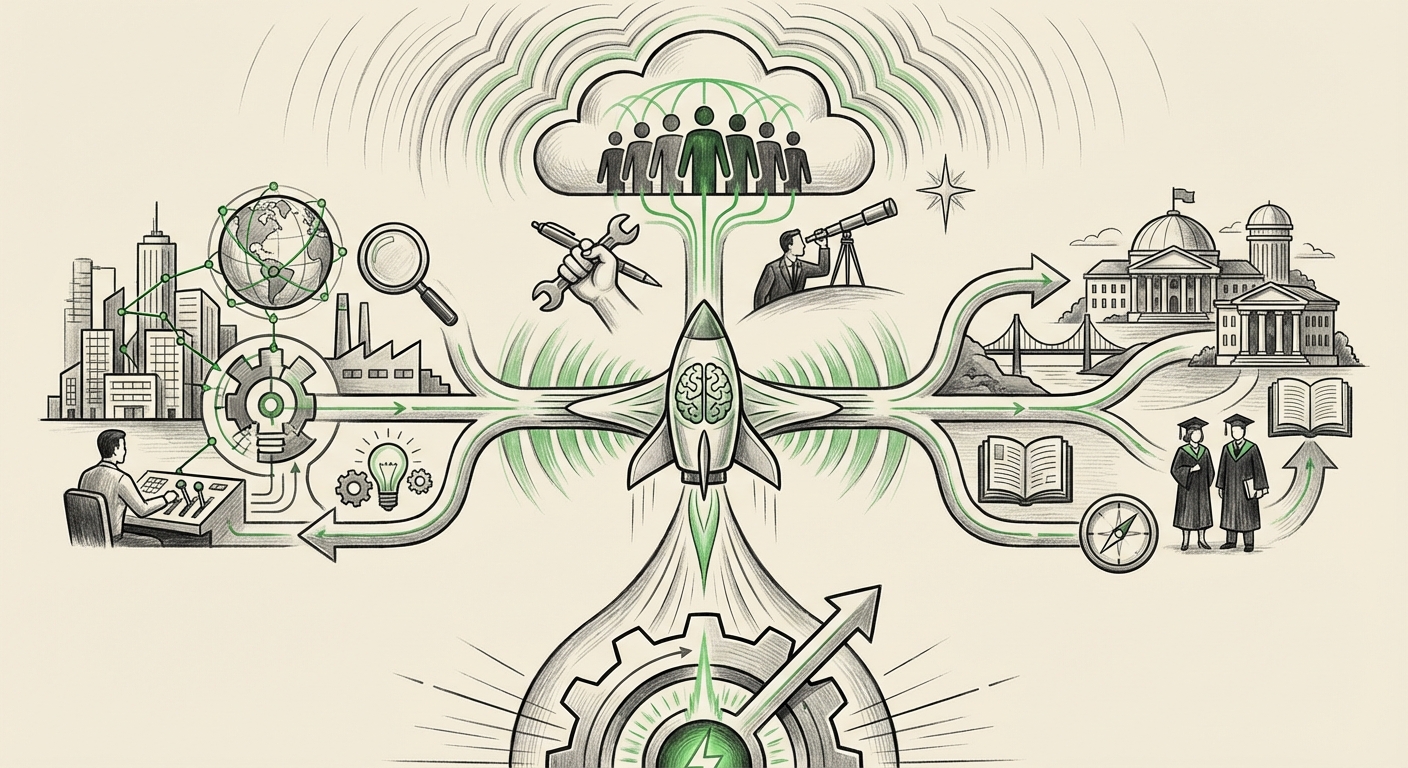
But here's the part most people will miss: this isn't only a telecom story. It's an AI story. The next wave of artificial intelligence won't be built in data centers alone. It will be built wherever people and machines need to be connected, including the places no fiber cable will ever reach. Whoever wins the satellite race in India is effectively deciding who gets to serve AI to a huge share of the planet.
The Claim, and Why It Matters
Mittal's statement is short, but it carries weight. He is not a spectator in this market. He is a competitor with real infrastructure, real spectrum ambitions, and real relationships on the ground. When someone like that says his satellite service is ahead of Musk's in India, the market listens.
Why does "leading in India" matter so much? Because India is one of the largest and most demanding connectivity markets on Earth. It has dense cities that already have strong mobile networks and vast rural areas that don't. Cable is expensive to lay. Towers are expensive to run. Satellites skip all of that. They beam down from low Earth orbit and connect a village, a ship, a farm, or a disaster zone without a single trench being dug.
Whoever provides that connection first, at a price people can pay, wins a customer relationship that lasts decades. That's the prize Mittal is claiming.
Why Satellite Internet Is Really an AI Story
Think about what AI actually needs to work. It needs three things: data, compute, and connectivity. Data and compute get all the attention. Connectivity is the quiet bottleneck.
A farmer in a remote area doesn't need a giant AI model sitting in her field. She needs a fast, reliable link to one. An AI that spots crop disease in a photo is useless if the phone can't upload the photo. A voice assistant that speaks a local language is useless if the connection drops mid-sentence. A hospital running AI-assisted scans is useless if it can't send the images anywhere.
This is why satellite networks are an AI story in disguise. Every satellite that comes online is a new on-ramp for AI services to reach people who were previously offline. The satellite operator becomes the gatekeeper of who gets access to modern AI tools and who does not.
Mittal's claim, then, is not just about internet speed tests. It is a claim about who controls the AI on-ramp for a huge part of the world.
The Invisible AI Running the Constellation
Here's the twist that most business readers don't see. The satellite networks themselves are becoming AI systems.
Low Earth orbit constellations are made up of many satellites moving fast. They constantly rise and set over any given spot. Signals have to be handed off from one satellite to the next without the user noticing. Beams have to be pointed precisely. Power has to be managed. Interference has to be avoided. Ground stations have to be scheduled. Weather has to be accounted for. Terminals have to be tracked and updated.
No human team can manage that in real time. So operators don't try. They hand the job to software that learns.
That software handles several things at once:
- Routing and handoffs: deciding which satellite serves which user at which moment.
- Beam management: shaping and aiming coverage as demand shifts from city to city, hour to hour.
- Predictive maintenance: spotting a failing component before it fails.
- Anomaly detection: flagging interference, jamming, or unusual traffic patterns.
- Demand forecasting: predicting where capacity will be needed next.
This is where the race is truly won or lost. Two satellite operators can have similar hardware and similar coverage maps. The one with the better AI layer will deliver a better experience at a lower cost. That is the difference between a service people tolerate and a service people love.
The Ground Segment Is the Next AI Battleground
Satellites get the glamour. Ground stations, gateways, and user terminals do the work.
Every satellite connection touches the ground somewhere. That ground equipment is where AI can be deployed most cheaply and most quickly. Operators can upgrade software at a gateway long before they can launch a new satellite. That means the fastest performance gains in the coming years will likely come from smarter ground systems, not from new hardware in orbit.
There is also a policy dimension. Processing data locally on the ground, inside a country, is often easier to defend than shipping it across borders. AI tools that run at the edge of the network, at the gateway or even in the terminal, can help operators respect local rules while still delivering smart services. Expect this to become a major selling point.
What This Means for Businesses
For companies, the practical effects are straightforward and worth planning for.
New customers become reachable
Any business that has been blocked from expanding because "there's no connectivity there" should revisit that assumption. Satellite coverage changes the math for logistics, agriculture, mining, shipping, energy, tourism, and field services.
AI systems get a backup path
Businesses increasingly depend on AI for everyday operations. Those systems need a connection that survives a cable cut or a tower outage. Satellite links are becoming a realistic redundancy option rather than a last resort.
Hybrid networks become the default
The future is not fiber versus satellite. It is fiber, mobile, and satellite working together, with software deciding which path each task should take. AI will make that decision automatically, and it will do it better than any rulebook could.
Competition pushes prices down
Mittal's confidence, and Musk's presence, both point to the same good news for buyers: when two serious players fight for a market, prices fall and service improves. That lowers the cost of every AI application that depends on bandwidth.
What This Means for Society
The social implications are just as large as the business ones.
Education. A connected village can access lessons, tutors, and AI learning tools that were previously only available in cities.
Healthcare. Remote clinics can send images and data to specialists, and AI can help triage cases before a doctor is available.
Agriculture. Farmers can get weather forecasts, pest warnings, and market prices in their own language, delivered by AI over a satellite link.
Finance. Banking and payments reach people who were never served by a branch.
Disaster response. When floods or storms knock out ground networks, satellites keep working. That matters enormously when AI is being used to coordinate rescue efforts.
There is a risk, though. If satellite service is priced only for wealthy customers, it will widen the digital divide instead of closing it. The operators who win long term will likely be the ones who find a way to serve high-volume, low-margin customers profitably, and AI-driven automation is the main tool that makes that possible.
The Competitive Picture Going Forward
The satellite race in India will not be decided by one clever launch or one press conference. It will be decided by a handful of slow, unglamorous factors:
- Regulatory approval and landing rights, permission to operate and to sell service.
- Spectrum access, the invisible resource every wireless service depends on.
- Local partnerships, working with existing telecom and distribution players.
- Pricing, reaching a mass market, not just early adopters.
- Operations software, the AI layer that turns hardware into reliable service.
- Ground infrastructure, gateways positioned where people actually live.
Mittal's claim suggests he believes his side is ahead on several of these. That could reflect local partnerships and regulatory groundwork, or it could reflect confidence in an operating model built on top of existing telecom experience. Either way, the claim puts a marker down.
What matters for the broader AI economy is that the race stays a race. If one provider dominates, prices stay high and innovation slows. If two or more compete seriously, everyone benefits.
Actionable Insights
- Map your connectivity blind spots. Find the parts of your operations that AI can't reach today because bandwidth doesn't exist there. That list is your opportunity list.
- Plan for hybrid connectivity. Design AI systems that can switch between fiber, mobile, and satellite without breaking.
- Invest in the AI operations layer. If you run any kind of network, the software layer, monitoring, prediction, automation, is where your next gains will come from.
- Watch the regulatory calendar, not just the launch calendar. Approvals and spectrum decisions will shape this market more than rocket launches will.
- Assume prices fall. Build business cases that improve as bandwidth gets cheaper, rather than depending on today's rates.
- Design for local processing. AI that runs at the edge is easier to deploy across borders and easier to defend to regulators.
- Serve the low end, not just the high end. The biggest long-term market is the customer everyone else ignores.
The Bottom Line
Mittal's claim that OneWeb leads Musk in India's satellite internet race is a competitive statement. But read it through an AI lens and it becomes something bigger: a statement about who will bring artificial intelligence to the billions of people and machines that are still offline.
The satellites are the visible part. The AI that routes, predicts, and manages them is the part that decides who wins. And the businesses and governments that understand that connection early will be the ones best positioned when the sky becomes the world's newest AI infrastructure layer.
TLDR: Billionaire Mittal has said OneWeb leads Musk in India's satellite internet race, a bold claim in one of the world's biggest connectivity markets. The real significance goes beyond telecom: satellite networks are the on-ramp that brings AI to places fiber and towers can't reach, and the constellations themselves are increasingly run by AI for routing, beam management, and predictive maintenance. For businesses, this means new reachable customers, cheaper bandwidth, and hybrid fiber-mobile-satellite networks as the default. For society, it means potential gains in education, health, farming, and disaster response, but only if pricing stays within reach of ordinary people.