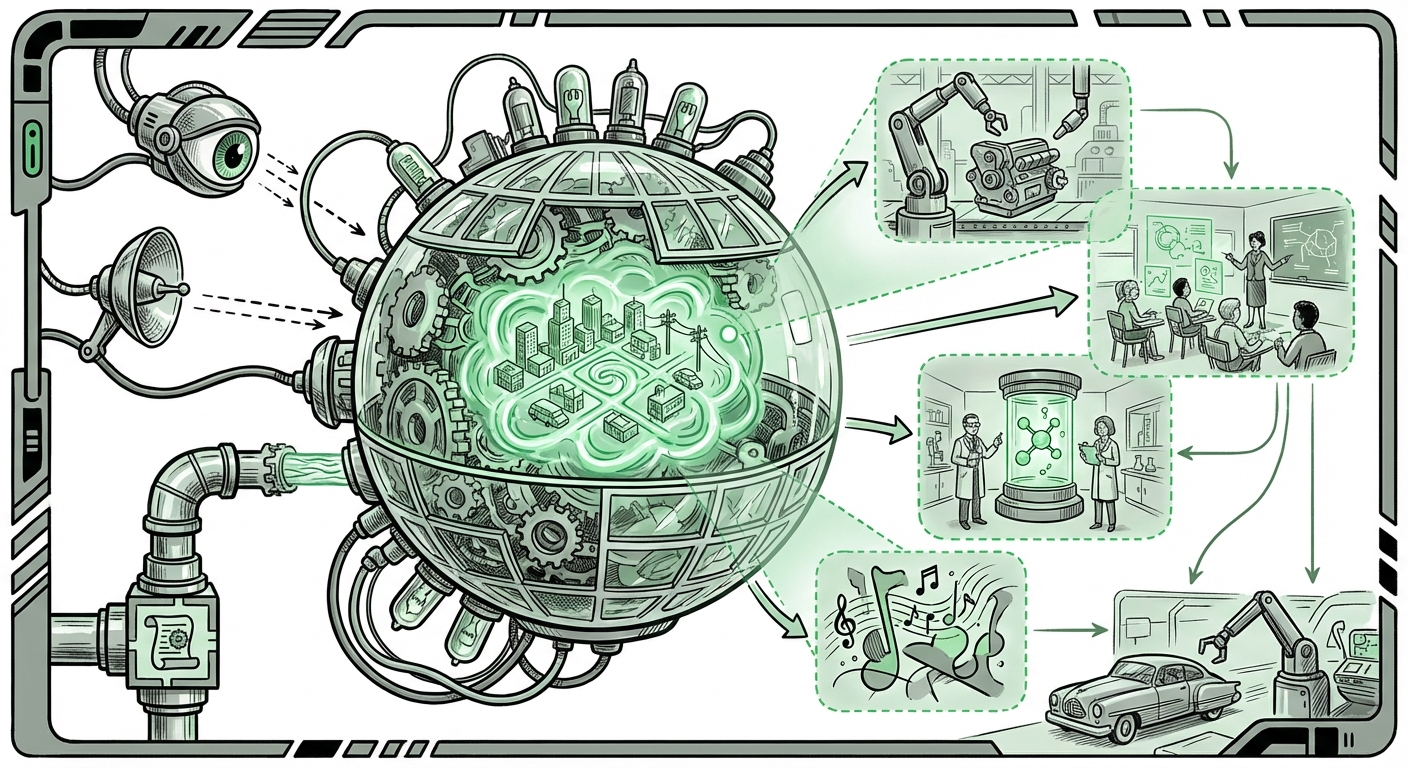
WSL Containers Are Now Generally Available, And It Quietly Changes How AI Gets Built
On September 29, 2026, WSL containers reached general availability. That sentence sounds like plumbing. It is not. It is one of those infrastructure milestones that barely makes a headline but reshapes who can build AI, where they build it, and how fast they can ship it.
For years, the average AI developer on Windows lived a double life. They wrote code on their laptop, then pushed it to a Linux box or a cloud instance to actually run it. The tools, the libraries, the GPU drivers, the packaging formats, almost all of it assumed a Linux environment. Windows was where the editor lived. Linux was where the work happened.
General availability of WSL containers collapses that gap. It moves containerized Linux workloads from "clever workaround" to "supported, production-grade default" on the machine sitting on your desk. And because containers are the packaging format of the modern AI stack, that shift matters far more than it first appears.
What "Generally Available" Actually Means
In software, general availability is a promise. It is the line between an interesting experiment and something you can put in a budget, a security review, or a support contract. When a feature hits GA, three things change at once:
- It becomes supportable. IT teams can standardize on it without fearing that a future update will break everything.
- It becomes buyable. Procurement, legal, and compliance can approve it because it is no longer a moving target.
- It becomes teachable. Documentation, onboarding guides, and training material can be written against a stable target.
That last point is the sleeper. The single biggest hidden cost in AI engineering is not compute, it is the two days a new hire spends fighting their environment before they write a useful line of code. A stable, supported container workflow on Windows erases most of that.
Why Containers Became the Language of AI
Modern AI work is a chain of fragile dependencies. A model needs a specific runtime. That runtime needs specific math libraries. Those libraries need specific driver versions. Change one link and the whole thing falls over with an error message that reads like a ransom note.
Containers solved this by freezing the entire environment into a single image. Same image on a laptop, a test server, and a training cluster. Same results, same bugs, same behavior. For AI teams, the container image became the real unit of work, more important than the notebook, more important than the repository.
The problem was that this packaging format was born in Linux and stayed there. Windows users could consume the output, but producing it locally was awkward. WSL containers remove that awkwardness. You build the image where you write the code.
What This Means for the Future of AI
1. The AI development loop gets shorter
Every step you remove from the edit-to-test cycle compounds. If a developer can spin up an isolated environment locally instead of waiting on a remote instance, experiments happen faster. Faster experiments mean more of them. More experiments mean better models and better products. This is not a small productivity story, it is a compounding one.
2. Local AI agents get a real sandbox
This is the most important implication, and it is easy to miss.
The next wave of AI is agentic: systems that do not just answer questions but take actions, writing files, installing packages, calling tools, running code. The moment an AI can execute code, you need a place to put it. A place where a mistake is contained, where you can see exactly what it touched, and where you can throw the whole thing away and start clean.
A container is exactly that place. It is a disposable, inspectable, sealed box. Until now, running an AI agent's code locally on Windows meant either trusting it with your real machine or standing up a virtual machine and managing it yourself. With WSL containers generally available, the safe option becomes the easy option. That single change could do more to unlock practical, everyday AI agents than any model upgrade.
3. One workflow from laptop to cloud to edge
The same container that runs on a developer's desk can run on a server, and increasingly on the Windows machines that already sit in factories, clinics, retail back offices, and branch locations. That is a big deal for AI at the edge, the kind that has to run close to the data because the data cannot move, or because the decision has to happen in milliseconds.
When the packaging format is consistent across all three tiers, you stop rebuilding your deployment process for each one.
4. Reproducibility becomes a competitive advantage
Regulated industries do not just need AI that works. They need AI they can explain, reproduce, and audit months later. A pinned container image is a receipt. It says exactly what ran, with what dependencies, in what environment. As AI systems face more scrutiny, teams that can hand over that receipt will move faster through review than teams that cannot.
Practical Implications for Businesses
Cost control. A meaningful share of cloud development spend exists purely because local machines could not run the real environment. Every workload you can shift back to hardware you already own is money that stops leaving the building every month.
Onboarding and retention. Engineers judge employers partly by how long it takes to get productive. A one-command setup is a recruiting asset.
Standardization. When every developer's environment is defined by an image rather than by memory and tribal knowledge, support tickets drop and "it works on my machine" conversations end.
Faster compliance reviews. A container image is an auditable artifact. Security teams can scan it, sign it, and approve it once, then trust every deployment that uses it.
Team flexibility. Platform choice stops being a constraint. A team can hire the best person regardless of which operating system they prefer, without forcing a Linux migration.
The Risks Nobody Should Skip
Convenience has a shadow. Four cautions worth putting in writing:
- Isolation is strong, not absolute. Containers share the host kernel. Treat images from untrusted sources as untrusted code, and think hard before mounting sensitive host directories into a container.
- Your image registry becomes a crown jewel. If fine-tuned models or sensitive data get baked into images, the registry now holds assets as valuable as your database. Secure it accordingly.
- Shadow AI gets easier. The same friction that kept unsanctioned AI projects in check is now lower. Policy has to catch up, or governance becomes a matter of luck.
- Test before you assume parity. Local container performance does not always match bare-metal Linux, particularly for heavy GPU work. Benchmark your actual workload rather than trusting a general claim.
Actionable Insights: What to Do This Quarter
- Audit the split. Find every workflow where your team writes on one platform and runs on another. Those are your highest-value candidates.
- Pilot one thing. Pick a single containerized AI service and run it locally on a Windows workstation. Measure setup time before and after.
- Rewrite onboarding around an image. Replace your multi-page environment guide with one reproducible setup.
- Stand up an internal image registry with scanning, signing, and version pinning from day one, not after the first incident.
- Write the policy early. Decide what can run locally, what must run in the cloud, and who approves new images.
- Prepare support. Train help desk and IT staff on container basics before the rollout, not during it.
- Track three numbers: time-to-first-commit for new hires, experiment cycle time, and cloud development spend.
The Bigger Picture
General availability announcements rarely feel historic in the moment. They feel administrative. But infrastructure shifts work exactly this way: nothing looks different on Tuesday, and then eighteen months later, an entire class of applications exists because a friction point quietly disappeared.
The direction of travel is clear. AI capability is becoming containerized, portable, and increasingly run close to where decisions happen. Desktop, edge, and cloud are converging on a shared packaging model. The winners will not be the teams with the most exotic setup, they will be the teams whose environments are boring, reproducible, and fast.
WSL containers reaching general availability is not a story about Windows. It is a story about the last major platform handing AI builders the same reliable, disposable, sealed box that everyone else already had, and about what those builders do next now that the box is on every desk.