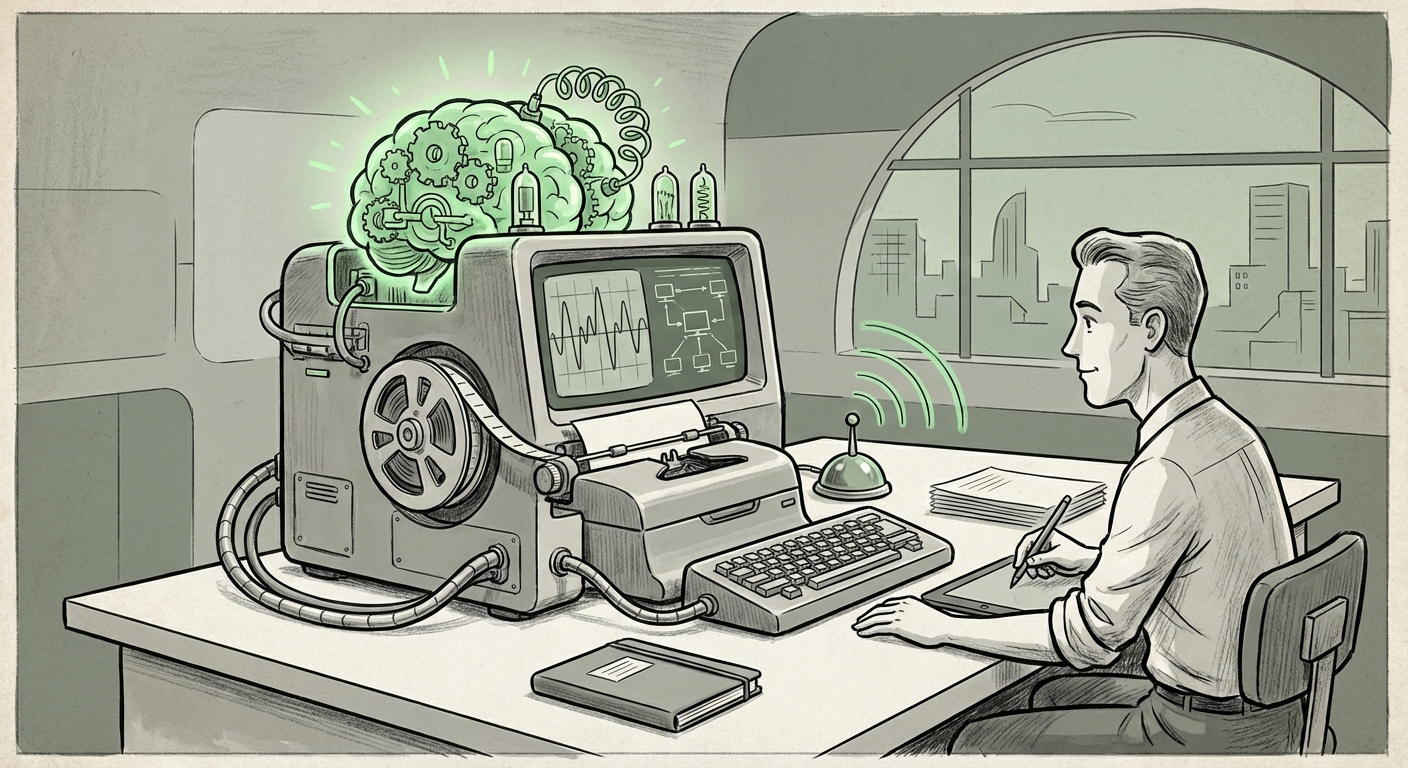
The AI Industry's Dark Secret: What Modern AI Really Costs and What It Means for the Future
The AI industry has a really dark secret. It is not a single scandal, a single bad actor, or a single leaked document. It is something bigger and harder to see: the gap between the story the industry tells about artificial intelligence and the messy, expensive, human-heavy reality of how that intelligence actually gets built.
That gap matters right now. As of September 2026, AI has moved from an experimental curiosity into the daily plumbing of businesses, schools, hospitals, and governments. Billions of dollars are flowing into the sector. Every company pitch deck promises the same thing, effortless intelligence, delivered at almost no cost. But the machinery behind those promises tells a very different story.
This article breaks down what the dark secret actually is, why it has stayed hidden for so long, and what it means for the future of AI and for anyone who plans to use it.
The Story We're Sold vs. the Story We're Living
AI is marketed like software. You download it, you turn it on, and it works. Software is supposed to be cheap to copy, easy to scale, and light on resources. That mental model is why so many business leaders assume AI will just keep getting cheaper and better on its own.
But modern AI does not behave like software in one critical way. It behaves like an industrial process. It needs raw materials, energy, land, factories, and human labor, lots and lots of human labor. The polished chat window you see is the tip of a supply chain that stretches around the world.
The dark secret is that this supply chain is largely invisible by design. Investors hear about model breakthroughs. They rarely hear about the labeling teams, the cooling water, the electricity contracts, the contract workers, or the legal fights. Those are the unglamorous parts, and they are where the real costs live.
The Hidden Human Labor Behind "Automation"
The most uncomfortable part of the secret is this: AI is not built by AI. It is built by people, and a lot of those people are doing work that is repetitive, poorly paid, and sometimes deeply disturbing.
Models learn from examples. Someone has to create those examples. Someone has to label images, tag text, rank answers, check facts, and flag harmful content. Someone has to test the system by deliberately trying to break it. When a model produces a harmful output, someone has to look at that output and decide how to fix it.
This work is often outsourced to contractors and freelancers far from the headquarters where the profits are booked. The pay is frequently low. The work is often temporary. And in some cases, especially content moderation and safety testing, the material being reviewed can be genuinely traumatic.
So when a company says its AI "automates" a task, what it often means is that the task has been shifted somewhere else in the chain, to a person who is not in the room and not in the story. That is the secret in its purest form: automation that is really a redistribution of hidden labor.
The Physical Footprint Nobody Puts on the Slide
AI also has a body. It lives in data centers, and data centers are physical places with real-world needs.
They need enormous amounts of electricity, both to run the machines and to keep them from overheating. They need water for cooling in many designs. They need land, buildings, backup power, and heavy-duty network connections. They need specialized chips, and those chips depend on a global supply chain of mines, fabrication plants, and shipping routes.
None of this fits the "AI is just software" narrative. Building and running large-scale AI is closer to running a factory than to running an app. That means the industry's growth story is tied to energy grids, water supplies, and raw materials in ways that most AI marketing never mentions.
This is why the dark secret is not just an ethics issue. It is an infrastructure issue. Communities near data centers feel the impact on power prices and water use. Energy planners have to forecast demand they never expected. And companies that build AI at scale inherit risks, regulatory, environmental, and reputational, that have nothing to do with how smart their models are.
The Data Question Nobody Wants to Answer Directly
Every AI system is a product of what it was trained on. That raises a question the industry has struggled to answer clearly: where did all that data come from, and did anyone agree to it?
Much of it came from the open web, articles, books, forums, images, code, conversations. Some of it was public. Some of it was copyrighted. Some of it was personal. Some of it was never meant to be training material at all.
This creates two problems. The first is legal and ethical: creators whose work shaped these systems often received nothing, and in many cases were never asked. The second is practical: if the web becomes flooded with AI-generated content, future models may end up training on their own output. That can degrade quality over time rather than improve it.
The dark secret here is that the industry's most valuable raw material was, in many cases, taken rather than bought, and the bill for that is still being written.
The Economics That Don't Quite Add Up
Here is the part that should worry every boardroom. Running cutting-edge AI is expensive. Training it is even more expensive. And the cost does not disappear once a model ships, inference, the act of actually using the model, costs money every single time someone asks it a question.
Meanwhile, the market has been trained to expect AI to be cheap or free. That creates a squeeze: heavy costs on one side, price pressure on the other. Many AI products are currently subsidized by investor money rather than paid for by customers.
That can work for a while. It cannot work forever. The dark secret is that a meaningful share of today's AI economy depends on continued outside funding. If that funding slows, prices rise, features get cut, or services shut down, and the businesses that built their workflows on top of them are left scrambling.
This is not a prediction of collapse. It is a warning about dependency. If AI is now part of how you operate, you are exposed to economics you do not control.
What This Means for Businesses
For business leaders, the dark secret translates into a simple instruction: stop treating AI like magic and start treating it like a supplier.
That means asking harder questions before you sign. What does this actually cost per use, not just per seat? What happens if the price triples? What happens if the vendor changes the model under you and your carefully tuned prompts stop working? Who is liable when the output is wrong? Where does your data go, and who can see it?
It also means being honest about the human layer. If your AI workflow depends on people quietly cleaning up its mistakes, that is a cost. If your team spends hours verifying outputs, that is a cost. If a model fails in front of a customer, that is a cost. None of it shows up in the demo.
The businesses that win with AI over the next few years will not be the ones that adopted it fastest. They will be the ones that understood its real cost structure and designed around it.
What This Means for Society
For society, the dark secret raises questions that go well beyond any one company.
- Work: If AI automates tasks, who absorbs the displaced workers, and who absorbs the hidden labeling work that replaces them?
- Energy and water: How much of our shared resources should go to AI, and who decides?
- Ownership: If our writing, art, and data trained these systems, do we have any claim on what they produce?
- Transparency: Should companies have to disclose how their models were built, what data they used, and what human labor was involved?
- Trust: If the industry hides its costs, why should the public trust its promises?
These are not abstract debates. They are already shaping regulation, lawsuits, labor negotiations, and public opinion. The industry can either lead on them or be dragged into them.
Actionable Insights: What to Do Now
Whether you are a CTO, a small business owner, or just someone paying attention, here is what the dark secret should change about your approach.
- Calculate total cost of ownership. Include inference fees, human review time, integration work, and error correction, not just subscription prices.
- Test the demo against reality. Run your own data, your own edge cases, and your own worst-case scenarios before committing.
- Demand supply chain transparency. Ask vendors where training data came from and how human labor was sourced and paid.
- Avoid single-vendor lock-in. Keep your prompts, workflows, and data portable so you can switch if pricing or terms change.
- Keep a human in the loop where stakes are high. Health, finance, law, and safety decisions need verification, not blind trust.
- Track your footprint. If you are scaling AI usage, understand your energy and cost trajectory before it becomes a surprise.
- Plan for volatility. Assume model behavior, pricing, and availability will change. Build systems that tolerate that.
- Be honest internally. Tell your team what AI can and cannot do. Overpromising creates the same disappointment the whole industry is now managing.
The Road Ahead
The dark secret of the AI industry is not that AI is fake. It clearly is not. The secret is that AI's real costs, human, physical, legal, and financial, have been kept out of the frame while the industry sold a story of effortless intelligence.
That era is ending. As AI becomes more embedded, more regulated, and more expensive to run, those hidden costs are coming into view whether the industry wants them to or not. The companies that acknowledge this first will be the ones that build durable products. The ones that keep hiding it will keep getting caught.
For everyone else, the lesson is simpler. AI is a powerful tool with a real bill attached. Understand the bill, and you can use the tool well. Ignore it, and you will eventually be handed an invoice you never planned for.