Big Releases, Bigger Controversies: What AI's Latest Wave Means for the Future of Work, Business and Trust
Something has shifted in how the artificial intelligence story gets told. For a few years, the headline was simple: a new model arrived, and it was better than the last one. People argued about benchmarks, then moved on. That era is over.
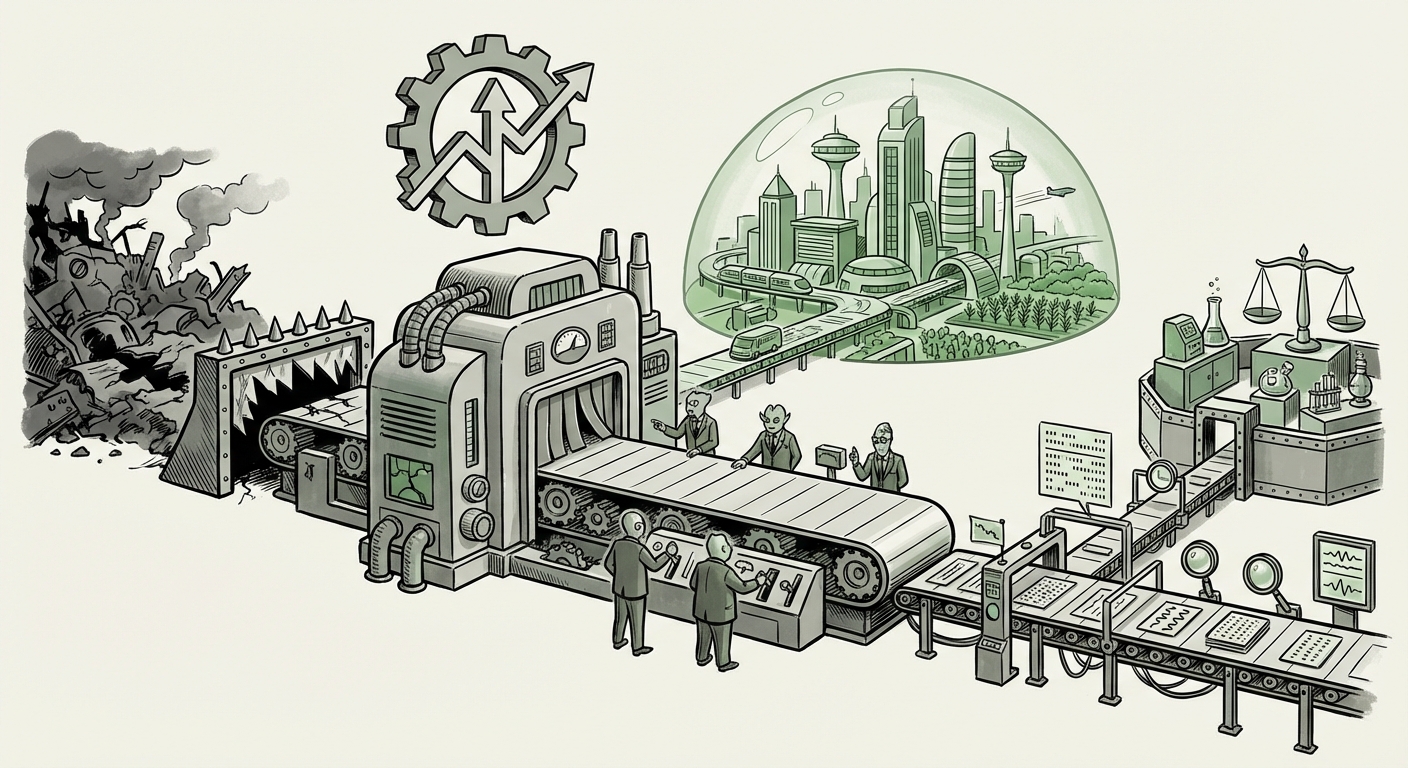
As of early September 2026, the pattern is unmistakable. A major release lands, faster, cheaper, more capable, and within days the conversation has moved somewhere else entirely. What was it trained on? Who owns the output? What happens to the people whose jobs it touches? Who is accountable when it gets something badly wrong? The launch gets the attention. The controversy sets the rules.
That gap, between the speed of releases and the speed of answers, is now the defining tension in AI. Understanding it is no longer optional for anyone running a business, building a product, or simply trying to keep up.
Why Release Cycles and Controversy Cycles Are Now the Same Cycle
Three forces have fused the launch and the backlash into a single event.
First, the technology now touches things people feel personally. Earlier generations of AI mostly sorted data or recommended content. Today's systems write, draw, speak, summarize, advise and increasingly act. They brush up against creative work, personal likeness, education, hiring, health questions and legal decisions. When software reaches into areas that shape identity and income, disagreement is guaranteed. It is not a public relations problem. It is a structural one.
Second, the distance from lab to living room has collapsed. A capability that once took years to spread now reaches hundreds of millions of people in weeks. There is no quiet period for society to adjust, no slow rollout where norms can form. The release and its consequences arrive at almost the same time, which means every launch is also an unplanned social experiment.
Third, the rules are still being written. Laws, industry standards and court decisions all move on slower clocks than model updates. That mismatch creates a vacuum, and vacuums get filled by whoever shouts loudest, companies, critics, regulators, or the public. Every controversy is really a fight over who fills that vacuum next.
The Four Flashpoints Driving the Biggest Arguments
1. Data, Provenance and Ownership
The most persistent fight is about where training data comes from and who has a claim on what comes out. Creators, publishers and rights holders want to know whether their work was used, and whether they should be paid. Companies want clarity so they can build without a legal cloud overhead. The practical result is a slow push toward provenance, documented records of what went into a system and how its outputs may be used. Expect this to move from a philosophical debate to a procurement checkbox.
2. Safety, Control and Misuse
As systems become more capable, the range of things they can do badly grows with the range of things they can do well. The arguments here are less about whether models should exist and more about what guardrails look like, who tests them, and what happens when a safeguard fails. This is where government interest is strongest and where voluntary commitments get tested hardest.
3. Money and Labor
Every release reshapes some job somewhere. Sometimes it removes tasks. Sometimes it creates new ones. Sometimes it just makes the same work faster, which quietly changes how many people are needed to do it. The controversy is rarely about the technology itself, it is about who captures the gains and who absorbs the disruption. Businesses that treat this as purely a communications issue tend to get surprised by it later.
4. Trust and Information
When anyone can generate convincing text, images, audio and video at almost no cost, the basic question of "is this real?" becomes a daily problem. The counter-move is a growing emphasis on verification: watermarks, content credentials, signed media, and platforms that show their work. The next few years will be as much about building trust infrastructure as about building better models.
What This Means for the Future of AI
The race is shifting from capability to credibility. Being the most powerful model matters less if buyers cannot explain it to their board, their customers or their regulator. Expect the winning arguments to be about documentation, auditability and clear limits, not just scores on a test.
Deployment will become the hard part. Building a strong model is a research problem. Getting thousands of organizations to use it safely, legally and productively is an operations problem. That is where the next wave of value, and the next wave of headaches, will live.
Governance is becoming continuous, not a one-time event. The old model was "approve it and move on." The new model looks more like monitoring: ongoing review, incident reporting, and the ability to change course when something goes wrong. Organizations that build this in early will spend far less time firefighting later.
Open and closed systems will keep pushing against each other. Open tools spread capability widely and fast; closed systems offer more control and clearer accountability. Neither wins outright. The tension between them is itself a permanent source of controversy, and a permanent source of innovation.
Practical Playbook: What Businesses Should Do Now
The good news is that most of this is manageable. The bad news is that it requires decisions, not just enthusiasm.
- Take inventory. Know every place AI touches your business, including tools employees adopted without asking. You cannot govern what you cannot see.
- Ask about provenance. When evaluating a vendor, ask what the system was trained on and what rights come with the output. Make it a standard question, like asking about security.
- Test on your own work. Leaderboards measure general ability. Your business needs evidence on your data, your customers and your edge cases.
- Pre-write the hard answers. Before a controversy lands, decide how you would explain your AI use to a customer, a journalist or a regulator. Improvising under pressure rarely goes well.
- Get the contracts right. Clarify data rights, liability and what happens if a vendor changes its model or terms. These details are where surprises hide.
- Build literacy, not just access. Give people training on what these tools do well, where they fail, and when to escalate. Confidence without judgment is a risk.
- Start small, measure hard. Pilot in a contained area, define success in numbers, then scale what works. Broad rollouts based on vibes are how expensive lessons get learned.
- Watch the rulebooks. Keep an eye on emerging requirements around disclosure, transparency and data use. Compliance is cheaper when you see it coming.
What It Means for Society
For the public, the central challenge is verification. If anyone can produce convincing content, then the ability to check sources becomes a basic civic skill, and the tools that help people do it become public infrastructure in everything but name.
The second challenge is distribution. The gains from AI tend to concentrate quickly, while the costs spread out slowly. That imbalance is what turns technical change into political conflict. Countries and companies that invest in helping people move into new roles, through training, better job matching, and support during transitions, will handle the shift far more smoothly than those that do not.
The third challenge is patience with process. Good governance of a fast-moving technology looks slow and unsatisfying from the outside. But the alternative, no process at all, produces exactly the cycle we are in now: release, uproar, rushed response, repeat.
How to Read the Next Twelve Months
Expect the pairing to continue. Every significant capability launch will arrive with a companion argument about data, safety, jobs or truth. That is not a sign the industry is failing. It is a sign the technology has become important enough to argue about.
The organizations that come out ahead will be the ones that treat controversy as a design input rather than an unfortunate side effect, building transparency, testing and accountability into products from the start instead of bolting them on after the headlines hit.
The biggest releases will keep getting the attention. The bigger controversies will keep setting the terms. The winners will be the ones who understand that both are part of the same story, and plan accordingly.