Googlebook OS Installed on a Chromebook Plus: The Quiet Signal That AI Is About to Rewrite the Rules of Hardware
In October 2026, a single user did something that at first glance looks like a weekend hobby project: they installed Googlebook OS onto a Chromebook Plus, and reported that it runs great. No official support. No sanctioned upgrade path. Just an operating system landing on hardware it was never sold with, and working.
That is a small story about one laptop. It is a much bigger story about where computing is heading, and about the role AI will play in getting us there.
For years, the tech industry has sold devices and software as matched pairs. You buy the machine, you get the operating system that came with it, and when the software moves on, the hardware gets left behind. That model is now under pressure from two directions at once: users who refuse to accept artificial limits, and AI features that are increasingly delivered as software rather than silicon.
This is what a successful Googlebook OS install on a Chromebook Plus tells us, and why it matters far beyond one enthusiast's desk.
The Install Itself: Small Act, Loud Signal
Let's be precise about what happened. A user took a Chromebook Plus, a category of laptop positioned as the more capable, premium tier of the Chrome-family hardware line, and put Googlebook OS on it. The result was not a crawl, not a crash, not a wall of missing drivers. It ran great.
The name matters here. Googlebook OS carries the same lineage as the Chrome platform, which tells us something important: this is not a third-party Linux distribution being forced onto locked hardware. It is a Google-family operating system running on Google-family hardware that was never officially cleared to run it.
That distinction is the whole story. When software from the same family runs well on adjacent hardware, it usually means the hardware was always capable, the limitation was policy, product segmentation, or timing, not physics.
And once the limitation is policy rather than physics, it tends to fall.
Why Hardware Walls Are Coming Down
The history of personal computing is a history of enforced boundaries. Consoles locked to cartridges. Phones locked to carriers. Laptops locked to the OS image shipped from the factory. Each boundary existed for a reason, support costs, licensing, quality control, revenue, and each one eventually got tested by users who wanted more from the device they already owned.
What is different now is the economics. Building dedicated silicon for every AI feature is expensive. Training, fine-tuning, and updating models is expensive. Shipping a new chip generation every year to unlock new capabilities is a treadmill that very few companies can stay on.
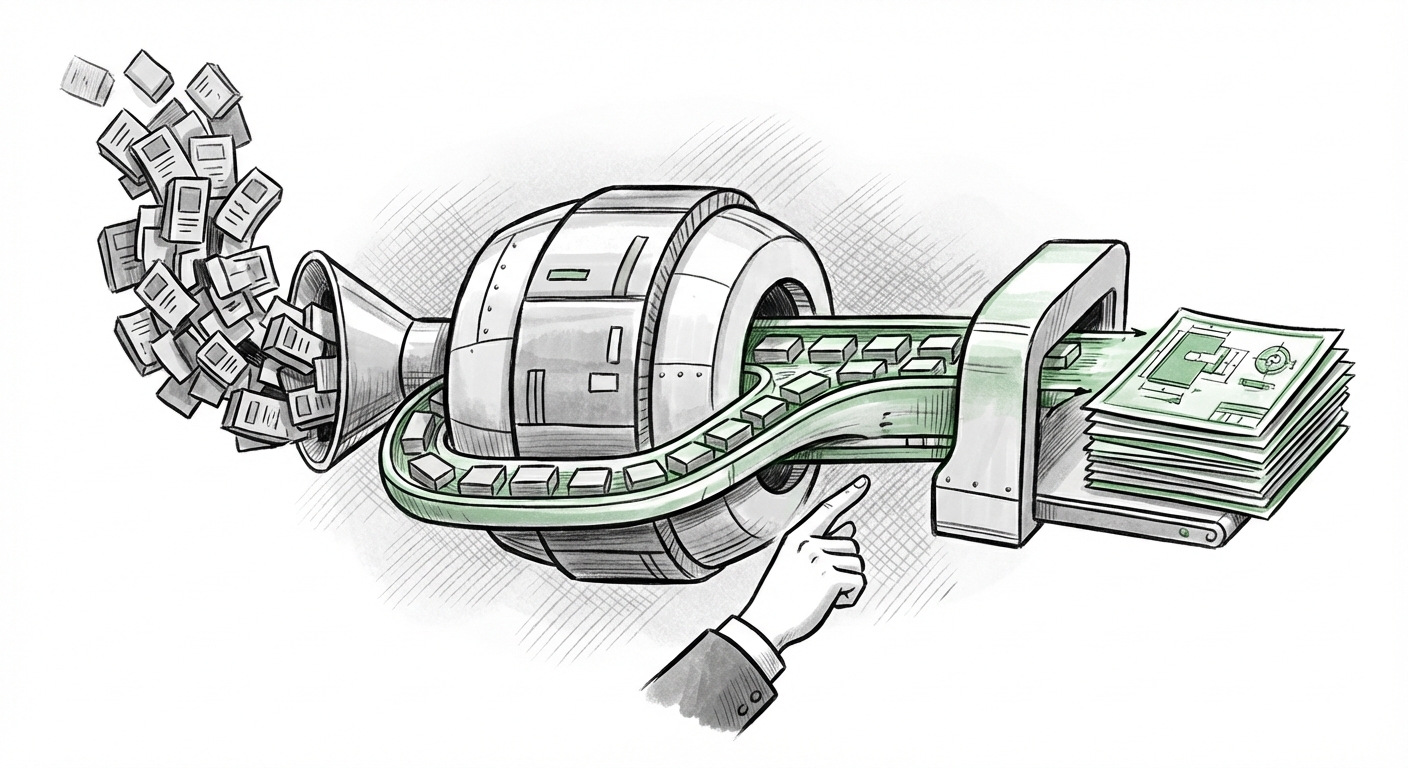
So the industry is moving toward a different answer: put the intelligence in the operating system and the cloud, and let it reach hardware that is already in people's hands.
A machine that can boot a newer OS is a machine that can receive newer AI features. That is the real prize. The Chromebook Plus in this story is not interesting because of its processor or its screen. It is interesting because it just proved that a perfectly ordinary device can become a landing pad for the next generation of software.
The OS Is Becoming the AI Layer
Ten years ago, an operating system was mostly a traffic cop. It managed files, windows, drivers, and power. Today, the operating system is increasingly the place where AI actually lives, not as a chatbot icon you click, but as a system service that everything else can call on.
That shift changes what "compatibility" means. When the smartest parts of your computer live in software and cloud services, the hardware requirement drops. You no longer need the newest chip to get the newest experience. You need a machine that can run a modern OS, hold a stable connection, and keep up with security updates.
For makers of devices, that is a double-edged sword:
- Good news: existing hardware stays useful longer, which builds loyalty and reduces waste.
- Hard news: the upgrade cycle weakens. If a three-year-old laptop can run the newest AI-powered OS well, why buy a new one?
The answer companies are converging on is that they will sell services and intelligence, not just boxes. The box becomes a vessel. The AI becomes the product.
What This Means for Businesses
A successful Googlebook OS install on Chromebook Plus hardware is a signal that IT leaders should read carefully, because it foreshadows a set of decisions they will all face within the next few refresh cycles.
1. Device longevity becomes a budget line, not an afterthought
If operating systems from the same family can be moved onto adjacent hardware, the practical lifespan of a fleet extends. That means finance teams should stop assuming a fixed replacement cadence and start modelling hardware as a flexible asset whose useful life depends on software support, not the calendar.
2. Security policy needs a clear answer for grey-area installs
Unsanctioned OS installs are already happening. Some are harmless experiments; some are genuine risks. Every organization will need a written position: which installs are blocked by policy, which are tolerated in lab environments, and which are formally supported. Leaving it undefined means the answer is being decided by whoever is boldest, not by whoever is responsible.
3. Procurement criteria shift from specs to intelligence
When AI capability arrives through the OS and the cloud, buyers should weigh different things: long-term software support, manageability, security patching, and how well the device integrates with AI services. A slightly slower processor with five more years of OS support may beat a faster one that gets stranded.
4. Training beats tooling
The organizations that win the next few years will not be the ones that bought the most AI-enabled devices. They will be the ones that taught their people how to fold AI into daily work, drafting, summarizing, analyzing, troubleshooting. The hardware is the easy part.
What It Means for Society
The broader social story is about access. When a capable operating system can land on hardware people already own, the cost of participating in modern computing falls. That matters for students, small businesses, and households that cannot justify replacing a working laptop every few years.
It also matters for the environment. Every device that stays in service an extra two years is a device that does not need to be manufactured, shipped, and eventually discarded. Software flexibility is quietly one of the most effective sustainability tools the industry has.
There is a counterweight, though, and it deserves honesty. More flexible installs mean more variation in the wild, more configurations, more edge cases, more chances for something to break in a way no one tested. Support models built around tightly controlled hardware will need to adapt, and users who go off the supported path should expect to be their own first line of help.
The Bigger Trend: Software Leads, Hardware Follows
Step back and the pattern is unmistakable. For decades, the industry ran on a hardware-first rhythm. New chip, new device, new features. That rhythm is breaking down.
Today the sequence runs the other way. A model improves. A feature ships. The operating system absorbs it. And suddenly millions of machines that were never designed for it can do something new. Hardware becomes the follower, not the leader.
The Googlebook OS install on a Chromebook Plus is a tiny, concrete example of that reversal. It is one person, one laptop, and one working outcome. But it demonstrates a principle that will define the next decade of personal computing:
Capability is no longer confined to the newest box on the shelf.
What to Watch Next
- Official positioning. Will Googlebook OS get a sanctioned path onto Chrome-family hardware, or stay in enthusiast territory?
- Enterprise tooling. Do management and security platforms add support for these mixed configurations?
- AI feature parity. Do AI capabilities depend on specific silicon, or can they run anywhere a modern OS runs?
- Support economics. How do vendors price support when the hardware matrix becomes fuzzy?
- User behavior. If installs like this become common, device makers will have to respond, either by embracing flexibility or by re-justifying the upgrade.
Actionable Takeaways
For individuals: if you have a capable machine that still feels fast, the question of "do I need a new laptop?" is increasingly a software question, not a hardware one. Keep an eye on what the operating system you already have can unlock.
For IT and business leaders: start writing your policy on unsupported OS installs now, before it is written for you. Audit your fleet for devices that could gain years of life through a software path. And shift your buying criteria toward support longevity and AI integration rather than raw spec sheets.
For builders and developers: the addressable market for AI features just got bigger. If your software can run on an operating system that lands on widely available hardware, you are no longer limited to the newest devices, you can reach the installed base.
Conclusion
A user installed Googlebook OS on a Chromebook Plus, and it runs great. That is the entire headline. But the implication is much larger than the event.
It shows that the walls between operating systems and hardware are softening, that AI capability is migrating into the software layer where it can reach further, and that the devices people already own are about to become more useful than the industry expected.
The future of AI in personal computing will not be decided only by who builds the fastest chip. It will be decided by who can deliver intelligence to the widest range of machines, including the one already sitting on your desk.