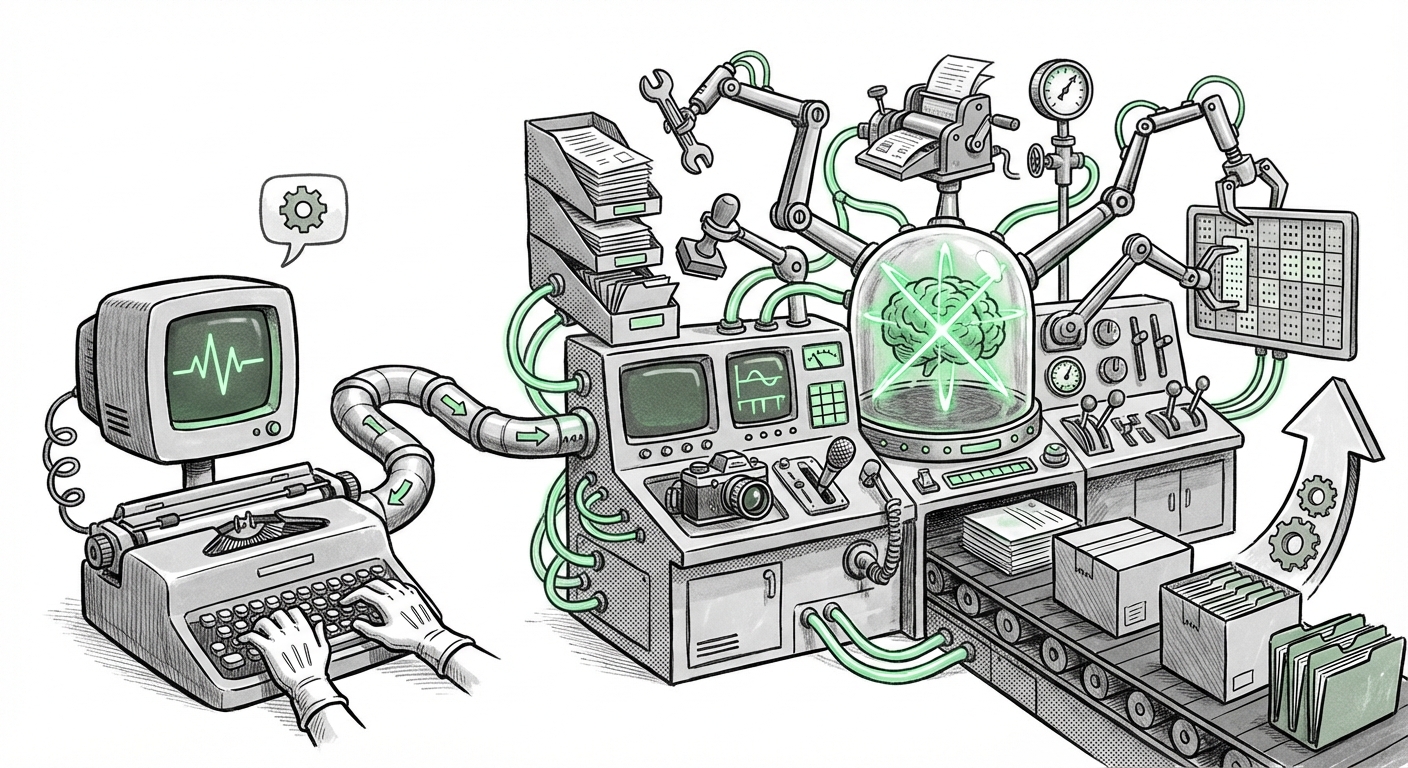
Microsoft's AI Constitution Explained: What Google, OpenAI, and TSA Updates Mean for the Future of AI
Something big is shifting in the world of artificial intelligence. For the last few years, the story has been about raw power, who can build the smartest model, the fastest, with the most data. Now the story is changing. It is becoming about rules.
The clearest sign of that shift is Microsoft's AI Constitution. It sits at the center of a wave of announcements that also includes updates from Google, OpenAI, and the TSA. Taken together, these four names tell a story that every business leader, developer, and everyday user should understand. AI is no longer just a lab experiment. It is becoming infrastructure, and infrastructure always comes with a rulebook.
What Is an "AI Constitution," Exactly?
Think of a country. It has laws, but it also has a constitution, a short, high-level document that says what the laws are supposed to protect. An AI constitution works the same way. It is a written set of core principles that decides how an AI system should behave when it faces a hard choice.
Should the AI refuse a request? Should it explain its reasoning? Should it hand a decision back to a human? A constitution answers those questions before they come up, instead of leaving them to whoever happens to be on call that day.
This matters because AI systems now make thousands of tiny decisions every second. No company can review each one by hand. So instead, they write down the values they want the system to follow, and then train and test the model against those values.
Why This Is Different From a Normal Safety Policy
Most tech companies already publish safety policies. They are usually long, careful, and a little vague. An AI constitution is different in three important ways:
- It is ordered. Principles are ranked. When two good values collide, the constitution says which one wins.
- It is testable. You can build a test set of tricky situations and check whether the model actually follows the rules.
- It is public-facing. It creates a shared language for customers, regulators, and critics to argue with.
That third point is the real breakthrough. Once a company writes down its rules, it can be held to them. That is uncomfortable for the company, and very useful for everyone else.
Google and OpenAI: The Same Current, Different Boats
Microsoft is not moving alone. The Google and OpenAI updates in this round point in the same direction: fewer vague promises, more concrete guardrails.
Across the industry, the pattern looks like this. Companies are publishing clearer behavior guidelines for their models. They are building more red-team testing, where people deliberately try to break the system before customers do. And they are spending more effort on the unglamorous parts, logging, monitoring, and human review, that actually keep AI systems trustworthy once they are in the wild.
There is also a growing focus on agentic AI. That is AI that does not just answer questions, but takes actions: booking, buying, sending, scheduling, filing. The moment a model can act, the stakes jump. A wrong answer is annoying. A wrong action can cost money, break a contract, or harm someone.
So it should come as no surprise that the biggest players are now writing constitutions. You need a rulebook precisely when the system stops talking and starts doing.
The TSA Update: Where AI Meets the Security Line
The TSA part of this roundup may be the most important clue of all, because it moves AI out of the browser and into the physical world.
Airport security is a high-stakes environment. It is crowded, fast, and full of people who are stressed and in a hurry. Errors are expensive in every direction: too strict and you delay millions of travelers, too loose and you miss a real threat.
AI is increasingly part of how agencies like the TSA handle that pressure, helping sort, flag, and prioritize what deserves a closer look. The lesson here is not about any single tool. It is about the pattern: when AI touches public safety, three requirements become non-negotiable.
- Explainability. If the system flags you, there has to be a reason a human can understand.
- Human override. A person must be able to say "no" to the machine, every time.
- Fairness testing. The system must be checked to make sure it does not treat groups of people unfairly.
These are the same three requirements that show up in hospitals, banks, and hiring systems. The TSA update is a reminder that the AI governance conversation is no longer a tech-industry talking point. It is government policy in practice.
The Big Trend: AI Is Moving From the Capability Race to the Trust Race
Step back and the whole picture becomes clear. The AI industry has gone through phases.
Phase One: The Capability Race
Who has the biggest model? Who can write the best poem, pass the hardest exam, or generate the most realistic video? That phase is not over, but it is no longer the whole story.
Phase Two: The Trust Race
Now the question is: can you rely on it? Can you put it in front of a customer, a patient, or a passenger without losing sleep? This is where Microsoft's AI Constitution, Google's updates, OpenAI's updates, and the TSA's work all live.
Phase Three: The Governance Race
The next phase, already starting, is about who sets the standards everyone else has to follow. Writing the rules early is a form of power. The company or agency whose framework becomes the default wins a lot, quietly.
If you only remember one thing from this article, remember this: the winning AI companies of the next decade may not be the ones with the smartest models. They will be the ones people actually trust.
What This Means for Businesses
If you run a company, this shift is not someone else's problem. Odds are you already use AI in some form, in your support chat, your email tools, your analytics, or your hiring pipeline. Here is what changes.
Vendors Will Be Judged on Their Rulebooks
Procurement teams are starting to ask new questions. Not just "how accurate is it?" but "what are your rules, and can I see them?" A vendor with a clear, published AI constitution becomes easier to buy from. A vendor with a vague blog post becomes a risk you have to justify.
Liability Is Moving In-House
When an AI agent books the wrong flight or rejects the wrong applicant, the customer does not blame the model. They blame you. Documentation, logging, and clear human checkpoints are how you defend yourself.
Small Teams Get a Shortcut
Here is the good news. You do not need a research lab to adopt good practice. The principles coming out of the big players are simple enough to copy at any scale.
Actionable Insights: What to Do This Quarter
- Ask your AI vendors for their rules. If they cannot show you a written set of behavior principles, treat that as a yellow flag.
- Test the rules, don't just read them. Write ten tricky scenarios your business actually faces. Run them. See what happens.
- Write your own short constitution. One page is enough. What should your AI never do? Who is accountable when it does? Who can override it?
- Log everything that matters. If a decision affects a person's money, safety, or access, keep a record you could explain later.
- Keep a human in the loop for irreversible actions. Payments, deletions, denials, and public statements should have a person on the trigger.
- Train your staff on the limits. People trust AI more than they should. A short training session prevents a lot of damage.
- Watch the governance race. The standards being written now will shape what you are allowed to buy and build later.
What This Means for Society
For everyday people, the AI constitution trend is quietly good news, but only if it is real.
A published rulebook gives you something to point at. If a system treats you unfairly, you can ask: which principle was supposed to protect me here? That question is much harder to dodge than "why did the algorithm do that?"
The risk is constitution theater, beautiful documents that never touch the actual model. The test is simple. Look for evidence: outside audits, published test results, appeals processes, and real people whose job is to say no. Principles without enforcement are just marketing.
There is also a fairness question. AI written by a handful of large companies and agencies will reflect their choices. That is why public debate about these constitutions matters. The rules governing a system used by millions should not be written entirely in private.
The Road Ahead
The next year of AI news will look different from the last. Expect fewer jaw-dropping demos and more documents: frameworks, audits, standards, and certification schemes. Expect regulators to reference the rulebooks that companies wrote themselves. Expect buyers to demand them.
Microsoft's AI Constitution, along with the Google, OpenAI, and TSA updates, is an early signal of that future. The era of "move fast and figure it out later" is ending for AI. What replaces it is an era of written rules, public accountability, and slow, grinding trust-building.
That is less exciting than a new model launch. It is also far more important, because trust is the thing that decides whether AI stays a clever toy or becomes something the world genuinely depends on.
The companies that treat their constitution as a living document, tested and revised in public, will be the ones still standing when the dust settles. Everyone else will be explaining, too late, what their rules were supposed to say.